Tragic Father-Son Dispute in Kudus Ends in Fatal Stabbing Following Years of Domestic Turmoil

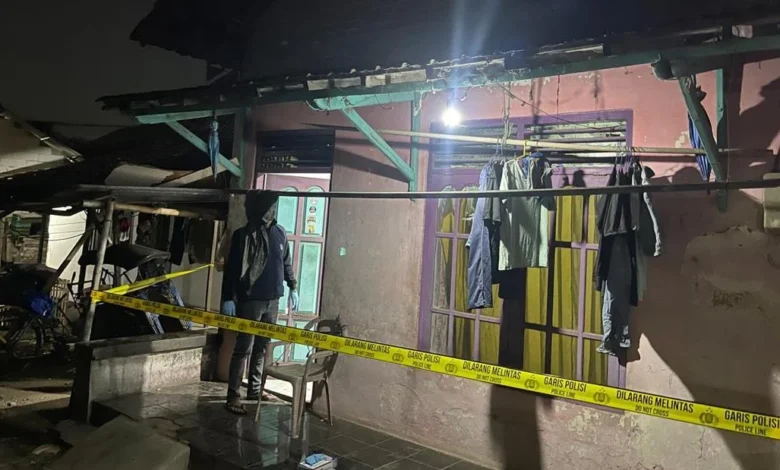
The quiet neighborhood of Jati Kulon village in the Jati subdistrict of Kudus Regency, Central Java, was shaken to its core following a horrific act of domestic violence that culminated in the death of a 34-year-old man at the hands of his own father. The incident, which highlights the devastating toll of unmitigated domestic friction and substance abuse, underscores a growing concern regarding familial conflict management and the availability of mental health and counseling resources at the grassroots level.
According to local law enforcement authorities, the violent altercation took place late Thursday night, just moments before midnight. The victim, identified by his initials FA, suffered a fatal stab wound to the lower left side of his chest during a heated confrontation with his 64-year-old father, identified by the initials TG. Despite swift intervention by neighbors and subsequent emergency medical treatment at the Mardi Rahayu Hospital in Kudus, FA succumbed to his injuries, leaving the local community in a state of profound shock and mourning.
Comprehensive Chronology of Events
The tragic sequence of events on that fateful Thursday night has been meticulously reconstructed by local law enforcement officers based on eyewitness testimonies, preliminary forensic findings, and statements gathered from immediate neighbors and village officials.
According to investigators, the escalation began in the late evening hours when TG was seen returning to their shared family residence carrying a sharp weapon, specifically a kitchen knife. The return of the elder man preceded the arrival of his son, FA, who reportedly came home visibly intoxicated, allegedly under the influence of alcohol. Such late-night arrivals had apparently become a source of immense tension within the household over an extended period.
Shortly after both men were inside the residence, neighbors reported hearing loud voices, shouting, and the unmistakable sounds of a violent physical struggle. The argument quickly escalated beyond verbal abuse. Within minutes, the heavy silence of the night was pierced as FA staggered out of the house into the courtyard, bleeding profusely from a severe stab wound to his chest.
Realizing the gravity of his condition, local residents immediately stepped in to assist the wounded man and alerted the local authorities. FA managed to communicate to those around him that he had been stabbed by his father before his condition deteriorated rapidly. Emergency responders rushed the victim to the nearby Mardi Rahayu Kudus hospital for urgent surgical and medical interventions. However, the internal trauma inflicted by the blade was too severe, and medical personnel were ultimately unable to save his life. He was pronounced dead shortly after arrival.
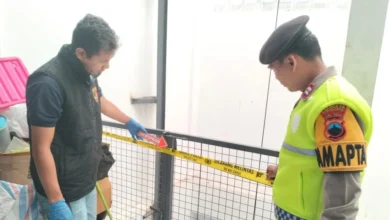
Upon receiving distress calls from the neighborhood, officers from the Jati Sector Police (Polsek Jati) and the Kudus Sub-Regional Police Resort (Polres Kudus) arrived swiftly at the scene. They secured the perimeter, conducted an initial crime scene investigation, and apprehended TG without major incident. The alleged murder weapon, a knife bearing traces of blood, was secured as primary physical evidence to be analyzed by forensic specialists.
Household Dynamics and Long-Standing Familial Friction
To understand the underlying causes of this tragedy, investigators and local community leaders delved into the complex family dynamics that defined the household. Hery Supriyanto, the Head of Jati Kulon Village, provided critical context regarding the living situation and the history of discord between the father and son.
According to Supriyanto, FA was the youngest of four siblings. Over the years, the older three siblings had moved out of the family home to establish independent lives elsewhere. Furthermore, the matriarch of the family had passed away a considerable time ago, leaving TG and FA as the sole remaining residents of the family house. This isolated living arrangement, devoid of external mediation from other family members, created an environment where minor disagreements could easily fester into explosive confrontations.
Village authorities confirmed that domestic disputes between TG and FA were far from isolated incidents. Instead, they represented a persistent pattern of friction. The primary catalyst for these frequent arguments was FA’s lifestyle, particularly his habit of returning home late at night while heavily intoxicated. Village officials noted that the father-and-son duo had engaged in verbal altercations on numerous previous occasions, which often stemmed from TG’s growing frustration over his son’s disruptive behavior and lifestyle choices.
Motive and Perpetrator Perspective
During initial police interrogations, the suspect, TG, offered a harrowing explanation for his actions, painting a picture of a desperate parent at the end of his psychological endurance.
AKP Subkhan, the Head of the Jati Sector Police, elaborated on the suspect’s statements during a press briefing. According to Subkhan, TG confessed that the fatal stabbing was the culmination of prolonged emotional distress, deep-seated resentment, and physical exhaustion resulting from years of abuse at the hands of his own son.
The suspect revealed that he had reached a breaking point, commonly referred to in criminal psychology as a "snapping point," driven by chronic frustration over FA’s persistent alcohol abuse. More alarmingly, police investigations and the suspect’s testimony revealed that the victim frequently subjected his elderly father to physical violence during their drunken rages. TG reportedly felt trapped, unprotected, and completely jengah—exhausted and fed up—with enduring repeated physical assaults and verbal intimidation within the very home he provided.
"The father had reached his absolute limit regarding his son’s chronic intoxication and the recurrent physical violence directed at him," AKP Subkhan explained to reporters. "The ongoing abuse created an unbearable living situation that ultimately resulted in this fatal explosion of violence."
Police Investigation and Legal Proceedings
Law enforcement agencies have emphasized that the case is being handled with utmost professionalism, diligence, and strict adherence to the Indonesian Criminal Code (KUHP) and relevant criminal procedure laws.
The investigation team is currently conducting a comprehensive review of the entire sequence of events, evaluating forensic evidence, gathering additional witness testimonies, and assessing the psychological state of the suspect at the time of the offense. The body of the deceased was subjected to a thorough post-mortem examination at a designated forensic medical facility to officially document the cause of death and gather scientific evidence to substantiate the prosecution’s case.
Because the incident occurred within a domestic setting and involved direct family members, police are classifying and investigating the case under the legal framework governing domestic violence (Kekerasan Dalam Rumah Tangga – KDRT) alongside standard criminal provisions concerning homicide.
"We are conducting a thorough investigation into all dimensions of this tragic event," AKP Subkhan stated. "Every piece of evidence is being analyzed, and the legal process will proceed strictly according to established laws and regulations. We ensure that the rights of all parties, as well as the pursuit of objective truth, remain our primary focus."
Broader Socio-Economic Implications and Psychological Context
The parricide in Kudus serves as a grim reminder of the broader systemic challenges facing Indonesian society, particularly regarding domestic conflict resolution, substance abuse prevention, and the accessibility of mental health support systems in regional areas.
Sociologists and criminologists point out that domestic violence is frequently underreported, especially when it occurs between parents and adult children. In traditional Indonesian society, family matters are often kept private, discouraging individuals from seeking external help from community leaders, social services, or law enforcement until a catastrophic breaking point is reached.
The proliferation of alcohol abuse in localized areas remains a significant risk factor for domestic disputes. When combined with underlying economic pressures, lack of psychological counseling, and inadequate coping mechanisms for elderly caregivers dealing with troubled family members, the potential for lethal outcomes increases exponentially.
Public health advocates and community leaders in Central Java have called for renewed efforts to strengthen neighborhood-level mediation programs. Such initiatives could empower local figures, such as village heads (lurah), neighborhood association leaders (RT/RW), and community health workers (kader posyandu), to identify signs of chronic domestic distress early and intervene before conflicts escalate into irreversible tragedies.
Furthermore, mental health professionals emphasize the necessity of providing support structures not only for victims of domestic abuse but also for beleaguered caregivers and family members who suffer in silence. Programs aimed at substance abuse rehabilitation and anger management could play a critical role in preventing similar incidents in the future.
As the legal proceedings against TG move forward, the community of Jati Kulon is left to reflect on the devastating human cost of unresolved familial conflict. The tragedy stands as a sombre warning about the urgent need for open communication, community vigilance, and accessible mental health resources to protect vulnerable individuals within the domestic sphere.