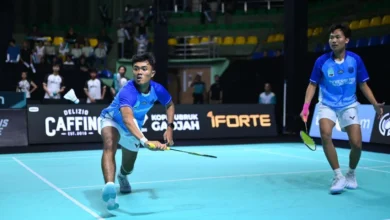
Hari Olahraga Nasional: Reflecting on the Historical Legacy and Future Aspirations of Indonesian Sports

September 9 marks a pivotal date in the Indonesian calendar, serving as the annual commemoration of Hari Olahraga Nasional (Haornas). This day is more than a mere calendar entry; it is a profound reflection of the nation’s journey toward sovereignty, resilience, and physical well-being. From its inception in the tumultuous post-independence era to its current status as a platform for national health promotion and athletic excellence, Haornas encapsulates the spirit of a nation that views sports as a fundamental pillar of its identity and social cohesion.
The Genesis: A Bold Statement of Independence
The origins of Hari Olahraga Nasional are inextricably linked to the inaugural Pekan Olahraga Nasional (PON), held in Solo, Central Java, from September 9 to 12, 1948. At that time, Indonesia was a nascent republic, struggling to assert its existence on the global stage while navigating the pressures of post-colonial uncertainty.
The decision to host a national sports event was not merely for competition; it was a strategic political move. In 1948, Indonesia aspired to participate in the XIV Olympic Games in London. However, the international community had yet to recognize the new nation, leading to significant administrative hurdles that prevented the Indonesian contingent from competing under their own flag. Undeterred, Indonesian leaders chose to bypass these international barriers by organizing their own "National Olympics." By staging PON I in Solo, the government effectively demonstrated that the Indonesian state possessed the organizational capacity, the spirit of unity, and the cultural autonomy to manage its own affairs, including the development of sports.
From Local Initiative to National Decree
While the spirit of Haornas was ignited in 1948, the formal institutionalization of the day occurred decades later. On September 9, 1983, President Soeharto officially inaugurated the commemoration during the renovation of the historic Sriwedari Stadium in Surakarta. This event served as a catalyst for a more structured national policy on sports.
The formal legal framework was solidified with the issuance of Presidential Decree (Keppres) Number 67 of 1985. This document officially codified September 9 as the annual Hari Olahraga Nasional. The decree was designed to cultivate a sustainable, long-term approach to sports development, ensuring that athletic training, physical education, and community sports remained a priority for future administrations. By establishing this legal foundation, the state moved toward a systematic approach to nurturing talent and promoting health, transforming sports from a hobbyist pursuit into a national strategic asset.
Chronology of Indonesian Sports Milestones
To understand the trajectory of Indonesian sports, one must look at the timeline of its development:
- 1948: The inaugural PON is held in Solo, marking the birth of the national sports movement amidst geopolitical challenges.
- 1983: President Soeharto officially declares September 9 as the date to commemorate the birth of the national sports movement.
- 1985: The issuance of Presidential Decree No. 67 officially legalizes Haornas, setting the stage for decades of state-sponsored athletic initiatives.
- 2000s–Present: The focus shifts from elite-level medal hunting to the concept of "Sports for All," integrating physical activity into the national healthcare agenda to combat lifestyle-related diseases.
- 2026: The 43rd anniversary of the official Haornas proclamation, serving as a moment for the Ministry of Youth and Sports to reassess infrastructure needs and national performance benchmarks.
The Evolution of the Sport Economy and Infrastructure
In recent years, the discourse surrounding Haornas has shifted toward the economic and social potential of sports. The Ministry of Youth and Sports (Kemenpora) has emphasized that sports are no longer just about trophies; they are a vehicle for economic growth and public health improvement.
Recent data from the Ministry suggests that the development of sports facilities—such as the proposed 1.5 trillion IDR investment in national academies and training centers—is critical for modernizing the country’s athletic output. Furthermore, the push for "Sport Tourism," as evidenced by the plans for PON 2028 in Sumba Timur, highlights how sporting events can be leveraged to stimulate local economies, attract international visitors, and modernize regional infrastructure.
The integration of sports into the "Ancol Beach Games" model represents a diversification of the sports portfolio, moving beyond traditional track-and-field events to include recreational and lifestyle-oriented sports. This approach reflects a modern, global trend where the utility of sports is maximized through urban development and tourism, rather than being confined to legacy stadium settings.
Strategic Implications: Health, Character, and Unity
The Ministry of Youth and Sports, in its 2025-2026 guidelines, has articulated that the essence of Haornas is the promotion of "Sports Culture." This goes beyond professional athletes; it encompasses a national mandate to make physical activity a daily habit for every Indonesian citizen.
The implications of this are manifold:
- Public Health: By encouraging mass participation in physical activity, the state aims to reduce the burden of non-communicable diseases such as obesity, diabetes, and cardiovascular issues, which are on the rise in urban centers.
- Character Building: Sports serve as an informal educational tool. The values of discipline, sportsmanship, and fair play are considered essential in developing a resilient younger generation.
- National Unity: As seen in the early days of PON, sports continue to be one of the most effective ways to bridge the cultural and geographical divides of the archipelago. When athletes compete for the national flag, regional identities are subsumed under the national identity, reinforcing the state’s integrity.
Official Responses and Future Outlook
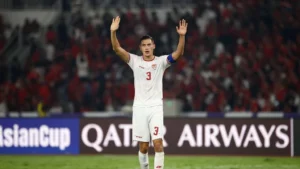
Government officials have consistently underscored the need for a paradigm shift in how Indonesia approaches sports. The Ministry of Youth and Sports has signaled a transition toward a more professionalized, data-driven approach to athlete development. By seeking massive investments for training academies, the government aims to provide a sustainable pipeline for talent, ensuring that Indonesia remains competitive in regional games like the SEA Games and Asian Games, while keeping an eye on the ultimate prize: Olympic gold.
However, challenges remain. Critics argue that despite the fervor of Haornas, grassroots sports infrastructure in rural areas remains underfunded. The gap between elite athletes in major cities and the general population’s access to quality sports facilities is a hurdle that the state is actively trying to address through its recent budget allocations.
Celebrating Haornas 2026
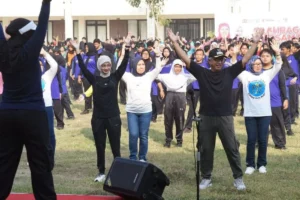
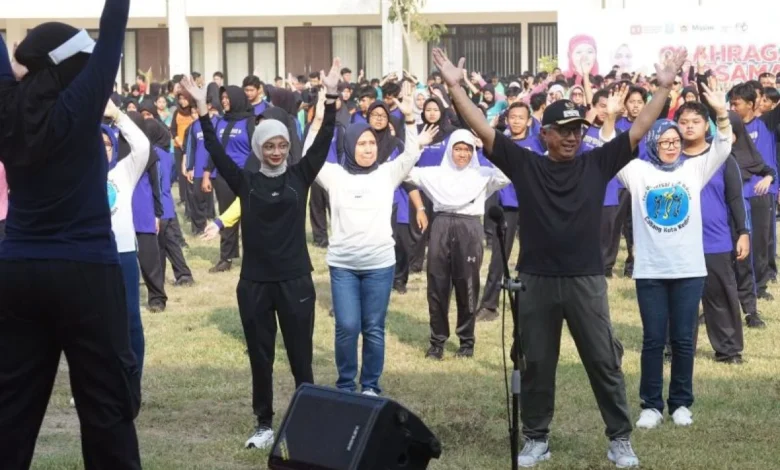
As the nation celebrates the 43rd anniversary of the formal Haornas proclamation in 2026, the spirit remains as relevant as it was in 1948. The commemoration is characterized by a mix of ceremonial activities, community marathons, school sports festivals, and widespread campaigns to promote active living.
For the average citizen, the message of Haornas 2026 is simple: sports are a personal responsibility as much as they are a national pride. Whether through participating in local community events, supporting Indonesian athletes in international circuits, or simply incorporating exercise into one’s daily routine, every citizen contributes to the broader national agenda.
The legacy of that first event in Solo in 1948 serves as a reminder that Indonesia’s sports history is one of triumph over adversity. Today, as the nation looks toward 2028 and beyond, the objective is to translate that historic resilience into modern success—creating a healthier, more competitive, and more unified nation through the universal language of sport. As we look back on the journey from the modest fields of 1948 to the modern, tech-integrated training facilities of today, it is clear that Haornas remains a vital heartbeat of the Indonesian experience, continually pushing the country toward its full potential on the world stage.