Exploring Indonesia at Home: Seven Domestic Destinations That Mirror Iconic International Landscapes Without the Need for a Passport

Indonesia possesses a wealth of tourist destinations boasting natural landscapes that rival some of the most celebrated and picturesque locations across the globe. From sweeping volcanic lakes framed by towering mountain ranges to dense bamboo groves and dramatic river valleys, numerous locations throughout the archipelago bear striking resemblances to iconic international landmarks. These comparative similarities do not imply absolute geographical identity; rather, they stem from shared topographic characteristics, such as distinct mountain formations, unique water coloration, expansive savanna grasslands, or the overall atmospheric ambiance of the region. Over recent decades, travel writers, international media outlets, and prominent public figures have frequently drawn direct parallels between specific Indonesian locales and foreign counterparts, comparing domestic vistas to the alpine charm of Switzerland, the serene traditions of Japan, the dramatic wildlife settings of Africa, or the tropical paradises of Southeast Asia.
This phenomenon of domestic internationalism has gained significant economic and cultural momentum, particularly in the post-pandemic tourism landscape where sustainable, localized travel has taken precedence. For travelers seeking the aesthetic and experiential allure of a foreign holiday without the accompanying financial costs, carbon footprint, and logistical complexities of international air travel, Indonesia offers a diverse array of domestic alternatives. This comprehensive overview examines the top seven Indonesian destinations capable of transporting visitors across the globe through sight and atmosphere alone, supported by geographical insights, entry cost structures, historical contexts, and the broader socioeconomic implications of domestic tourism development.
The Rise of Domestic Alternative Tourism and Economic Implications
The growing trend of marketing Indonesian destinations through international comparisons is far more than a mere promotional gimmick; it is a strategic response to evolving global travel patterns. According to tourism economists and analysts, the domestic tourism market serves as the primary backbone of the nation’s hospitality sector, contributing significantly to regional gross domestic product (GDP) and local employment. When prominent public figures or international travel publications highlight a domestic site—such as equating a Sumatran lake to an Alpine basin—it triggers a localized surge in interest that directly benefits small-to-medium enterprises (SMEs), homestay operators, local guides, and regional transport providers.
Historically, the promotion of Indonesian tourism relied heavily on highlighting distinct, localized cultural heritages. However, the shift toward comparative destination branding began to accelerate in the late 2010s, propelled by the ubiquity of social media platforms such as Instagram and TikTok. Visual-first platforms naturally gravitate toward iconic aesthetic markers—misty mountain backdrops, crystal-clear turquoise waters, and symmetrical bamboo tunnels—making global comparisons an effective tool for capturing consumer attention. From a macroeconomic perspective, encouraging domestic travelers to explore local equivalents of foreign hotspots helps mitigate capital flight, keeping tourism expenditures within the domestic economy. Furthermore, regional governments have increasingly leveraged these comparisons to secure infrastructural development funds, aiming to improve road networks, sanitation facilities, and digital connectivity surrounding these hidden gems.
- Lake Toba, North Sumatra: The Alpine Majesty of Southeast Asia
Nestled within the rugged terrain of North Sumatra, Lake Toba stands as a geological marvel and the largest volcanic lake in the world. Formed by a colossal supervolcanic eruption estimated to have occurred roughly 74,000 years ago, the lake spans an area of over 1,145 square kilometers, with Samosir Island—roughly the size of Singapore’s main island—resting majestically at its center. The sheer scale of the water body, combined with the undulating, pine-forested slopes of the surrounding Bukit Barisan mountain range, creates an atmospheric landscape that bears an uncanny resemblance to the glacial lakes of Central Europe.
Panorama enthusiasts and travel critics have long compared the vistas of Lake Toba to those found in Switzerland, particularly when viewed from vantage points along the northern rim, such as Huta Ginjang in North Tapanuli Regency. Perched at an elevation of approximately 1,095 meters above sea level, Huta Ginjang offers an unobstructed, cinematic panorama of the sprawling Toba caldera, the deep blue expanse of the lake, and the dramatic silhouette of Samosir Island rising from the depths. The cool, crisp highland air further enhances the illusion of being transported to an Alpine resort town.
From a regulatory and operational standpoint, managing a destination of this magnitude requires careful coordination between local governments and regional tourism authorities, such as the Lake Toba Authority Designated Body (BPODT). Access to the Huta Ginjang viewing platform is maintained through a nominal user fee of approximately IDR 6,000 per person, ensuring baseline maintenance and site cleanliness. Officials note that infrastructural investments over the past five years—including the upgrading of Silangit International Airport and improved arterial roadways—have drastically reduced travel times, allowing international and domestic visitors to access the Swiss-like panorama of Toba with unprecedented ease.
- Raja Ampat, Southwest Papua: Indonesia’s Ultimate Maldivian Escape
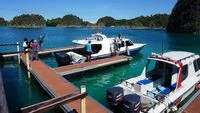
Situated off the northwest tip of Bird’s Head Peninsula in West Papua—within the newly established province of Southwest Papua—Raja Ampat represents the pinnacle of marine biodiversity and pristine tropical geography. Comprising over 1,500 small islands, cays, and shoals surrounding the four main islands of Waigeo, Misool, Salawati, and Batanta, Raja Ampat is globally revered by marine biologists and scuba diving enthusiasts alike. The region harbors roughly 75 percent of all known coral species on Earth and an astonishing array of reef fish, making it a crown jewel of global marine conservation.
Despite its distinct geological origins rooted in tectonic uplift and complex karst limestone formations rather than atoll-building coral rings, the visual aesthetic of Raja Ampat is frequently likened to the Maldives. The comparison is most acutely realized at viewpoints such as Piaynemo or Wayag, where jagged, emerald-green karst islets emerge sharply from kaleidoscopic gradations of turquoise, azure, and cobalt-blue shallow waters. The blindingly white sandbars and translucent visibility that often exceeds 30 meters reinforce the Maldivian illusion.
Operating within a remote and ecologically sensitive marine sanctuary requires stringent regulatory frameworks. To preserve the delicate coral ecosystems from over-tourism, regional authorities enforce an environmental conservation fee system. Local Indonesian tourists are currently assessed a marine park entry fee of IDR 500,000, while international visitors are charged IDR 1,000,000, with all revenues earmarked for coral reef monitoring, community-based conservation programs, and waste management infrastructure. Tourism stakeholders emphasize that while the upfront cost of visiting Raja Ampat is higher than standard domestic destinations, the investment directly safeguards the natural assets that draw comparisons to the world’s most exclusive island retreats.
- Keputih Bamboo Forest, Surabaya: Kyoto’s Serene Tunnel in East Java
Far removed from the volcanic peaks and marine archipelagos, an urban oasis in East Java offers a completely different geographical translation. Located along Jalan Raya Marina Asri in the Keputih district of Sukolilo, Surabaya, the Keputih Bamboo Forest provides an unexpected juxtaposition to the bustling industrial and commercial reality of Indonesia’s second-largest city. What began decades ago as a municipal dumping ground and waste disposal site has undergone a remarkable ecological and urban revitalization, transforming into a dense, flourishing green lung.
The primary attraction of Keputih is its labyrinthine network of pathways flanked by towering, densely clustered bamboo stalks. As sunlight filters through the overlapping canopy of vibrant green leaves, it casts dramatic, shifting shadows across the paved walking trails, creating an ethereal atmosphere that instantly evokes the world-famous Sagano Bamboo Forest in Kyoto, Japan. While the physical scale of the Surabaya site is more modest than its international counterpart, the acoustic dampening effect of the bamboo groves and the visual symmetry of the natural corridors provide an authentic psychological escape.
The socioeconomic accessibility of the Keputih Bamboo Forest is one of its greatest operational strengths. Managed under the auspices of the Surabaya City Government’s park administration division, the site charges no general admission fee, welcoming pedestrians, nature photographers, and families free of charge. Visitors are only subject to nominal municipal parking tariffs—typically IDR 2,000 for motorcycles and IDR 5,000 for automobiles. Urban planners and environmental analysts frequently cite Keputih as a stellar model of successful urban land reclamation, demonstrating how neglected municipal spaces can be transformed into high-value recreational assets that rival international botanical landmarks.
Comparative Analysis and Future Outlook for Domestic Tourism
The existence of these diverse landscapes underscores a broader narrative regarding Indonesia’s tourism potential. As global travel economics shift and travelers increasingly seek high-value, aesthetically rich experiences closer to home, the systematic promotion of domestic "doublets"—locations mirroring international icons—serves as a vital economic buffer. Government bodies, including the Ministry of Tourism and Creative Economy, have increasingly aligned their promotional strategies with this psychological inclination, launching campaigns that encourage citizens to "Explore Indonesia First."
However, analysts caution that balancing aesthetic appeal with ecological preservation remains the ultimate challenge. Sites like Lake Toba and Raja Ampat face ongoing pressures related to waste management, water pollution, and sustainable carrying capacities. For the illusion of international luxury to persist, rigorous infrastructural maintenance and community-led conservation must accompany marketing initiatives.
Ultimately, these seven destinations—and the countless others scattered across the archipelago—prove that experiencing the breathtaking majesty of the Swiss Alps, the tranquil bamboo paths of Kyoto, or the azure lagoons of the Maldives does not necessarily require a transcontinental flight. Through strategic conservation, improved accessibility, and a growing appreciation for local natural heritage, Indonesia continues to redefine what it means to travel the world without ever leaving home.