Exploring Jakarta Beyond Museums: Five Historic Alleyways That Tell the Capital’s Untold Stories


Jakarta is a sprawling metropolis defined by rapid modernization, gleaming skyscrapers, and congested thoroughfares. For many travelers and residents alike, exploring the capital’s rich heritage is often equated with visiting institutional repositories such as the National Museum, wandering through the colonial-era architecture of Kota Tua, or touring the historic maritime hub of Sunda Kelapa. However, beneath the frantic pace of the megalopolis lies a network of narrow alleyways—locally known as gang—that quietly preserve the social, economic, and cultural evolutionary timeline of the city formerly known as Batavia. Away from the multi-lane avenues, these pedestrian-scaled corridors offer a tactile, living museum experience. They feature decades-old family-run culinary institutions, centuries-old places of worship, and architectural remnants from various immigrant communities that laid the foundational stones of modern Jakarta. Historic preservation experts note that while grand monuments tell the political narrative of a nation, these labyrinthine alleys reveal the micro-histories of everyday urban survival, trade networks, and cultural assimilation. Urban planning initiatives in recent years have increasingly turned their attention toward revitalizing these pedestrian corridors, recognizing their immense potential for cultural tourism and heritage conservation. A closer examination of Jakarta’s urban morphology reveals five distinct, highly historical alleyways that offer a fascinating window into the capital’s multicultural past.
Gang Gloria: The Culinary Heart of Glodok’s Chinatown
Nestled deep within the bustling commercial district of Pancoran-Glodok in West Jakarta, Gang Gloria stands as a monumental testament to the endurance of the capital’s Chinese-Indonesian heritage. Measuring a mere four meters in width, this legendary alleyway has functioned as a vital commercial and social artery since the early 20th century, a period when Glodok rapidly evolved into the epicenter of Batavia’s ethnic Chinese community. The alley derives its contemporary moniker from the historic Gloria shopping arcade that once anchored the locality. Despite facing commercial shifts and periods of declining foot traffic in the late 20th century, Gang Gloria underwent a comprehensive governmental and community-led revitalization effort in 2022. This urban renewal project aimed to preserve its historical storefronts while upgrading pedestrian infrastructure. Today, the alley is globally celebrated as a premier heritage food destination. Visitors traversing its narrow corridor are greeted by the aromatic signatures of decades-old culinary institutions. Among them is Kopi Es Tak Kie, a legendary coffee shop established in 1927 that continues to serve its signature black coffee to generations of loyal patrons. Other notable culinary landmarks include Bakmi Amoy, Toko Kawi, and Soto Betawi Nyonya Afung. Historians emphasize that Gang Gloria is far more than a mere collection of eateries; it represents an unbroken chain of generational enterprise and cultural resilience that survived sweeping socio-political transformations throughout Indonesian history.
Gang Kelinci: A Batavia Trading Hub Immortalized in Melody
Situated in the heart of Pasar Baru, Central Jakarta, Gang Kelinci occupies a unique intersection of commercial history, religious heritage, and popular culture. The broader Pasar Baru district traces its lineage back to the early 19th century when the Dutch colonial administration sought to establish a premier shopping quarter outside the decaying walls of old Batavia. As commerce flourished in the surrounding grid, smaller access routes like Gang Kelinci emerged to support the dense influx of merchants, laborers, and shoppers. However, the alley achieved national legendary status during the 1960s, immortalized by the iconic Indonesian pop song "Gang Kelinci," famously performed by singer Lilis Suryani. The track captured the nostalgic, densely populated, yet tight-knit communal atmosphere of Jakarta’s historic residential alleys during the post-independence era. Beyond its cultural footprint in mid-century music, Gang Kelinci serves as a spatial gateway to profound historical treasures. The alley provides direct pedestrian access to Vihara Sin Tek Bio, a revered Chinese temple widely documented to have been established in 1698, making it one of the oldest surviving spiritual structures in the capital. Culinary tourists frequenting the area can also sample historic delicacies such as Bakmi Gang Kelinci and Cakwe Ko Atek. Cultural analysts point out that alleys like Gang Kelinci demonstrate how urban infrastructure can organically double as repositories of intangible cultural heritage, blending commercial utility with enduring artistic and spiritual significance.
Gang Koja: Tracing the Footsteps of the Khoja Community in Pekojan
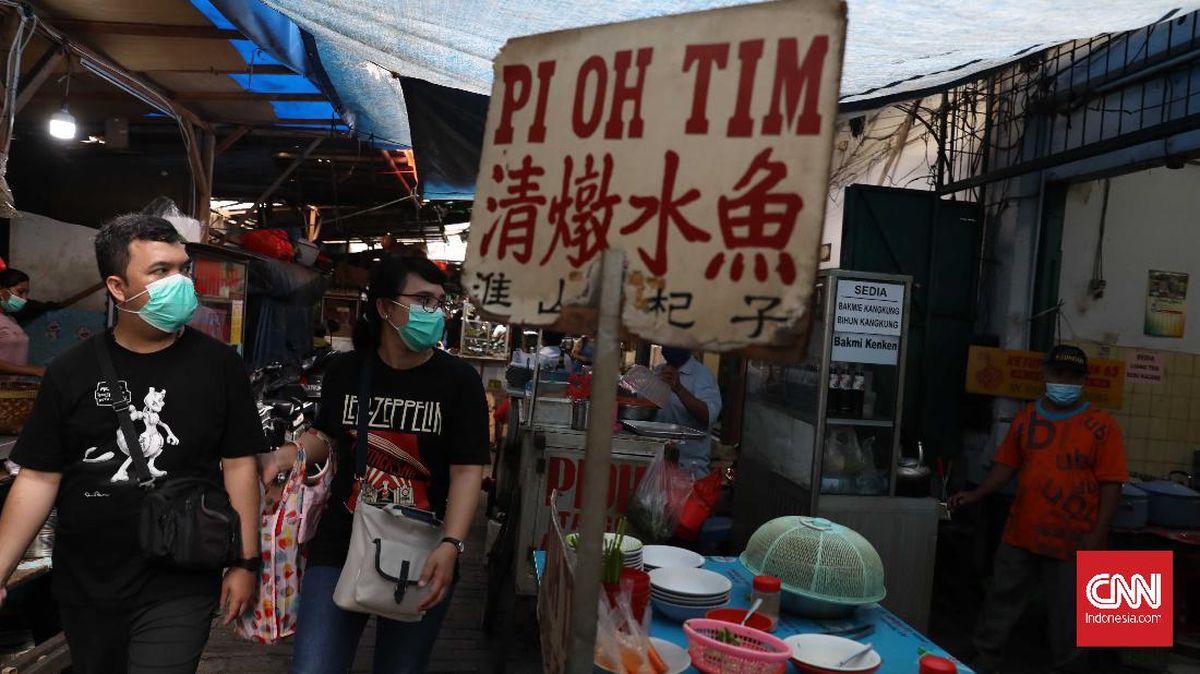
Relocating westward to the district of Pekojan in Tambora, West Jakarta, Gang Koja offers a profound glimpse into Jakarta’s deep-rooted Islamic and South Asian heritage. Although officially re-designated by municipal authorities as Jalan Pengukiran II, the local populace and historical cartographers continue to refer to the corridor by its original designation. The name "Koja" is an enduring linguistic and demographic marker referencing the Khoja, a distinct community of Muslim merchants of Indian descent who migrated to Batavia centuries ago. During the 17th and 18th centuries, Pekojan functioned as a primary settlement zone for various mercantile groups, eventually evolving into Batavia’s original Kampung Arab (Arab Village) during the colonial era. The undeniable crown jewel of Gang Koja is Masjid Al-Anshor. Constructed in 1648, this historic mosque was built by the pioneering Indian Muslim merchant community and remains one of the oldest functioning Islamic houses of worship in Jakarta. Architectural historians note that the mosque exhibits fascinating syncretic design elements, blending traditional Betawi vernacular architecture with Middle Eastern and South Asian stylistic cues. The preservation of Gang Koja and its surrounding structures is vital for academic researchers studying the multi-ethnic demographic composition of early colonial Batavia, proving that the city’s cosmopolitan identity was forged centuries before modern globalization.
Gang Petak Sembilan: Commercial Persistence Behind Glodok Market
Positioned directly behind the modern structures of Pasar Glodok within the broader Pancoran district, Gang Petak Sembilan remains a vibrant vortex of traditional commerce and cultural ritual. The intriguing toponym "Petak Sembilan"—literally translating to "Nine Plots"—is rooted in local oral history and archival records suggesting that the area was originally divided into nine distinct housing plots or tenement blocks. While the physical layout of these original nine plots has long since vanished beneath subsequent waves of urban rebuilding, the historic name persists as an institutional anchor of Jakarta’s Pecinan (Chinatown). Today, the alley functions as a high-density traditional market street where vendors hawk an extensive array of specialized goods, ranging from traditional Chinese medicinal herbs and ritual paraphernalia to festive confectionries and fresh produce. The social and economic pulse of Gang Petak Sembilan accelerates dramatically during major cultural observances, most notably the Lunar New Year (Imlek), when thousands of visitors converge upon the narrow corridor to witness lion dance performances, procure seasonal delicacies, and offer prayers at neighboring temples. Urban sociologists argue that alleys like Petak Sembilan exemplify adaptive urbanism, where traditional spatial economies successfully negotiate and survive within the framework of a modernizing megalopolis.
Gang Jelakeng: Uncovering the Entertainment and Social History of Colonial Tambora
Stretching along the historical banks of the Krukut River in Tambora, West Jakarta, Gang Jelakeng—situated between Jalan Perniagaan Barat, Jalan Toko Tiga, and Jalan Pasar Pagi—presents a complex narrative of social history, urban archaeology, and linguistic evolution. Spanning approximately one kilometer, this narrow pathway is characterized by a dense alignment of aging structural facades. Contemporary urban research published in journals such as Berkala Arkeologi by the National Research and Innovation Agency (BRIN) sheds light on the etymology of the name "Jelakeng." Scholars indicate that the term derives from the Chinese dialect phrase "Jie Lak Keng," historically linked to a cluster of 26 distinct buildings that once dominated the locale. During the colonial era, Jelakeng was deeply integrated into the socio-spatial network of Batavia, functioning not merely as a residential or commercial alley, but as a notable zone associated with urban entertainment, leisure, and cross-cultural socialization. Despite enduring numerous structural modifications, fires, and infrastructural interventions over the centuries, remnants of traditional Chinese-Indonesian shophouse architecture remain visible along the route. Heritage conservationists emphasize that studying micro-locales like Gang Jelakeng is essential for reconstructing the everyday social realities of non-elite populations in historic Batavia, offering a vital counter-narrative to official colonial chronicles.
Implications, Heritage Preservation, and Future Urban Tourism
The renewed public and scholarly interest in these five historic alleyways—Gang Gloria, Gang Kelinci, Gang Koja, Gang Petak Sembilan, and Gang Jelakeng—highlights a significant shift in Jakarta’s tourism and urban development paradigms. For decades, urban renewal strategies in the Indonesian capital prioritized large-scale infrastructural projects, commercial superblock developments, and the clearance of high-density settlements. However, the sustained popularity of pedestrian heritage tourism indicates a growing public appetite for authentic, human-scaled urban experiences that prioritize cultural continuity over sterile modernization. Urban planners and heritage advocates argue that municipal authorities must implement targeted protective regulations for these historic quarters. Measures such as architectural guidelines, improved waste management, enhanced pedestrian safety, and financial incentives for legacy business owners are seen as crucial steps to prevent over-commercialization and displacement. By safeguarding these narrow corridors, Jakarta does not merely preserve physical bricks and mortar; it maintains the living, breathing social fabric that anchors the city’s multicultural identity. As the capital navigates its future as a global metropolis, these historic alleyways serve as a permanent reminder that the soul of Jakarta is found not in its towering skyscrapers, but in the enduring stories whispered within its narrowest streets.