China Rejects US Sanctions Banning All Iranian Airlines Amid Escalating Military Conflict

The geopolitical confrontation between the United States and Iran has escalated dramatically into the aviation and economic sectors, drawing sharp international friction as Washington implements a near-total global ban on Iranian commercial carriers. The sweeping sanctions, announced by the United States Department of the Treasury under the direction of Treasury Secretary Scott Bessent, mandate the complete cessation of operations for all Iranian airlines across the globe, effectively attempting to ground the nation’s commercial fleet entirely. This aggressive economic maneuver has drawn immediate condemnation from Beijing, with the Chinese Foreign Ministry denouncing the measures as unlawful, unilateral, and lacking any grounding in international law or the United Nations Charter.
The unfolding crisis highlights the widening rift between Washington and major global economies over enforcement mechanisms against Tehran. As military hostilities between the United States and Iran continue to destabilize critical maritime and economic corridors, the secondary sanctions targeting international aviation support networks threaten to disrupt global supply chains, travel routes, and diplomatic relations.
Background Context of the US-Iran Conflict
The current aviation blockade cannot be viewed in isolation; it is a direct extension of a prolonged and severe military escalation between Washington and Tehran that erupted into active warfare in late February. Tensions, which had simmered for decades over Iran’s nuclear program, regional proxy activities, and ballistic missile development, boiled over into direct kinetic engagements.
The primary theater of active conflict has centered heavily on the Strait of Hormuz, a critical maritime chokepoint through which a significant portion of the world’s petroleum passes. Commercial shipping, naval patrols, and regional airspaces have faced persistent threats as both nations exchange strikes. In this high-stakes environment, Washington has increasingly weaponized its dominance over the global financial system—particularly the US dollar—to choke off the Iranian state’s remaining avenues of revenue, logistics, and international connectivity. The targeting of Iran’s aviation sector represents the latest phase of a maximum-pressure campaign designed to isolate Tehran completely from the global community.
Chronology of the Latest Aviation Ban and Escalation
The sequence of events leading to the global grounding of Iranian airlines unfolded rapidly within international diplomatic and financial circles:
- Late February: Direct military hostilities commence between the United States and Iran, marked by escalating kinetic exchanges, particularly concentrated around the strategic waters of the Strait of Hormuz.
- Mid-September: US economic intelligence and Treasury officials finalize comprehensive plans to target Iran’s remaining commercial and logistical lifelines, identifying international civil aviation as a vital node for state operations and elite transport.
- September 21: Financial and aviation authorities anticipate sweeping punitive measures as Washington prepares new executive actions regarding international compliance with anti-Iran statutes.
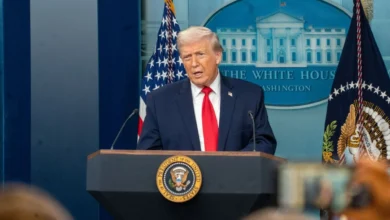
- September 22: US Treasury Secretary Scott Bessent formally announces the comprehensive global ban during a press briefing, declaring that all Iranian airlines will be barred from international operations effective September 23. Concurrently, Beijing issues its formal rejection through Foreign Ministry spokesperson Guo Jiakun, labeling the move illegal.
- September 23: The deadline takes effect, prohibiting Iranian carriers from landing at foreign airports and enforcing strict secondary penalties on any global entity—including fuel suppliers, ground handlers, and ticketing agencies—that facilitates Iranian aviation operations.
The Scope and Enforcement Mechanism of US Sanctions
The measures announced by Treasury Secretary Scott Bessent go far beyond prohibiting Iranian-flagged aircraft from entering United States airspace, a restriction that has existed in various forms for decades. Instead, the new policy constitutes an extraterritorial enforcement action aimed at compelling global compliance through the threat of financial ostracization.
Beginning September 23, the decree mandates that all Iranian airlines cease international operations worldwide. To ensure compliance, the Treasury Department has cast a wide enforcement net that targets international airports, aviation fuel providers, maintenance hubs, ticket distribution networks, and ground service operators across the globe.
"On the 23rd September, all Iranian airlines will be halted in operations around the world," Bessent stated during the policy rollout. Emphasizing the severe secondary enforcement mechanism, he issued a stark warning to international aviation partners: "If they land, you cannot provide fuel, you cannot service the landing, and you cannot sell tickets to them; if you violate this, you will be cut off from the dollar."
By threatening to exclude non-compliant foreign companies, banks, and service providers from the United States financial system and access to transactions denominated in US dollars—the dominant currency of international trade—Washington leverages the supreme utility of the American banking architecture to enforce foreign policy goals universally, regardless of local sovereignty or foreign jurisdictions.
China’s Official Reaction and Legal Stance
The response from Beijing was swift, uncompromising, and deeply critical of unilateral Western enforcement. Speaking at a regular press briefing on Tuesday, September 22, Chinese Foreign Ministry spokesperson Guo Jiakun articulated Beijing’s formal opposition to the measures, highlighting a fundamental disagreement over international legal norms.
"China consistently opposes illegal unilateral sanctions that lack a basis in international law or authorization from the UN Security Council," Guo stated, as cited by Agence France-Presse (AFP).
Beijing’s stance reflects its longstanding foreign policy doctrine, which fiercely defends state sovereignty, opposes the extraterritorial application of domestic US law, and insists that coercive measures against sovereign nations must possess explicit multilateral backing through the United Nations Security Council. China has historically maintained economic and diplomatic ties with Iran, viewing Tehran as a crucial strategic partner in the Middle East and a key participant in energy trade and infrastructure initiatives. By openly rejecting the American decree, Beijing signals its continued refusal to automatically adhere to Washington-led economic isolation campaigns, setting the stage for potential diplomatic showdowns over regulatory compliance.
Global Aviation and Economic Implications
The implementation of a global grounding of Iranian airlines carries profound structural implications for the international civil aviation network, regional economies, and international law.
From an operational standpoint, Iranian commercial carriers—including flag carriers such as Iran Air and various private regional operators—rely heavily on international routes to Europe, Asia, and neighboring Middle Eastern countries for passenger transit, diaspora connectivity, and foreign currency generation. The sudden halt of these routes forces international airports and civil aviation authorities into a complex compliance maze.
Airports across key transit hubs in the Middle East, Central Asia, and parts of Europe and Asia now face an immediate dilemma. Operators must balance their business relationships with Iranian carriers against the existential threat of losing access to the US financial clearing system. For fuel suppliers and ground handlers, the prospect of being cut off from the US dollar effectively forces complete risk aversion, ensuring compliance with Washington’s directives out of self-preservation rather than legal obligation under local laws.
Furthermore, the enforcement of such sweeping secondary sanctions raises significant legal and diplomatic questions among US allies and neutral nations. Nations in Europe and Asia that maintain diplomatic channels with Tehran may find their own corporate entities caught in the crossfire between American financial hegemony and domestic commercial interests. The requirement to deny routine services—such as emergency refueling or basic technical maintenance—also touches upon long-standing international aviation safety norms, traditionally governed by the principles of the Chicago Convention, which prioritize humanitarian and safety considerations for aircraft in flight.
Broader Geopolitical Ramifications and Future Outlook
The collision between US economic warfare and Chinese diplomatic resistance over Iranian aviation underscores the deepening fragmentation of the global economic order. As Washington utilizes financial infrastructure as a primary instrument of national security and warfare, rising powers like China increasingly challenge the legitimacy of these tools.
The ongoing conflict in and around the Strait of Hormuz ensures that the economic squeeze on Iran will remain intense in the foreseeable future. With military operations ongoing since late February, the integration of aviation bans into the broader campaign demonstrates that the United States is willing to disrupt global commercial ecosystems to achieve strategic objectives.
Whether other nations will follow China’s lead in overtly defying these secondary sanctions remains a critical variable. While many foreign corporations will quietly comply with the US Treasury directives to protect their access to the American financial market, the outspoken opposition from Beijing signals that the era of unchallenged US economic dominance faces mounting institutional and geopolitical pushback. As the September 23 deadline takes full effect, the global aviation community braces for a turbulent period of compliance enforcement, shifting flight routes, and heightened diplomatic friction between the world’s leading superpowers.
Related posts: