Russia Holds First Parliamentary Elections Including Annexed Ukrainian Territories Amid International Condemnation

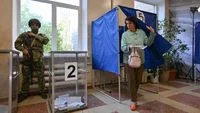
For the first time since the onset of the full-scale conflict, Russia’s parliamentary elections have officially expanded to include residents living in Ukrainian territories that have been unilaterally annexed by Moscow. The nationwide voting process, which commenced on Friday and concluded on Sunday, marks a significant political milestone for the Kremlin as it attempts to solidify administrative control over occupied regions, despite facing fierce condemnation from Kyiv and widespread rejection from the international community.
According to reports from the Associated Press, the inclusion of regions such as Donetsk, Luhansk, Kherson, and Zaporizhzhia into the Russian electoral map represents a crucial strategic move for President Vladimir Putin’s administration. However, the legitimacy of the vote has been entirely undermined by allegations of coercion, the heavy presence of armed military personnel at polling stations, and a total lack of independent oversight. Ukrainian authorities, alongside Western allies, have dismissed the entire electoral exercise as illegal, illegitimate, and a blatant violation of international law.
Background and Territorial Context
The annexation of Donetsk, Luhansk, Kherson, and Zaporizhzhia was officially declared by Moscow in September 2022 following hastily organized, unrecognized referendums. Even at the time of the proclamation, Russian forces did not exercise complete military control over all four regions. Over the subsequent years, the frontline has remained volatile, characterized by intense artillery exchanges, trench warfare, and significant civilian displacement.
Despite the ongoing hostilities and the absence of secure conditions, Russian authorities pushed forward with integrating these territories into the federal election cycle for the State Duma, the lower house of the Russian parliament. Moscow election officials reported that the combined electorate across these four annexed regions exceeds 3.5 million eligible voters.
Because of perceived security risks and logistical nightmares, voting in the annexed territories did not strictly adhere to the traditional three-day window observed within mainland Russia. Instead, local election authorities initiated mobile voting and early polling in these conflict zones as early as late August, allowing officials to travel through neighborhoods accompanied by armed escorts.
Chronology of the Electoral Process
The timeline of the electoral rollout reflects the complex and contentious nature of organizing a state vote in an active war zone. Early voting mechanisms were deployed in the final week of August across remote and frontline settlements in the Donbas and southern Ukraine. These mobile units operated under tight military security, designed to project an image of normalcy and civic participation despite the sounds of nearby artillery.
The official nationwide polling window opened on Friday and ran through Sunday. Throughout this period, state-affiliated media broadcasted scenes of citizens casting ballots, often highlighting elderly residents and local public workers. However, independent monitors and human rights organizations documented a starkly different reality on the ground. Visual documentation from Donetsk showed Russian soldiers carrying automatic weapons stationed directly next to ballot boxes, monitoring citizens as they marked and submitted their voting papers.
Political Rationale and Kremlin Statements
President Vladimir Putin framed the inclusion of the annexed territories as a historic moment of national reunification and political consolidation. In a televised address delivered days before the polls opened, Putin emphasized the strategic and symbolic weight of the vote for the State Duma. He argued that the participation of millions of citizens in these regions served as tangible proof of public support for Moscow’s geopolitical trajectory.
"The choice and determination of our citizens in these territories will once again demonstrate that millions of people stand firmly behind our fighters, and that we are a unified nation," Putin stated.
Political analysts observing the elections from abroad noted that the timing and execution of the Duma vote during a period of active warfare were meticulously designed by the Kremlin to achieve two primary objectives: first, to secure absolute political dominance for the ruling United Russia party, and second, to manufacture a narrative of domestic consensus regarding the prolonged military campaign in Ukraine. By forcing citizens in occupied zones to participate in Russian civic structures, Moscow seeks to accelerate the administrative and psychological assimilation of these territories into the Russian Federation.
Allegations of Coercion and Human Rights Violations
The integrity of the voting process in the occupied regions has been heavily contested by human rights advocates and local civil society groups. Violeta Artemchuk, a coordinator for the Ukrainian human rights organization Donbas SOS, detailed a systematic campaign of intimidation employed by local election committees appointed by Moscow.
According to Artemchuk, election officials frequently conducted door-to-door visits accompanied by armed Russian soldiers and state security agents. Residents who were reluctant to open their doors or participate in the voting process faced severe repercussions. Public sector employees, including teachers, healthcare workers, and municipal staff, were reportedly threatened with immediate termination if they failed to cast a ballot. Furthermore, access to essential state benefits, pensions, and humanitarian aid was allegedly tied directly to electoral participation.
Vulnerable populations, such as retirees and individuals with disabilities who rely entirely on government assistance to survive, faced particularly coercive tactics. Artemchuk noted that those who abstained from voting risked being flagged on official lists as "disloyal" elements, which could result in the immediate revocation of their pensions and humanitarian rations.
International Rejection and Legal Implications
The international community has responded with swift and unified condemnation, refusing to recognize either the validity of the polling or its ultimate outcome. Kyiv’s leadership immediately urged foreign governments and multilateral institutions to reject the legitimacy of the Russian parliamentary vote in occupied territories.
Ukrainian officials and international legal experts pointed out that holding elections on sovereign foreign territory without the consent of the recognized government constitutes a severe breach of the United Nations Charter and international humanitarian law. Volodymyr Fesenko, a political analyst at the Penta Center based in Kyiv, offered a blunt assessment of the exercise, remarking that "holding elections under the barrel of a gun is nothing more than a political farce."
European institutions echoed these sentiments. Christian Wigand, spokesperson for the European Commission, issued a formal statement condemning the vote as yet another egregious violation of international law. He labeled the proceedings as "fake elections" and reaffirmed the European Union’s unwavering stance that neither the process nor the results would ever be recognized by Brussels or its international partners.
Broader Impact and Geopolitical Implications
The successful conclusion of these parliamentary elections in the annexed regions carries profound implications for the trajectory of the conflict and future diplomatic engagements. By embedding Russian political architecture into Donetsk, Luhansk, Kherson, and Zaporizhzhia, Moscow is creating institutional facts on the ground that will complicate any prospective peace negotiations or future territorial settlements.
Domestically, the Kremlin has utilized the election to reinforce its narrative of invulnerability and popular mandate. By integrating millions of new voters—regardless of the methods used to secure their participation—Moscow expands its electoral base and further mutes domestic opposition. The ruling elite successfully utilized the state apparatus to demonstrate that the war effort and its political consequences are deeply interwoven with the daily functioning of the state.
Conversely, the disenfranchisement and coercion experienced by Ukrainian citizens living under occupation deepen the psychological and social chasm between local populations and the occupying administration. The deployment of armed guards at ballot boxes and the punitive measures tied to civic participation underscore a governance model reliant on force rather than consent.
As the geopolitical standoff between Russia and the West persists, the staging of elections in annexed territories serves as a stark reminder of the protracted nature of the conflict. With neither side willing to compromise on territorial integrity and sovereignty, the integration of occupied regions into Russia’s political framework solidifies the dividing lines of a fractured European security architecture for the foreseeable future.
Related posts: