Advanced Driver Assistance Systems are Redefining Automotive Safety Standards in the Modern Era

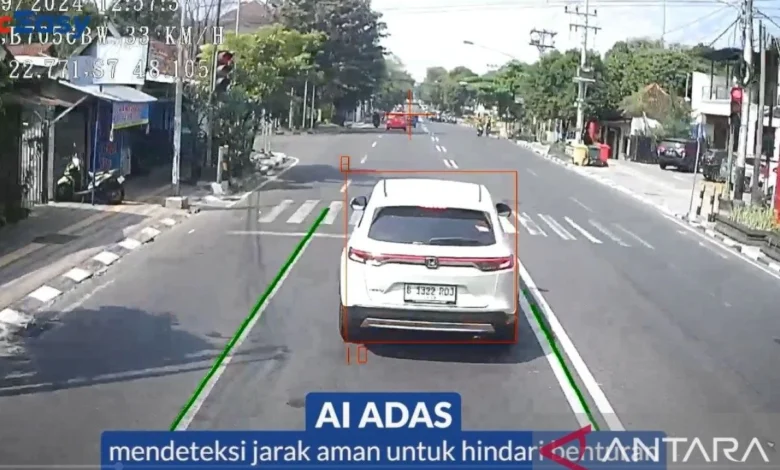
The automotive landscape is undergoing a profound transformation, shifting from a focus on mechanical efficiency and cabin luxury toward the integration of advanced intelligent safety frameworks. Central to this evolution is the Advanced Driver Assistance Systems (ADAS), a suite of technologies designed to mitigate human error—the primary cause of over 90% of traffic accidents globally. As modern vehicles become increasingly connected and sensor-rich, ADAS has transitioned from a premium luxury offering to a foundational expectation for manufacturers and regulatory bodies alike.
This shift is underscored by the 2026 update to the European New Car Assessment Programme (Euro NCAP) protocols. These new standards represent a paradigm shift in how safety is quantified. Rather than merely evaluating how well a chassis absorbs energy during a crash, the new metrics heavily weight a vehicle’s ability to proactively avoid incidents through intelligent intervention.
The Evolution of Proactive Safety Infrastructure
The fundamental premise of ADAS is to augment the driver’s sensory capabilities. By utilizing a complex array of hardware—including long-range radar, high-resolution cameras, ultrasonic sensors, and in some high-end configurations, LiDAR—the vehicle creates a real-time digital map of its immediate environment. This data is processed by onboard computers to perform two critical functions: alert the driver to imminent hazards or intervene mechanically to prevent a collision.
Technological milestones over the last decade have made this possible. The democratization of high-speed microprocessors and sophisticated machine learning algorithms has allowed features that were once experimental to become industry standard. Systems such as Forward Collision Warning (FCW) and Automatic Emergency Braking (AEB) are now common, but the current frontier involves more nuanced technologies like Lane Centering Assistance and Blind Spot Intervention.
Chronology of Safety Regulation and Adoption
The rise of ADAS is not purely a result of market demand but is heavily driven by stringent regulatory benchmarks.
- 2010s: The initial introduction of basic ADAS features, such as rudimentary parking sensors and basic cruise control, began appearing in premium European and American vehicles.
- 2020: The World Health Organization (WHO) and various national transport ministries began emphasizing the "Safe System Approach," which advocates for technology as a pillar of road safety.
- 2023: Euro NCAP announces the 2026 roadmap, signaling a shift toward testing autonomous emergency steering and interactions with vulnerable road users, such as cyclists and pedestrians.
- September 2026: The implementation of the new protocols yields immediate results, with models such as the AION UT, Geely E2, and Leapmotor B05 securing five-star ratings, proving that safety innovation is no longer limited to high-cost luxury manufacturers.
Core Features and Functional Utility
The efficacy of ADAS lies in its ability to operate in scenarios where human reaction times are inherently insufficient. The following features represent the current industry benchmark:
1. Collision Mitigation Systems
Automatic Emergency Braking (AEB) serves as the last line of defense. When sensors detect a stationary object or a sudden deceleration of the vehicle ahead, the system computes the likelihood of impact. If the driver fails to respond, the system initiates partial or full braking pressure. This technology is particularly effective at urban speeds where distracted driving is a frequent catalyst for rear-end collisions.
2. Fatigue Management and Long-Distance Assistance
Adaptive Cruise Control (ACC) and Lane Centering Assistance act as cognitive load reducers. By maintaining a constant, safe distance from the vehicle ahead and keeping the car centered within its lane, these systems allow the driver to remain in a "supervisory" role rather than an "active-control" role during monotonous highway travel. Data suggests that these systems can significantly reduce mental fatigue, which is a leading contributor to single-vehicle accidents.
3. Situational Awareness and Blind Spot Management
Blind Spot Monitoring (BSM) addresses the physical limitations of vehicle design—specifically, the C-pillar obstruction that creates blind zones. More advanced iterations, such as Blind Spot Intervention, apply subtle steering torque to prevent a lane change if a vehicle is detected in the adjacent lane, effectively eliminating a common source of merging accidents.
Data-Driven Implications for the Automotive Industry
The transition toward intelligent safety has had a measurable impact on the global automotive market. According to recent industry reports, the inclusion of ADAS features is now a decisive factor for consumers, often outweighing aesthetic preferences or horsepower figures.
The competitive landscape has shifted toward the East, with manufacturers from China making aggressive moves to integrate sophisticated safety suites into mid-range vehicles. The successful Euro NCAP testing of Chinese models in 2026 demonstrates that the "safety gap" between traditional Western manufacturers and emerging global players is rapidly closing. This creates a cycle of innovation where companies must prioritize R&D in sensor fusion and AI-driven predictive safety to remain relevant.
The Human-Machine Interface (HMI) and the "Semi-Autonomy" Trap
Despite the rapid advancement of these systems, the National Highway Traffic Safety Administration (NHTSA) and other global regulators remain firm on one point: current ADAS implementations are not autonomous. There is a distinct, often misunderstood, gap between "driver assistance" and "autonomous driving."
The SAE International levels of automation provide the framework for this distinction. Most current vehicles operate at Level 1 or Level 2, where the vehicle can steer, accelerate, or brake, but the human must remain fully engaged. The danger, as noted by safety experts, is "automation bias," where drivers become over-reliant on the technology, leading to a degradation in their own situational awareness.
The primary limitation of current technology remains environmental variability. Sensors can be obscured by heavy rain, snow, or mud, and software algorithms may struggle to interpret erratic human behavior or poorly marked road conditions. Consequently, the industry is shifting its messaging toward "Active Safety" rather than "Self-Driving," emphasizing that the technology is a co-pilot, not a replacement.
Future Perspectives: The Role of AI and Infrastructure
Looking toward the end of the decade, the integration of Artificial Intelligence (AI) into ADAS is expected to move beyond simple detection to predictive behavior analysis. Using massive datasets, future systems will be able to anticipate the movement of pedestrians or other vehicles before they manifest, potentially reducing accident rates even further.
Furthermore, the concept of V2X (Vehicle-to-Everything) communication—where cars communicate with traffic lights, road infrastructure, and other vehicles—will likely be the next phase of evolution. This would effectively extend the "eyes" of the vehicle beyond the reach of its onboard sensors, allowing for a holistic view of the traffic ecosystem.
Conclusion
The proliferation of Advanced Driver Assistance Systems marks a significant chapter in automotive history. By codifying safety through standardized testing and incentivizing manufacturers to prioritize accident prevention, the industry is moving toward a future where the frequency of road fatalities is dramatically reduced.
However, the technology remains a tool, not a cure-all. As vehicles become more autonomous in their decision-making, the role of the human operator must shift toward informed supervision. The future of road safety lies in the successful synergy between sophisticated machine perception and responsible human oversight. As Euro NCAP and other global entities continue to raise the bar, it is clear that the standard for a "safe" car is no longer just about survival in a crash—it is about avoiding the crash altogether.
Related posts: