Hari Olahraga Nasional: Reflecting on the Historical Legacy and Future Aspirations of Indonesian Athletics

September 9th serves as a pivotal date in the Indonesian national calendar, marking the annual celebration of Hari Olahraga Nasional (Haornas), or National Sports Day. Beyond the ceremonial festivities, this date encapsulates the resilience, identity, and aspirations of a nation that has utilized physical prowess and competitive spirit to assert its presence on the global stage. As Indonesia commemorates its 43rd official National Sports Day in 2026, the occasion prompts a deeper look into the historical origins of the movement, the evolution of national policy, and the multifaceted role of sports in contemporary Indonesian society.
The Historical Genesis: From Diplomacy to the Playing Field
The roots of Haornas are inextricably linked to the birth of the Pekan Olahraga Nasional (PON), or the National Sports Week. In 1948, just three years after declaring independence and while the young republic was still navigating the complexities of post-colonial sovereignty, Indonesian leaders faced a significant diplomatic hurdle. The country sought to participate in the XIV Olympiad in London, a move intended to signify to the international community that Indonesia was a sovereign, independent state.
However, the international sports community at the time remained hesitant to recognize the credentials of the Indonesian contingent. Faced with administrative obstacles and a lack of formal recognition, the Indonesian government, led by figures dedicated to nation-building, made a strategic pivot. Instead of waiting for external validation, they decided to host a national-scale sporting event to demonstrate internal cohesion and organizational capability.
The inaugural PON was held in Solo, Central Java, from September 9 to September 12, 1948. The choice of date for the opening ceremony—September 9—would later become the bedrock for the national celebration of sports. By organizing this event, Indonesia effectively showcased its ability to manage large-scale logistics and foster national unity during a time of existential threat, cementing the role of athletics as a tool for soft power and national pride.
Formalization and Legislative Milestones
While the spirit of the first PON laid the groundwork, the formalization of September 9 as a national day did not occur until several decades later. The turning point came in 1983, during the tenure of President Soeharto. During the inauguration of the renovated Stadion Sriwedari in Surakarta—the very site of the first PON—the President formally declared September 9 as Hari Olahraga Nasional.
This declaration was later codified into law through Presidential Decree (Keppres) Number 67 of 1985. The decree was not merely symbolic; it was a mandate for the government to foster a systematic and sustainable approach to athletic development across the archipelago. The legal framework provided the necessary structure for the Ministry of Youth and Sports (Kemenpora) to channel funding, infrastructure development, and community engagement programs into a unified national agenda.
Since 1985, the government has utilized Haornas as a platform to introduce various national sports policies. These policies have evolved from focusing solely on elite athlete performance to addressing broader public health concerns and the economic potential of the sports industry.
The Evolution of Sports: Beyond the Podium
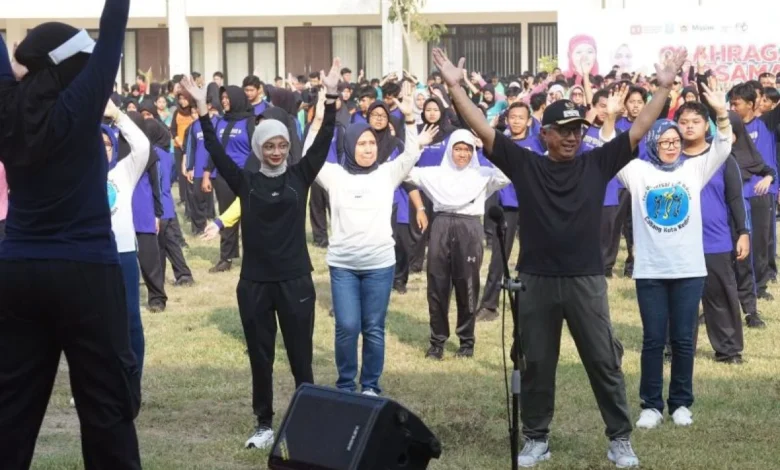
In the modern era, the significance of Haornas has transcended the pursuit of gold medals. While elite performance remains a source of national pride, the current discourse surrounding National Sports Day emphasizes "sporting culture" (pembudayaan olahraga). This initiative, championed by the Ministry of Youth and Sports, aims to integrate physical activity into the daily lives of the average Indonesian citizen.
The shift in perspective is driven by compelling data regarding public health and lifestyle changes. With rising rates of sedentary behavior and non-communicable diseases, the government has recognized that a robust sports culture is essential for human capital development. According to recent ministerial guidelines, sports are now viewed as a critical component of character building, promoting values such as discipline, teamwork, perseverance, and social inclusion.
Furthermore, the economic dimension of sports has gained prominence. The concept of "sport tourism" has become a central pillar of the nation’s economic strategy. Projects such as the development of Sumba Timur as a hub for sport tourism and the integration of infrastructure for events like the upcoming beach PON demonstrate how the sports sector can act as a catalyst for local economic development, hospitality, and infrastructure modernization.
Economic and Infrastructure Challenges
Despite the enthusiasm, the path to becoming a world-class sporting nation is paved with financial and logistical challenges. A recurring topic in recent government discussions is the massive investment required to sustain competitive sports. For instance, the Ministry of Youth and Sports has highlighted the necessity of securing approximately Rp1.5 trillion to establish state-of-the-art training academies and specialized centers.
Such investments are viewed as non-negotiable if Indonesia intends to remain competitive in regional events like the SEA Games and Asian Games, as well as on the global stage of the Olympics. The debate over funding underscores the tension between grassroots community programs and the high-cost requirements of elite performance training. Experts argue that a balanced approach is required: while top-tier academies produce world-class talent, the long-term sustainability of the national sports system depends on widespread participation that can only be achieved through better community facilities and localized school programs.
The Role of Technology and Modernization
As of 2026, the integration of technology into sports has become a focal point of the Haornas agenda. From data analytics in athlete training to the digitization of sports management and ticket systems for major events, the digitalization of the sector is accelerating. The government is encouraging the private sector to participate in the growth of the "sports tech" industry, which could potentially unlock new revenue streams and improve the efficiency of talent scouting across Indonesia’s vast geographical landscape.
The upcoming "Beach PON" in Ancol, scheduled for later this year, serves as a test case for these modernization efforts. By utilizing urban spaces for specialized aquatic and sand-based sports, organizers hope to demonstrate that sports can be adapted to modern urban environments, making physical activity more accessible to city dwellers.
Societal Implications and Future Outlook
The broader implication of Haornas 2026 is a renewed commitment to national unity. In a diverse nation of thousands of islands, sports continue to serve as a rare common language that transcends regional, religious, and socio-economic divides. When an athlete competes under the Indonesian flag, the sense of collective identity is arguably at its strongest.
However, the future of this celebration lies in its ability to adapt to the needs of the younger generation. Generation Z and Alpha are engaging with sports in new ways, shifting from traditional team sports to individual fitness trends, esports, and lifestyle-oriented activities. The challenge for policymakers is to maintain the historical reverence for the PON legacy while ensuring that the definition of "National Sports" remains inclusive and relevant to the digital-first habits of contemporary youth.
As we look toward the next decade, the objectives for Haornas remain clear:
- Infrastructure: Completing the network of national training centers to provide equitable access to quality coaching.
- Health: Reversing the trend of sedentary lifestyles through school-based initiatives and public fitness incentives.
- Professionalization: Converting the sports sector into a professional industry that creates jobs, fosters entrepreneurship, and contributes significantly to the national GDP.
Conclusion
Hari Olahraga Nasional is more than an annual commemorative event; it is a mirror reflecting Indonesia’s progress. From the makeshift spirit of the 1948 PON in Solo to the sophisticated, technology-driven sports ecosystem of 2026, the trajectory of Indonesian sports is one of persistent ambition.
As citizens commemorate the 43rd anniversary of the official inception of this day, they are reminded that the strength of the nation is built on both the physical health of its people and the achievements of its athletes. By fostering a culture where sports are an everyday activity rather than a rare event, Indonesia aims to build a more disciplined, healthy, and unified society. Whether through grassroots community participation or the high-stakes world of international competition, the legacy of September 9 continues to inspire a nation to reach further, run faster, and aim higher. The journey that began in the middle of a struggle for independence remains, fundamentally, a journey toward a stronger, healthier, and more resilient Indonesia.