Lando Norris Ascends to Formula 1 Glory: A Historic Conclusion to the 2025 World Championship Season

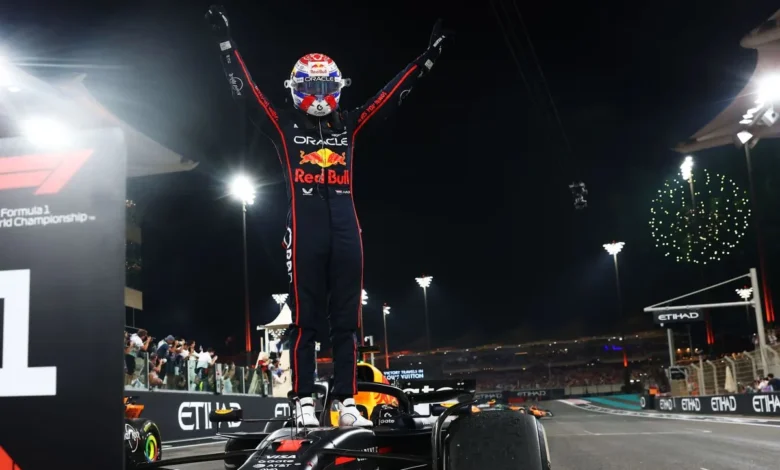
The 2025 Formula 1 World Championship has reached a definitive and historic conclusion, marking the arrival of a new era in motorsport as Lando Norris officially secured his maiden Drivers’ World Championship. The climax of the season at the Abu Dhabi Grand Prix on December 7, 2025, served as the theater for this transition, where the McLaren driver navigated a high-pressure weekend to overcome a formidable challenge from Max Verstappen. By finishing third in the final race of the year, Norris cemented his place in history, accumulating 423 points—a narrow two-point margin over the outgoing champion.
The Decisive Final Act in Abu Dhabi
The atmosphere at the Yas Marina Circuit was electric, characterized by a palpable sense of anticipation. Lando Norris entered the weekend knowing that consistency, rather than a race win, was the key to his destiny. While his teammate, Oscar Piastri, and Red Bull’s Max Verstappen occupied the top two steps of the podium, Norris’s clinical third-place finish ensured that his arithmetic advantage held firm.
The race was a masterclass in tactical driving. Norris opted for a conservative yet aggressive approach, managing tire degradation and defending against the potential threat of late-race surges from the midfield. As the checkered flag waved, the silence of the desert night was broken by the jubilation of the McLaren garage, signaling the end of a long-standing pursuit of a championship title for the Woking-based outfit.
A Season of Unprecedented Rivalry
The 2025 season will be remembered as one of the most balanced in recent history. Following years of Red Bull Racing’s absolute dominance, the technical regulations and internal development cycles saw a resurgence from McLaren. The rivalry between Norris and Verstappen became the defining narrative of the year, characterized by wheel-to-wheel combat in diverse conditions, from the rain-soaked streets of Brazil to the high-speed straights of Spa-Francorchamps.
Norris’s path to the title was far from linear. He endured significant mid-season hurdles, including tactical errors and mechanical reliability concerns that threatened to derail his momentum. However, his ability to bounce back—most notably with his dominant performance during the sprint race at the Brazilian Grand Prix—demonstrated a psychological maturity that experts believe has been the missing piece in his championship quest.
The Historical Context of Formula 1 Supremacy
To understand the significance of Norris’s achievement, one must look at the legacy of the sport. Since the inaugural world championship in 1950, won by Giuseppe Farina for Alfa Romeo, the title has been the ultimate benchmark of excellence. The sport has transitioned through distinct epochs: from the pioneer era of Juan Manuel Fangio, who claimed five titles in the 1950s, to the technical revolution led by figures like Jack Brabham and Jim Clark.
The list of champions serves as a "Who’s Who" of automotive history. The 1970s and 80s introduced the world to the aggressive brilliance of Niki Lauda and the tactical genius of Alain Prost. The 1990s and early 2000s were defined by the unparalleled dominance of Michael Schumacher, who turned Ferrari into a juggernaut. Following the Schumacher era, the sport saw the rise of Sebastian Vettel’s four-year streak with Red Bull, followed by the record-equaling era of Lewis Hamilton, whose seven titles solidified his status as one of the greatest athletes to ever grace the track.
Chronology of Champions: A Legacy of Speed
| Era | Defining Characteristics | Key Champions |
|---|---|---|
| 1950-1960 | Foundation and Reliability | Fangio, Ascari, Brabham |
| 1961-1970 | Technical Innovation | Clark, Graham Hill, Stewart |
| 1971-1980 | Safety Evolution and Aerodynamics | Lauda, Fittipaldi, Hunt |
| 1981-1990 | Turbo Era and Superstars | Senna, Prost, Piquet |
| 1991-2000 | Advanced Electronics | Schumacher, Hakkinen, Damon Hill |
| 2001-2010 | The Ferrari and Renault Dominance | Schumacher, Alonso, Hamilton |
| 2011-2020 | Hybrid Power Units | Vettel, Hamilton, Rosberg |
| 2021-2025 | The Verstappen-Norris Era | Verstappen, Norris |
Official Responses and Competitive Implications
In the immediate aftermath of the Abu Dhabi Grand Prix, the paddock was filled with expressions of mutual respect. Max Verstappen, despite the disappointment of losing his crown, was quick to acknowledge the quality of his rival. "Lando and McLaren have performed at an exceptional level throughout the year," Verstappen remarked in the post-race press conference. "While it is never easy to concede the title, the competition has pushed us to refine our own processes, and that is what makes this sport great."
McLaren Team Principal Andrea Stella praised Norris’s resilience, noting that the title was the culmination of a multi-year restructuring plan. "This is a testament to the dedication of every single person at the factory," Stella stated. "Lando has matured into a complete driver, capable of managing not just the car, but the immense mental pressure that comes with a title fight."
The implications for the 2026 season are profound. With the championship title heading back to Woking, the competitive landscape has shifted. Red Bull will enter the winter testing period with a clear mandate to reclaim the top spot, while Ferrari and Mercedes continue to invest heavily in their own infrastructure to bridge the gap.
Technical Analysis: The McLaren Edge
Norris’s success was largely attributed to the versatility of the McLaren chassis, which proved to be the most "all-around" car on the grid. While Red Bull’s RB21 often excelled in high-speed cornering, the McLaren exhibited a wider operating window, allowing Norris to remain competitive across varying track temperatures and circuit layouts.
Data analytics from the season show that Norris led the field in "average qualifying position" and "points gained in wet-weather conditions." This ability to secure favorable starting positions, coupled with a lack of major errors during the season, provided the foundation for his 423-point tally.
Looking Toward the Future
The 2025 season will be remembered as the year the guard changed. Lando Norris joins an elite fraternity of world champions, becoming the first British driver to claim the title since Lewis Hamilton’s last championship run. For fans of Formula 1, the result provides a sense of renewed hope that the sport is entering a phase of tighter, more unpredictable competition.
As the teams pack up their equipment in Abu Dhabi, the focus shifts to the winter break. The winter months will be characterized by intense simulation work, driver physical training, and the final stages of car development for the upcoming season. With Norris carrying the number one on his car for 2026, the target will be firmly on his back.
The history of Formula 1 is written in the stories of those who rise to the challenge. From Farina’s first win to Norris’s dramatic crowning, the sport continues to be a relentless pursuit of perfection. As the 2025 season closes, the record books are updated, and a new chapter begins—one that will surely be as thrilling as the one that preceded it.
Comprehensive List of Formula 1 World Champions (1950–2025)
- 1950: Giuseppe Farina (Alfa Romeo)
- 1951: Juan Manuel Fangio (Alfa Romeo)
- 1952: Alberto Ascari (Ferrari)
- 1953: Alberto Ascari (Ferrari)
- 1954: Juan Manuel Fangio (Maserati/Mercedes)
- 1955: Juan Manuel Fangio (Mercedes)
- 1956: Juan Manuel Fangio (Ferrari)
- 1957: Juan Manuel Fangio (Maserati)
- 1958: Mike Hawthorn (Ferrari)
- 1959: Jack Brabham (Cooper Climax)
- 1960: Jack Brabham (Cooper Climax)
- 1961: Phil Hill (Ferrari)
- 1962: Graham Hill (BRM)
- 1963: Jim Clark (Lotus Climax)
- 1964: John Surtees (Ferrari)
- 1965: Jim Clark (Lotus Climax)
- 1966: Jack Brabham (Brabham Repco)
- 1967: Denny Hulme (Brabham Repco)
- 1968: Graham Hill (Lotus Ford)
- 1969: Jackie Stewart (Matra Ford)
- 1970: Jochen Rindt (Lotus Ford)
- 1971: Jackie Stewart (Tyrrell Ford)
- 1972: Emerson Fittipaldi (Lotus Ford)
- 1973: Jackie Stewart (Tyrrell Ford)
- 1974: Emerson Fittipaldi (McLaren Ford)
- 1975: Niki Lauda (Ferrari)
- 1976: James Hunt (McLaren Ford)
- 1977: Niki Lauda (Ferrari)
- 1978: Mario Andretti (Lotus Ford)
- 1979: Jody Scheckter (Ferrari)
- 1980: Alan Jones (Williams Ford)
- 1981: Nelson Piquet (Brabham Ford)
- 1982: Keke Rosberg (Williams Ford)
- 1983: Nelson Piquet (Brabham BMW)
- 1984: Niki Lauda (McLaren TAG)
- 1985: Alain Prost (McLaren TAG)
- 1986: Alain Prost (McLaren TAG)
- 1987: Nelson Piquet (Williams Honda)
- 1988: Ayrton Senna (McLaren Honda)
- 1989: Alain Prost (McLaren Honda)
- 1990: Ayrton Senna (McLaren Honda)
- 1991: Ayrton Senna (McLaren Honda)
- 1992: Nigel Mansell (Williams Renault)
- 1993: Alain Prost (Williams Renault)
- 1994: Michael Schumacher (Benetton Ford)
- 1995: Michael Schumacher (Benetton Renault)
- 1996: Damon Hill (Williams Renault)
- 1997: Jacques Villeneuve (Williams Renault)
- 1998: Mika Hakkinen (McLaren Mercedes)
- 1999: Mika Hakkinen (McLaren Mercedes)
- 2000: Michael Schumacher (Ferrari)
- 2001: Michael Schumacher (Ferrari)
- 2002: Michael Schumacher (Ferrari)
- 2003: Michael Schumacher (Ferrari)
- 2004: Michael Schumacher (Ferrari)
- 2005: Fernando Alonso (Renault)
- 2006: Fernando Alonso (Renault)
- 2007: Kimi Raikkonen (Ferrari)
- 2008: Lewis Hamilton (McLaren Mercedes)
- 2009: Jenson Button (Brawn Mercedes)
- 2010: Sebastian Vettel (Red Bull Renault)
- 2011: Sebastian Vettel (Red Bull Renault)
- 2012: Sebastian Vettel (Red Bull Renault)
- 2013: Sebastian Vettel (Red Bull Renault)
- 2014: Lewis Hamilton (Mercedes)
- 2015: Lewis Hamilton (Mercedes)
- 2016: Nico Rosberg (Mercedes)
- 2017: Lewis Hamilton (Mercedes)
- 2018: Lewis Hamilton (Mercedes)
- 2019: Lewis Hamilton (Mercedes)
- 2020: Lewis Hamilton (Mercedes)
- 2021: Max Verstappen (Red Bull Honda)
- 2022: Max Verstappen (Red Bull RBPT)
- 2023: Max Verstappen (Red Bull Honda RBPT)
- 2024: Max Verstappen (Red Bull Honda RBPT)
- 2025: Lando Norris (McLaren Mercedes)