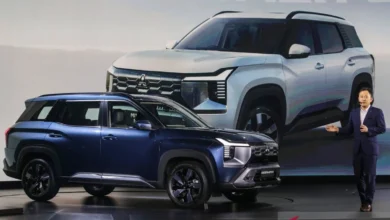
BYD Plans to Showcase Groundbreaking Solid-State Battery Technology in Vehicles Next Year


The global transition toward next-generation electric mobility has reached a critical juncture as major automotive manufacturers accelerate the development of advanced energy storage systems. BYD, one of the world’s leading manufacturers of new energy vehicles and power batteries, has announced ambitious timelines for the implementation of solid-state battery technology. According to executive leadership, the Chinese automotive giant plans to introduce its pioneering solid-state battery technology in a demonstrative vehicle model as early as next year. This strategic milestone marks a significant step forward in the commercialization of an energy storage medium widely regarded as the holy grail of the electric vehicle industry.
The disclosure was made by Stella Li, Executive Vice President of BYD, during an exclusive interview with automotive media outlet Carwow.es in Valencia, Spain. Li’s remarks underscore the aggressive research and development strategy currently underway at BYD, a company that has steadily expanded its footprint from a domestic battery manufacturer into a global automotive powerhouse. While the automotive industry has long debated the commercial viability and timeline of solid-state batteries due to complex manufacturing hurdles and high production costs, BYD’s latest announcement signals that the transition from laboratory research to real-world application is accelerating faster than previously anticipated.
Comprehensive Research and Development Framework
During her conversation with Carwow.es, which was subsequently detailed by industry publication CarNewsChina, Stella Li emphasized the depth and breadth of BYD’s research capabilities. She noted that the company’s vast research and development infrastructure is actively exploring virtually every known battery chemistry and structural configuration.
"Teknologi baterai apa pun, saya jamin Anda akan menemukannya di salah satu sudut R&D BYD; kami sedang memelajarinya," Li stated in the original interview, reflecting the company’s comprehensive approach to energy storage innovation. Translated to the global stage, this philosophy highlights BYD’s intention to maintain technological supremacy across multiple battery chemistries, ranging from standard lithium iron phosphate (LFP) formulations to cutting-edge solid-state architectures.
Li asserted that BYD commands a leading position in both the commercial deployment and technological mastery of solid-state systems. However, the company remains pragmatic about the distinction between a technical demonstration and full-scale commercial manufacturing. The upcoming rollout scheduled for next year is designed primarily as a proof-of-concept vehicle—a foundational step to validate the real-world durability, thermal stability, and operational efficiency of the solid-state cells outside controlled laboratory environments.
Technical and Logistical Roadmap
Despite the excitement surrounding the upcoming demonstration, BYD has exercised caution by withholding specific technical parameters. During the briefing in Valencia, Li did not disclose the official name of the designated vehicle, the exact chemistry of the solid electrolyte, precise energy density metrics, or performance benchmarks such as charging speeds and driving range. Furthermore, a definitive commercial release date or mass-production timeline for retail consumers remains unannounced.
Industry analysts interpret this measured approach as a prudent strategy to manage market expectations. Solid-state batteries, which replace the flammable liquid or gel electrolytes found in conventional lithium-ion batteries with solid materials such as ceramics, polymers, or sulfides, present formidable manufacturing challenges. While these materials promise vastly superior energy densities, enhanced safety profiles by virtually eliminating the risk of thermal runaway, and broader operating temperature ranges, scaling up production while maintaining cost parity with conventional cells remains an ongoing global challenge.
BYD’s internal roadmap suggests that while the upcoming model will serve as a physical testing ground, full-scale mass production for the consumer market will likely require several more years of iterative refinement, supply chain restructuring, and manufacturing optimization.
The Broader Context of Solid-State Battery Development
The announcement by BYD occurs within a highly competitive international landscape. Automakers and specialized battery firms across Asia, Europe, and North America are racing to commercialize solid-state technology. Japanese automotive giants such as Toyota, alongside South Korean conglomerates like Hyundai and Samsung SDI, have all established aggressive timelines for solid-state deployment, generally targeting the latter half of the decade for commercialization.
BYD’s unique advantage lies in its vertically integrated business model. Unlike many legacy automakers that rely heavily on third-party cell suppliers, BYD designs and manufactures its own semiconductors, battery management systems, and chemical cells. This vertical integration provides the company with exceptional agility, allowing it to rapidly transition innovations from its internal research facilities to pilot production lines. By leveraging its proprietary blade battery manufacturing infrastructure, BYD has already established a dominant market share in conventional LFP technologies, generating the capital and technical expertise required to fund long-term projects like solid-state chemistry.
Implications for the Global Electric Vehicle Market
The introduction of a functional solid-state vehicle by BYD, even in a limited demonstrative capacity, carries profound implications for the global automotive market. If BYD successfully demonstrates the viability of its solid-state system next year, it could fundamentally alter consumer perception and industry benchmarks regarding electric vehicle performance.
Chief among the projected benefits of solid-state technology is the dramatic reduction in charging times paired with exponential increases in driving range. Traditional lithium-ion batteries require complex cooling and safety systems to prevent overheating during ultra-fast charging sessions. Solid-state batteries, by virtue of their non-flammable solid electrolytes, can theoretically withstand significantly higher electrical currents, enabling charging speeds that rival the refueling times of internal combustion engine vehicles.
Additionally, the elimination of liquid solvents drastically reduces the physical footprint and weight of the battery pack. This reduction in mass allows for more aerodynamic vehicle designs, improved handling dynamics, and more efficient energy utilization. For a manufacturer like BYD, which exports an expanding lineup of passenger and commercial electric vehicles to Europe, Latin America, Asia-Pacific, and beyond, mastering solid-state technology solidifies its competitive edge against both traditional legacy automakers and emerging EV pure-plays.
Economic and Supply Chain Considerations
Transitioning from conventional lithium-ion production to solid-state manufacturing requires a fundamental overhaul of existing industrial ecosystems. Equipment designed for slurry mixing, coating, and liquid electrolyte filling is largely incompatible with the solid-state fabrication process, which often involves high-temperature sintering, thin-film deposition, or specialized cold-pressing techniques.
As BYD prepares to showcase its solid-state vehicle next year, economists and industry observers will closely monitor how the company plans to finance and execute the eventual transition from prototype lines to giga-scale manufacturing. The initial cost of solid-state batteries is expected to be prohibitively high, restricting their initial deployment to high-end luxury models or specialized commercial applications. Over time, however, economies of scale and supply chain maturation are projected to drive down costs, mirroring the historical price trajectory of conventional lithium-ion batteries over the past two decades.
Conclusion and Future Outlook
BYD’s announcement in Valencia marks a pivotal milestone in the evolution of electric vehicle technology. By committing to a tangible, on-road demonstration of solid-state battery technology next year, the company is signaling its readiness to challenge technological boundaries and maintain its leadership position in the global transition toward sustainable mobility.
While substantial hurdles remain before solid-state batteries achieve widespread commercial viability and consumer affordability, BYD’s aggressive R&D strategy and vertical integration provide a formidable platform for success. As the automotive world awaits the official unveiling of BYD’s milestone vehicle next year, the broader industry moves one step closer to realizing the ultimate vision of safer, faster-charging, and longer-lasting electric transportation.