Beyond Excel SQL and Python: Why Professional Certification is the New Standard for Data Analyst Recruitment

In the modern digital economy, the sheer volume of data generated by businesses has transformed the Data Analyst role from a niche technical position into a foundational pillar of corporate strategy. However, a growing trend in the Indonesian labor market suggests that proficiency in industry-standard tools—such as Microsoft Excel, SQL, and Python—is no longer a sufficient guarantee of employability. As competition for high-level data roles intensifies, recruiters are increasingly prioritizing candidates who possess verified, nationally recognized credentials over those with only self-taught portfolios.
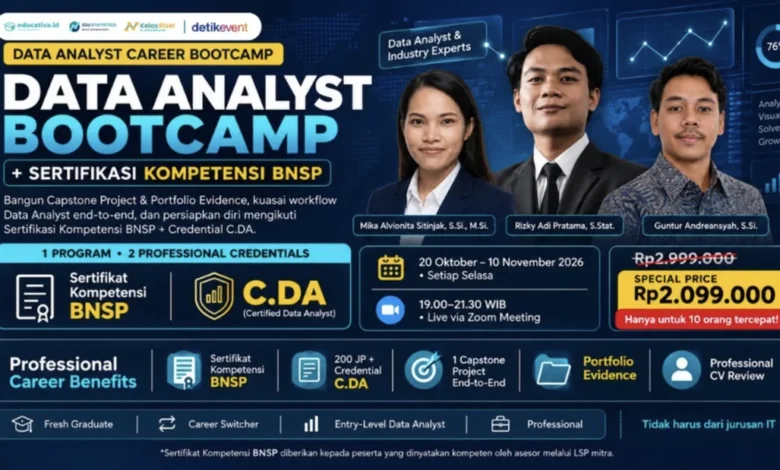
The disconnect between technical training and recruitment standards has prompted a shift in how educational programs are structured. Addressing this critical gap, a new Intensive Bootcamp focused on Data Analyst certification through the National Professional Certification Agency (BNSP) has been launched. This program is specifically designed to align participant output with the rigorous standards required for official competency testing, moving beyond theoretical instruction to provide a bridge toward professional validation.
The Evolution of Data Analytics Recruitment
The current recruitment landscape for data professionals is characterized by a "screening paradox." While thousands of graduates complete online courses every month, Human Resources (HR) departments report a consistent struggle to verify the quality of these applicants. A standard resume listing "Python" or "Tableau" skills is now viewed with a degree of skepticism unless supported by tangible, validated evidence.
According to recruitment data trends from 2024, HR managers in the tech and finance sectors spend an average of only six to ten seconds on the initial CV screening process. During this brief window, certifications issued by reputable bodies—particularly those aligned with national competency standards like the BNSP—act as a primary filter. Candidates lacking this "stamp of approval" often fail to reach the interview stage, regardless of their actual proficiency.
Bridging the Competency Gap
The intensive bootcamp, scheduled to commence on October 20, 2026, aims to solve this verification crisis. Unlike traditional bootcamps that focus exclusively on project-based learning, this program is explicitly mapped to the criteria of the BNSP Competency Exam. This ensures that the documentation and portfolios created during the training are not only representative of professional work but are also fully compliant with the specific requirements demanded by government-sanctioned assessors.
The program is structured across four intensive live sessions, conducted via Zoom, covering the full lifecycle of a data project:
- Business Requirement and Data Acquisition: Understanding how data fits into the broader corporate strategy.
- Exploratory Data Analysis (EDA): Mastering the art of cleaning and interpreting raw datasets.
- Data Modeling and Business Intelligence Dashboarding: Translating complex findings into actionable visual insights for stakeholders.
- Quality Assurance and Mock Assessment: Preparing participants for the psychological and technical rigors of the final certification exam.
Chronology and Program Logistics
The program is designed for rapid skill acquisition and professional readiness. The timeline for the upcoming cohort is as follows:
- Commencement Date: October 20, 2026.
- Session Structure: Four consecutive Tuesdays.
- Daily Hours: 19:00 to 21:30 WIB.
- Final Session: November 10, 2026.
By limiting the program to four weeks of intensive, high-stakes instruction, the curriculum maintains a laser focus on the outcomes required for the "Certified Data Analyst" designation. The program concludes with a simulated mock assessment, which provides participants with a safe environment to identify knowledge gaps before the formal examination process.
The Value of BNSP Certification
The BNSP (Badan Nasional Sertifikasi Profesi) is the authoritative body in Indonesia responsible for the implementation of competency certification. A certificate from this agency carries a weight that private, non-accredited certificates cannot match.
Industry analysts observe that companies in the banking, logistics, and retail sectors are increasingly mandating BNSP-certified personnel for roles involving sensitive data interpretation. This is because the certification serves as a third-party validation that the professional meets a baseline standard of quality and ethics defined by the state. Participants in this bootcamp will receive a 200-hour training certificate and, crucially, access to the LSP (Professional Certification Institute) mitra examination, complete with a one-time retake guarantee. This safety net reduces the barrier to entry for career switchers who may be intimidated by the stakes of professional certification.
Target Demographics and Industry Impact
The demand for this level of training spans several professional cohorts:
- Final-Year Students: Seeking to differentiate themselves in a saturated entry-level job market.
- Fresh Graduates: Attempting to transition from general academic theory to industry-specific application.
- Career Switchers: Professionals from non-technical backgrounds who need a credible pathway to enter the data sector.
- Current Professionals: Those aiming to ascend to senior or lead data roles where evidence of leadership and quality control is required.
The broader implication of this shift is a professionalization of the data industry in Indonesia. As more institutions adopt the BNSP model, the market is likely to see a decrease in "skill inflation," where candidates overstate their abilities on resumes. Employers will benefit from a more standardized talent pool, reducing the costs associated with hiring unqualified staff and subsequent retraining.
Professional Analysis: The Future of Data Talent
The success of such bootcamps suggests that the future of technical education lies in the integration of certification. In the past, the "portfolio" was a loose collection of GitHub repositories. In the future, the "portfolio" will likely be a verified digital credential linked to a national database of certified professionals.
For businesses, the impact is twofold. First, it streamlines the hiring process by providing an objective benchmark for competence. Second, it ensures that data-driven decisions—which are increasingly critical for profitability and risk management—are made by individuals who have demonstrated a standardized understanding of data integrity, privacy, and analytical accuracy.
As the industry moves toward 2027 and beyond, the expectation is that self-taught skills will remain a prerequisite, but professional certification will be the requirement for advancement. The introduction of programs that align technical training with the BNSP standard represents a significant maturation of the Indonesian labor market.
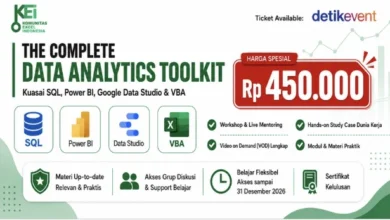
For those interested in navigating this shift, the combination of technical training and official certification represents the most viable path to securing a sustainable career in the high-demand field of data analytics. Prospective applicants are encouraged to review the full details and registration criteria via the official event portal at detikevent.
In conclusion, the transition from being a "data enthusiast" to a "certified data professional" requires a disciplined approach to both skill acquisition and the navigation of formal certification processes. By bridging the gap between theoretical knowledge and professional standardization, these intensive programs are setting the tone for a new generation of data talent, ensuring that Indonesian professionals remain competitive in an increasingly globalized and data-centric economy. As the demand for decision-making based on high-quality data continues to outpace the supply of certified professionals, those who secure these credentials early will likely find themselves at a distinct advantage in the years to come.