Prabowo Appoints Suahasil Nazara as New Finance Minister Replacing Purbaya Yudhi Sadewa Amid Strategic Cabinet Reshuffle

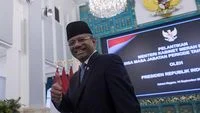
The Indonesian political and economic landscape experienced a significant shift on Monday, September 14, 2026, when President Prabowo Subianto officially inaugurated Suahasil Nazara as the new Minister of Finance. The swearing-in ceremony took place at the State Palace in Jakarta, enacted under Presidential Decree Number 97P of 2026. Suahasil steps into the role immediately, succeeding Purbaya Yudhi Sadewa, who was relieved of his duties on the very same day.
This high-level transition at the Ministry of Finance has drawn intense scrutiny from financial markets, economists, and the public alike. As Southeast Asia’s largest economy navigates complex global macroeconomic challenges, fiscal policy adjustments, and domestic revenue targets, the leadership change at the helm of the country’s financial sector signals a potential strategic realignment in the administration’s fiscal governance.
The Transition and Political Background
Suahasil Nazara is by no means a newcomer to the inner workings of Indonesia’s financial administration. Prior to his elevation to the cabinet’s top economic post, Suahasil served as the Deputy Minister of Finance starting in October 2019. His tenure as deputy spanned two distinct presidential administrations, demonstrating his institutional continuity and technical reliability through the later years of President Joko Widodo’s administration and into the current administration of President Prabowo Subianto.
His extensive institutional memory within the Ministry of Finance is viewed by many market analysts as a stabilizing factor. Having worked closely with former Finance Minister Sri Mulyani Indrawati and subsequently with Purbaya Yudhi Sadewa, Suahasil possesses a deep, granular understanding of the state budget (APBN), tax reform initiatives, fiscal decentralization, and debt management strategies.
Conversely, the departure of Purbaya Yudhi Sadewa marks a notably brief tenure. Purbaya, who had taken over the reins with high expectations regarding economic stimulation and structural acceleration, found his tenure cut short amid shifting policy demands. While the administration has framed the reshuffle as a routine exercise aimed at optimizing governmental performance, the abruptness of the transition underscores the high-pressure environment surrounding Indonesia’s fiscal management.
Comparative Wealth and Asset Analysis: Suahasil Nazara versus Purbaya Yudhi Sadewa
In accordance with transparency regulations for public officials in Indonesia, both figures’ financial profiles are a matter of public record through the State Officials Wealth Report (LHKPN). Disclosures submitted on February 27, 2026, provide a detailed look into the personal assets of both the incoming and outgoing ministers, highlighting distinct differences in their asset portfolios, particularly concerning vehicular possessions and net worth.
Suahasil Nazara’s Asset Portfolio
According to his LHKPN filing submitted on February 27, 2026, during his tenure as Deputy Minister, Suahasil reported a total net worth of Rp138.1 billion. Within this comprehensive wealth portfolio, his collection of motorized vehicles is valued at a total of Rp1.228 billion. The portfolio comprises four four-wheeled vehicles, with no motorcycles registered under his name. The specific breakdown of Suahasil’s vehicle collection includes:
- A 2013 Toyota Camry Sedan, acquired through self-earnings, valued at Rp160 million.
- A 2019 Honda Jazz Sedan, acquired through self-earnings, valued at Rp220 million.
- A 2022 Honda HR-V SUV, acquired through self-earnings, valued at Rp330 million.
- A 2019 Toyota Alphard Minibus, acquired through self-earnings, valued at Rp518 million.
Suahasil’s automotive holdings lean heavily toward practical, administrative-style sedans and family utility vehicles, reflecting a relatively conservative personal asset allocation when compared to his overall multimillion-dollar net worth, which largely encompasses real estate and financial investments.
Purbaya Yudhi Sadewa’s Asset Portfolio
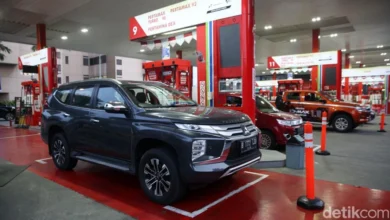
In contrast, outgoing Minister Purbaya Yudhi Sadewa presents a different asset distribution profile. Based on his LHKPN report submitted on the exact same date—February 27, 2026—Purbaya’s total vehicle collection is valued significantly higher at Rp3.606 billion, encompassing a broader variety of transport modes. Purbaya’s vehicle inventory includes:
- A 2008 Mercedes-Benz Sedan, acquired through self-earnings, valued at Rp200 million.
- A 2019 BMW SUV, acquired through self-earnings, valued at Rp1.6 billion.
- A 2019 Toyota Alphard Minibus, acquired through self-earnings, valued at Rp1 billion.
- A 2019 Peugeot 5008 SUV, acquired through self-earnings, valued at Rp730 million.
Unlike Suahasil, Purbaya also incorporates two motorcycles into his official registry:
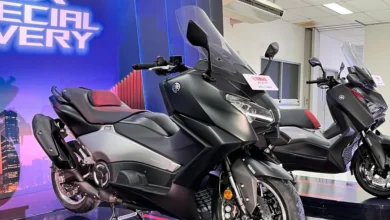
- A 2018 Yamaha XMAX maxi-scooter, acquired through self-earnings, valued at Rp55 million.
- A 2021 Honda Vario 125 scooter, acquired through self-earnings, valued at Rp21 million.
Despite Purbaya holding a more extensive and higher-valued garage of vehicles totaling Rp3.606 billion compared to Suahasil’s Rp1.228 billion, an inverse relationship appears when looking at their total declared net worth. Purbaya’s total wealth is recorded at Rp57.4 billion, which places him well below Suahasil’s total declared net worth of Rp138.1 billion. This divergence illustrates that vehicular asset accumulation does not directly correlate with overall net wealth among high-ranking Indonesian state officials, as real estate holdings, land assets, securities, and cash equivalents form the primary pillars of their financial standing.
Chronology of the Cabinet Level Shake-Up
The timeline leading up to Suahasil’s appointment reflects the rapid pace of executive decision-making under the Prabowo administration:
- Early 2026: Economic pressures mount as global supply chain realignments, currency fluctuations, and domestic subsidy demands place heavy burdens on the state budget.
- February 27, 2026: Both Suahasil Nazara (then Deputy Minister) and Purbaya Yudhi Sadewa submit their mandatory LHKPN periodic disclosures, locking in their asset transparency records for the fiscal year.
- Monday, September 14, 2026: President Prabowo Subianto executes a surprise mid-day cabinet restructuring. Purbaya Yudhi Sadewa is relieved of his ministerial duties, and Suahasil Nazara is formally appointed and inaugurated as the new Minister of Finance at the State Palace under Presidential Decree Number 97P of 2026.
- Post-Inauguration (September 14, 2026 onwards): Suahasil assumes immediate control of the Ministry of Finance, initiating hand-over protocols and briefing sessions to maintain continuity in state financial operations without market disruption.
Macroeconomic Implications and Market Reactions
The appointment of Suahasil Nazara has elicited cautious optimism from macroeconomic analysts and financial institutions. Transitioning a seasoned technocrat who has spent years inside the bureaucracy into the top ministerial position minimizes the steep learning curve typically associated with external political appointees.
Indonesia currently faces a delicate balancing act. On one hand, the government is committed to ambitious national development programs, infrastructure continuity, and social safety net expansions initiated under President Prabowo’s platform. On the other hand, maintaining strict fiscal discipline—specifically adhering to the statutory budget deficit ceiling of 3 percent of Gross Domestic Product (GDP)—remains paramount to preserving investor confidence and sovereign credit ratings.
During his years as Deputy Minister, Suahasil was widely recognized for his rigorous analytical approach to budget allocation, tax collection enhancement, and prudent debt management. Market watchers anticipate that his leadership will ensure continuity in regulatory frameworks, particularly concerning tax administration reforms implemented through the core tax system modernization project and ongoing efforts to broaden the domestic tax base.
Furthermore, Suahasil’s established working relationships with international financial institutions, central bank officials, and domestic banking leaders position him well to navigate potential external economic headwinds. As global interest rate dynamics and geopolitical tensions continue to influence emerging market capital flows, having a familiar and trusted technocrat at the financial helm provides a reassuring signal to foreign investors.
Official Responses and Outlook
While formal policy statements from the newly inaugurated minister are slated to be delivered following his first official coordination meeting with ministry echelon officials, preliminary reactions from legislative members and economic observers emphasize the need for immediate stability.
Lawmakers from key parliamentary budgetary commissions have noted that Suahasil’s comprehensive familiarity with ongoing fiscal discussions in the House of Representatives (DPR) will facilitate a smoother legislative process during upcoming state budget evaluations. The immediate priority for the new Minister of Finance will be steering the finalization of fiscal targets, managing debt servicing costs efficiently, and ensuring that government spending effectively stimulates grassroots economic growth while safeguarding macroeconomic resilience.
As Suahasil Nazara takes command of the Ministry of Finance, attention will now shift to whether his technocratic expertise can successfully harmonize President Prabowo’s expansive socioeconomic agendas with the rigid discipline required to keep Indonesia’s financial foundation secure in an unpredictable global economy.
Related posts: