Mengenang Kembali Pierre Cardin dan Karya Legendarisnya Melalui Pembukaan Museum Baru di Venesia


The fashion world prepares to honor the indelible legacy of one of its most visionary pioneers as the official Pierre Cardin Museum opens its doors in Venice, Italy. Located within the opulent walls of the Palazzo Bragadin—a futuristic sanctuary that served as the designer’s private residence for nearly four decades—the museum officially welcomes the public following an exclusive masquerade gala held earlier in September. This landmark cultural exhibition houses over 350 works, including historic and contemporary creations, original fashion sketches, haute couture masterpieces, furniture pieces, lighting fixtures, and avant-garde design objects spread across a sprawling thousand-square-meter expanse.
Main Facts and Opening Exhibition Overview
The inauguration of the Pierre Cardin Museum marks a significant milestone in fashion history, permanently enshrining the contributions of the Italian-born, French-raised designer who passed away in December 2020 at the age of 98. Curated to reflect his revolutionary approach to design, the primary exhibition hall features approximately 130 meticulously preserved garments spanning a remarkable timeline from 1951 to 2018.
Among the standout pieces on display are a 1991 black velvet evening gown accented with dramatic, oversized taffeta hip structures, and an emerald-green knitted tunic from 1971 complete with a striking side-tied belt. Visitors can also admire a 1963 silver silk sleeveless mini dress featuring a honeycomb pattern accompanied by a neck ribbon in lieu of a traditional collar, as well as a vibrant pumpkin-orange gown from 1993 characterized by spectacular cascading pleats.
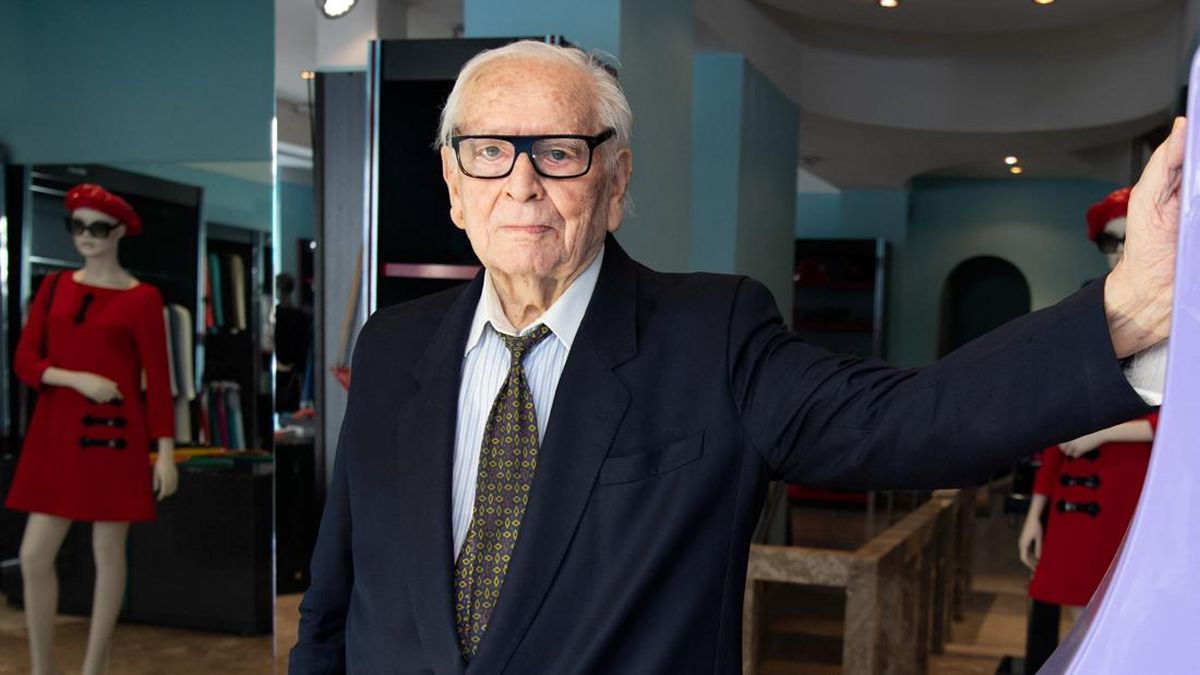
Rodrigo Basillicati-Cardin, the designer’s nephew and current Chief Executive Officer of the Pierre Cardin label, emphasizes the deeply architectural nature of his uncle’s work. Describing Cardin’s philosophy, Basillicati-Cardin notes that his predecessor viewed garments primarily as sculptural art rather than fluid textiles. Throughout his legendary career, Cardin famously remarked on his distinct aesthetic vision, stating his desire for people to recognize his creations from a distance of ten meters based purely on their structural integrity and bold silhouettes.
Chronology and Historical Context
Pierre Cardin’s journey to becoming a global fashion titan is deeply rooted in innovation, resilience, and a profound break from traditional industry norms. Before establishing his independent fashion house in 1950, Cardin honed his craft under the mentorship of elite couturiers such as Christian Dior and Elsa Schiaparelli. His early exposure to high fashion laid the technical foundation for his subsequent experimentation with geometric patterns, synthetic fabrics, and unisex silhouettes that defined the futuristic aesthetic of the 1960s.
A critical turning point in Cardin’s career occurred in 1951, just four months after launching his own house. Commissioned to design costumes for the legendary "Ball of the Century"—a lavish Venetian masquerade organized by art collector and socialite Charles de Beistegui—Cardin faced the daunting task of producing 30 elaborate costumes with a tiny workshop team of only six seamstresses. The successful execution of this commission, which included dressing eccentric figures like Salvador Dalí, propelled Cardin into elite social circles and established his international reputation. The recent masquerade gala held at Palazzo Bragadin served as a deliberate homage to this foundational career-launching moment 75 years prior.
In 1959, Cardin made a radical departure from industry convention by introducing a commercial ready-to-wear (prêt-à-porter) collection aimed at democratizing fashion. While this populist move initially resulted in his temporary expulsion from the elite French Chamber of Syndicalism for Haute Couture, the commercial triumph of the strategy ultimately forced competitors to follow suit, fundamentally reshaping the global fashion economy. Furthermore, Cardin pioneered global brand licensing, attaching his name to an unprecedented array of consumer products ranging from accessories to automobiles. While this expansive licensing strategy occasionally diluted the immediate exclusivity of the core luxury brand, it cemented Cardin’s status as a visionary businessman who foresaw the modern global branding model decades ahead of his time.

Supporting Data and Insider Perspectives
The museum project and its accompanying archival preservation efforts offer a rare, intimate look into the daily operations and rigorous standards of the Cardin empire. Renee Taponier, a loyal associate who began working alongside the designer at the tender age of 14, played an instrumental role in preparing the Venice exhibition. Having dedicated more than six decades to the organization, Taponier’s responsibilities spanned retail management, garment construction, and runway show coordination.
Reflecting on his decades-long collaboration with the late master, Taponier highlights Cardin’s unwavering commitment to excellence. Operating with notoriously high standards, Cardin simultaneously fostered deep loyalty among his staff by providing mentorship and professional purpose. The Palazzo Bragadin itself functioned as more than a residence; it was a psychological and creative retreat where Cardin could escape the frantic pace of the international fashion capitals to rejuvenate his artistic imagination.
Broader Impact and Implications
The establishment of the Pierre Cardin Museum in Venice carries profound implications for cultural tourism, fashion historiography, and the preservation of mid-century design heritage. As contemporary fashion increasingly looks backward to draw inspiration from the mid-to-late 20th century, the permanent exhibition provides scholars, designers, and enthusiasts with a comprehensive archive to study the origins of modern futuristic and unisex apparel.
By anchoring this cultural repository in Venice—a city historically tied to Cardin’s breakthrough moment—the brand successfully bridges its illustrious past with its contemporary identity under Rodrigo Basillicati-Cardin’s leadership. The museum not only safeguards over 350 physical artifacts of cultural significance but also reasserts Cardin’s pivotal role in transitioning the fashion industry from an exclusive, closed-door artisan craft into a globally accessible, multi-billion-dollar commercial enterprise. Through this meticulous curation of architectural garments and historical ephemera, the legacy of Pierre Cardin remains firmly embedded in the collective consciousness of modern design.
Related posts: