Toyota Hilux Rangga Redefines Indonesia Light Commercial Vehicle Market with Extensive Customization and Competitive Pricing

The Indonesian light commercial vehicle sector has witnessed a significant transformation with the introduction of the Toyota Hilux Rangga, a versatile pickup truck engineered to cater to the diverse and evolving demands of modern businesses, micro, small, and medium-sized enterprises (MSMEs), and public service operations. Positioned strategically below the traditional Toyota Hilux 4×4, the Hilux Rangga arrives as a dedicated multi-purpose commercial solution rather than a conventional lifestyle or heavy-duty off-road vehicle. PT Toyota-Astra Motor (TAM), the official distributor of Toyota vehicles in Indonesia, has emphasized that this new vehicle is designed from the ground up to function as a customizable business ecosystem, capable of adapting to logistical, agricultural, municipal, and industrial requirements.
Since its market introduction, the vehicle has generated considerable interest among commercial fleet operators and independent entrepreneurs alike. By combining a robust chassis, high payload capacity, and a wide array of specialized conversion possibilities, the Hilux Rangga has quickly established itself as a formidable competitor in Indonesia’s fiercely contested light commercial vehicle (LCV) segment. Industry analysts note that its arrival aligns with broader economic trends in Southeast Asia’s largest economy, where digital transformation, logistics expansion, and localized manufacturing require highly adaptable and cost-effective commercial transport solutions.
Evolution and Strategic Market Positioning
The development and deployment of the Hilux Rangga represent a culmination of Toyota’s extensive global experience in commercial vehicle manufacturing, tailored specifically to the operational realities of the Indonesian market. The vehicle’s conceptual lineage traces back to Toyota’s long-standing heritage of dependable utility vehicles, designed to offer maximum uptime, ease of maintenance, and high durability under demanding climatic and infrastructural conditions.
While the flagship Toyota Hilux has long dominated the rugged 4×4 market segment—catering heavily to mining plantations, government agencies, and adventure-seeking consumers—the Hilux Rangga addresses a different market gap. It is configured exclusively with rear-wheel-drive (RWD) layouts, allowing Toyota to optimize production costs and pass those savings directly to commercial buyers. According to TAM leadership, the decision to omit a 4×4 variant for the Rangga was intentional, preventing internal product cannibalization while maintaining a clear demarcation between the two nameplates, despite both sharing foundational structural and chassis architecture.
The vehicle is currently imported as a completely built-up (CBU) unit from Toyota’s advanced manufacturing facilities in Thailand before being distributed across the Indonesian archipelago. Priced competitively from Rp194.3 million to Rp309.6 million on-the-road, the Hilux Rangga bridges the gap between traditional entry-level pickup trucks and more expensive light trucks, offering businesses a scalable asset that can expand alongside their commercial operations.
Engineering Specifications and Performance Capabilities
Underneath its utilitarian exterior, the Toyota Hilux Rangga packs dependable mechanical engineering designed to endure the punishing stop-and-go conditions of urban traffic as well as the unpaved terrains of rural logistical routes. Buyers are offered a choice of two robust internal combustion engines that fully comply with stringent EURO 4 emissions standards, reflecting Toyota’s commitment to environmental sustainability without compromising power delivery.
The diesel variant is powered by the proven 2GD-FTV 2.393 cc, 4-cylinder engine equipped with a Variable Nozzle Turbocharger (VNT) and Common-rail fuel injection technology. This powerplant generates a maximum output of 149 PS at 3,400 rpm. Torque delivery varies depending on the chosen transmission: the 5-speed manual transmission delivers 343 Nm of torque between 1,400 and 2,800 rpm, whereas the more relaxed 6-speed automatic transmission unleashes an impressive 400 Nm of torque across a band of 1,600 to 2,000 rpm, making it exceptionally well-suited for heavy hauling in congested urban settings.
Alternatively, commercial operators seeking a gasoline-powered alternative can opt for the 1TR-FE 1.998 cc, 4-cylinder engine featuring Toyota’s Dual VVT-i system. This engine produces 139 PS of power at 5,600 rpm and a peak torque of 183 Nm at 4,000 rpm, paired exclusively with a 5-speed manual transmission. This variant appeals particularly to urban-based couriers and short-distance distributors who prioritize lower initial acquisition costs and gasoline refueling convenience.
Structural integrity and cargo utility form the bedrock of the Hilux Rangga’s engineering profile. The vehicle boasts a substantial payload capacity of up to 1.2 metric tons, ensuring it can handle bulky and heavy freight with ease. Furthermore, its functional design incorporates a flat cargo deck featuring a three-way opening tailgate mechanism, facilitating effortless loading and unloading from the rear and both flanks. Unlike traditional cab-over trucks where the driver sits directly above the front wheels, the Hilux Rangga features a semi-bonnet design. This forward engine layout not only enhances frontal crash protection and occupant safety but also significantly improves ride comfort, reduces cabin noise, and minimizes driver fatigue during long-haul operational shifts.
Versatility Through Advanced Customization and Conversions
The true defining characteristic of the Toyota Hilux Rangga is its high degree of customizability. Recognizing that commercial enterprises require specialized transport environments rather than a one-size-fits-all cargo bed, TAM has worked in close collaboration with local bodybuilders and conversion specialists to develop a comprehensive portfolio of ready-to-use application variants.
Executive statements from Toyota-Astra Motor underscore this strategic vision. "Hilux Rangga is not merely a commercial vehicle, but rather a business solution that can be customized for a diverse range of requirements, extending from MSME logistics, agriculture, and public services to mining operations," explained Vice President TAM Jap Ernando Demily. He further noted that the vehicle has been engineered from the outset to accommodate both corporate fleet conversions and independent non-fleet applications seamlessly.
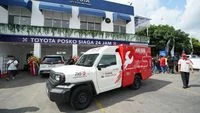
Among the prominent specialized conversions already developed on the Hilux Rangga platform are vehicles tailored for the government-backed Nutritious Free Meal (Makanan Bergizi Gratis – MBG) program, designed to support nationwide public health and nutritional distribution initiatives. Another notable adaptation is the Hilux Rangga Cold Box (Moda), engineered specifically for the cold-chain logistics sector to guarantee temperature-controlled transportation of frozen foods, pharmaceuticals, and perishable agricultural commodities over long distances.
For industrial maintenance and corporate infrastructure support, the Hilux Rangga Flatdeck has been successfully deployed as a fully equipped mobile maintenance vehicle. This unit carries specialized tools, diagnostic equipment, and spare parts directly to remote industrial sites, agricultural estates, and construction zones, thereby minimizing operational downtime for heavy machinery.
Public services and financial inclusion initiatives have also embraced the platform. The ACC Mobile Service conversion transforms the pickup into a mobile financial branch, bringing banking and credit access directly to underserved rural communities and remote regional populations. In the municipal safety sector, customized Hilux Rangga fire-fighting units have been designed to navigate narrow urban alleyways and dense residential districts where conventional heavy fire engines struggle to pass.
Public Transportation Integration
Beyond private commercial logistics and municipal services, the Toyota Hilux Rangga has made significant inroads into the public transportation sector. Following rigorous evaluation periods, the vehicle was selected for trial integration into Jakarta’s expansive public transit network as a Mikrotrans unit under the Transjakarta umbrella.
Commencing initial trial operations in November 2024, these passenger-configured conversions aim to replace or supplement aging microbus fleets, offering commuters enhanced safety features, improved cabin ergonomics, and reliable daily service. The successful transition of a commercial pickup chassis into a certified mass-public transit vehicle highlights the structural adaptability and engineering flexibility inherent in the Rangga platform.
Economic Implications and Market Outlook
The introduction and rapid adoption of the Toyota Hilux Rangga carry profound implications for the broader Indonesian automotive and macroeconomic landscape. As the government continues to prioritize infrastructure development, rural economic empowerment, and supply chain efficiency, the demand for reliable, versatile, and economical light commercial vehicles is projected to grow steadily.
By offering a competitively priced platform that eliminates the financial burden of purchasing overly specialized, single-purpose vehicles, Toyota has provided local businesses and MSMEs with a scalable asset. Entrepreneurs can start with a basic flatbed configuration and progressively upgrade or convert their vehicles as their business operations expand and diversify. This modular approach reduces capital expenditure barriers for startup businesses while ensuring long-term asset utility.
Furthermore, the involvement of local bodybuilders and aftermarket conversion specialists in outfitting the Hilux Rangga fosters regional economic growth within Indonesia’s secondary automotive manufacturing ecosystem. Job creation in specialized fabrication, engineering, and maintenance sectors directly benefits from the widespread deployment of the vehicle across various industries.
As market competition intensifies within the light commercial vehicle segment, the Toyota Hilux Rangga stands out through its combination of global automotive reliability, localized application engineering, and strong institutional support. With its robust mechanical specifications, extensive safety features, and boundless adaptability, the vehicle is well-positioned to remain a cornerstone of commercial mobility and economic productivity across Indonesia for years to come.