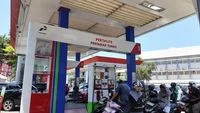
Jakarta, CNN Indonesia — In a decisive move to address mounting public frustration over extended waiting times at fuel stations, PT Pertamina Patra Niaga has officially announced a significant operational enhancement across Makassar, South Sulawesi. The state-owned energy subsidiary has increased the number of fuel dispensers and nozzles at 12 strategic public refueling stations (SPBU) within the city. This infrastructure upgrade is coupled with a comprehensive reconfiguration of service capacities designed to directly alleviate supply bottlenecks and accommodate a persistent surge in local fuel demand.
The intervention comes in response to reports of protracted queues that have begun to strain urban mobility and logistics in one of Eastern Indonesia’s most vital economic hubs. By scaling up physical hardware and optimizing service workflows, Pertamina Patra Niaga aims to streamline the refueling process for both private motorists and commercial transport operators, ensuring a steady, reliable energy supply throughout the regional capital.
Strategic Operational Overhaul and Infrastructure Upgrades
According to an official written statement released by VP Corporate Communication of Pertamina Patra Niaga, Kitty Andhora, the decision to augment nozzle availability and reconfigure service layouts was arrived at following intensive monitoring of daily consumption patterns. The operational adjustments specifically target high-traffic zones where demand for subsidized fuels has consistently outpaced historical averages.
"We continuously conduct evaluations and execute follow-up measures based on actual conditions in the field," Kitty explained in her statement. "The adjustment of capacity configurations and the addition of subsidized fuel nozzles across 12 SPBU locations in Makassar represent one of the proactive steps we are taking to optimize service capacity and support the public in smoothly obtaining fuel supplies."
Under the newly implemented adjustments, technical teams have recalibrated fuel dispensing speeds and reorganized vehicle flow paths within the station compounds. This targeted reconfiguration allows pumps to handle higher volumetric throughput per hour, effectively reducing the dwell time of individual vehicles at the islands. By accelerating the turnaround time at the dispensers, the cumulative waiting period for motorists trailing behind in the queue is substantially diminished.
Complementing 24-Hour Operations
The latest round of nozzle installations builds upon a prior set of interventions deployed by Pertamina Patra Niaga to stabilize the energy distribution network in Makassar. Earlier, the company escalated the number of round-the-clock fuel stations to a total of 25 SPBU operating on a 24-hour basis across the city.
This extended-hours policy was formulated to diffuse peak-hour congestion by distributing the volume of refueling activity across a broader timeframe. Motorists facing heavy schedules during traditional business hours have been provided with viable alternative windows to procure fuel during late-night or early-morning hours, thereby easing daytime pressure on critical urban thoroughfares.
However, as vehicular density and economic activity continued to climb, localized congestion persisted at specific nodes, prompting the current secondary wave of interventions involving physical hardware expansion at the forecourt level.
Dynamic Distribution and Real-Time Stock Monitoring
Beyond physical modifications at individual service stations, Pertamina Patra Niaga has reinforced its logistical oversight framework. The company has intensified its real-time monitoring of inventory levels and daily distribution velocities across the entirety of the Makassar supply chain.
Logistical deployment is now managed through a dynamic distribution model. Rather than relying on rigid, static delivery schedules, fuel tankers dispatch volumes based on predictive analytics and live-feed inventory data from each individual SPBU. This agile logistical posture ensures that stations experiencing localized spikes in consumption receive expedited replenishment before inventories drop to critical thresholds.
The company maintains that these synchronized measures—spanning infrastructure expansion, extended operational hours, and dynamic supply routing—form an integrated strategy designed to safeguard energy security and operational continuity in the region.
Context, Background, and Urban Energy Dynamics
Makassar, functioning as the primary metropolitan gateway and commercial nexus of Eastern Indonesia, experiences high volumes of daily transit traffic, inter-city logistics, and commuter movement. In recent months, economic recovery and infrastructural expansion have driven an upward trajectory in fuel consumption metrics, particularly for subsidized variants such as Pertalite and Solar.
When regional demand spikes unpredictably—whether driven by seasonal travel, agricultural harvest cycles, or general economic growth—the fixed physical capacity of urban fuel stations can quickly become saturated. Traditional service station designs, often constrained by spatial limitations within dense urban environments, struggle to process high volumes of vehicles simultaneously. This structural bottleneck frequently manifests as spillover queues that disrupt traffic flow on adjacent public roads.
Pertamina’s recent interventions reflect a broader, proactive operational philosophy aimed at modernizing retail distribution networks to match the velocity of urban growth. By identifying high-stress corridors and injecting targeted capital improvements, the downstream energy sector seeks to prevent the systemic friction that traditionally accompanies rapid economic development.
Industry Implications and Economic Analysis
Energy sector analysts note that while physical capacity enhancements such as adding nozzles and extending operating hours provide immediate, tangible relief to consumers, their long-term efficacy depends on disciplined supply chain integrity and consumer cooperation.
Queues at service stations are frequently exacerbated not merely by supply deficits, but by panic buying and hoarding behaviors triggered by rumors or temporary localized delays. When motorists perceive potential scarcity, the psychological urge to top off tanks prematurely creates artificial demand surges that overwhelm even well-supplied distribution networks.
Consequently, Pertamina Patra Niaga has reiterated its public appeal for moderation. The company strongly urges consumers to purchase fuel strictly in accordance with their actual needs and to refrain from panic buying or hoarding supplies in unauthorized containers. Rational consumption patterns are viewed as a vital pillar in maintaining market equilibrium and ensuring equitable access for all road users.
Looking Forward: Ongoing Evaluation and Consumer Support
Pertamina Patra Niaga has emphasized that its current operational posture in Makassar is fluid and subject to continuous review. The company’s regional management teams remain on high alert, mandated to adapt distribution protocols in real-time as demographic shifts and economic indicators evolve.
To maintain transparent communication channels with the public, Pertamina continues to promote its dedicated assistance infrastructure. Consumers seeking specific information regarding station locations, operating statuses, or wishing to report distribution irregularities are encouraged to reach out directly to the official Pertamina Contact Center at line 135.
As urban centers across Indonesia continue to navigate the complexities of post-pandemic economic expansion, targeted infrastructural interventions like those deployed in Makassar serve as a critical case study in balancing retail energy supply with the dynamic demands of a growing modern society.
Related posts: