Revitalizing Jakarta: MRT Jakarta Expands Successful Transit-Oriented Placemaking Strategy from Blok M to Historic Kota Tua

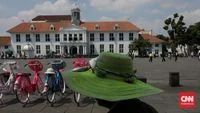
Jakarta is undergoing a profound structural metamorphosis, transcending the traditional boundaries of civil engineering and mass transit infrastructure development. Beyond the construction of subterranean tunnels, elevated concrete guideways, and sleek modern stations, the city is actively rethinking the spatial dynamics of the urban environment surrounding its public transportation network. Under the stewardship of PT MRT Jakarta (Perseroda), the areas adjacent to transit hubs are no longer viewed merely as transitional zones for commuters. Instead, they are being treated as vibrant, interconnected ecosystems designed to cultivate community engagement, stimulate local commerce, and revitalize historical urban fabrics.
Following the successful yet ongoing transformation of the Blok M commercial district in South Jakarta, PT MRT Jakarta is setting its sights on the capital’s historic northern corridor: Kota Tua. However, urban planners and transit executives have emphasized that the impending revitalization of Kota Tua will not simply be a carbon-copy replica of the Blok M model. While both initiatives rely on the core principles of transit-oriented development (TOD) and dynamic placemaking, the strategy for Kota Tua is explicitly anchored in the preservation and celebration of the area’s rich, multi-layered heritage. By weaving contemporary retail, active community spaces, and modern mobility solutions into a historical tapestry that honors both its colonial past and its deep-rooted Chinese-Indonesian heritage, urban developers hope to author a new chapter for one of Jakarta’s most iconic historic quarters.
The Strategic Vision for Kota Tua: Heritage Meets Modern Urbanism
The ambitious plans for the revitalization of Kota Tua were detailed during the MRT Jakarta Fellowship Program 2026 workshop held at the corporate headquarters in Central Jakarta. Samuel Ryan Pradipta Pranowo, Division Head of the Business Planning and Expansion Division at MRT Jakarta, outlined the organization’s holistic approach to transforming the historic district. According to Pranowo, the overarching objective is to inject fresh economic and social vitality into Kota Tua without eroding the distinct historical character that defines the precinct.
"Hopefully, the Kota Tua area will be revitalized soon," Pranowo stated during the workshop. "We hope it will remain vibrant while preserving its inherent heritage identity. The heritage of Chinatown and Little Amsterdam will not be lost; rather, the area will be energized through a careful combination of retail, community spaces, and various other activations."
In urban planning terminology, placemaking extends far beyond architectural beautification or surface-level cosmetic upgrades. It is a multi-disciplinary approach to the planning, design, and management of public spaces that capitalizes on a local community’s assets, inspiration, and potential. By fostering public spaces that promote people’s health, happiness, and well-being, placemaking transforms physical locations into destinations imbued with meaning.
For Kota Tua, this means the historical district will not be positioned to imitate the youthful, urban-nostalgic aesthetic of Blok M. While Blok M has successfully reemerged as a trendy cultural nexus for Jakarta’s younger demographic, Kota Tua’s spatial evolution will derive its momentum from its centuries-old narrative. The historical district—encompassing the remnants of Batavia’s colonial fortifications, the architectural grandeur of Fatahillah Square, and the bustling commercial arteries of Glodok—possesses a unique dual identity. Glodok, recognized as one of Jakarta’s most prominent Chinatowns and a historic hub for electronics and traditional medicine, will retain its distinct character within the master plan.
MRT Jakarta’s integration strategy aims to harmonize these disparate historical threads with modern lifestyle elements. By introducing curated retail experiences, dedicated community event spaces, and enhanced tourism infrastructure, the initiative seeks to transition Kota Tua from a daytime-only sightseeing destination into a dynamic, round-the-clock cultural and economic ecosystem. This strategic pivot aligns seamlessly with broader transit-oriented development frameworks, which dictate that public transportation nodes must serve as the beating heart of urban activity, gradually marginalizing private vehicular dependence in favor of pedestrianization, micro-mobility, and civic engagement.
Learning from the Blueprint: The Blok M Precedent
To fully comprehend the trajectory planned for Kota Tua, urban analysts must examine the blueprint that paved the way: the ongoing transformation of Blok M. Long before conceptualizing the revitalization of northern Jakarta’s heritage core, MRT Jakarta deployed its placemaking methodology in South Jakarta’s legendary commercial and transit district.
However, corporate leadership is quick to manage expectations regarding the timeline and completion status of the Blok M project. According to internal assessments shared by Pranowo, the revitalization of Blok M is currently only about halfway complete. Despite achieving significant milestones, the comprehensive master plan for the area remains a work in progress.
"Some of these concepts will be applied by MRT, starting with Blok M, which we have already begun, although it is still only halfway done," Pranowo explained. "Blok M will be made much neater and better. So we are actually only halfway through the Blok M revitalization, and this exact conceptual framework will subsequently be applied to Kota Tua."
The visible impact of the partial transformation in Blok M has already reshaped urban mobility and lifestyle patterns in South Jakarta. Historically viewed as a fading commercial hub from the late 20th century, Blok M has experienced a remarkable renaissance. Data compiled by MRT Jakarta indicates that pedestrian foot traffic in the area has surged dramatically, regularly drawing approximately 40,000 visitors per day during standard weekdays. On weekends, absent any major scheduled festivals or promotional events, daily visitation numbers swell to between 60,000 and 70,000 people. During high-profile community events, cultural festivals, or weekend markets, visitor volume spikes even further, capturing between 80,000 and 90,000 attendees per day.
This impressive surge in foot traffic is not the accidental byproduct of transit connectivity alone; it is the calculated result of meticulous physical and programmatic interventions. The revitalization effort has relied heavily on the integration of public green spaces, most notably the redesign and activation of Taman Literasi Martha Tiahahu, the optimization of the Blok M Hub transit interface, and the curation of regular community-led gatherings, creative markets, and artistic performances.
Furthermore, the economic engine driving Blok M’s revival is deeply rooted in local enterprise. MRT Jakarta has successfully integrated nearly 500 Micro, Small, and Medium Enterprises (MSMEs) as official tenants within its managed ecosystem. For the transit authority, embedding small-scale entrepreneurs and local culinary vendors into the commercial fabric is a deliberate strategy to ensure long-term economic resilience. This approach prevents the district from suffering the fate of artificial, event-dependent commercial zones, guaranteeing that the area remains economically active, culturally diverse, and financially sustainable seven days a week.
Chronology of Transit-Led Urban Renewal in Jakarta
The expansion of placemaking initiatives from Blok M to Kota Tua represents the latest phase in a broader, multi-year chronological evolution of Jakarta’s urban planning paradigm. For decades, urban development in the Indonesian capital was dictated by automobile-centric policies, resulting in severe traffic congestion, fragmented public spaces, and minimal integration between disparate modes of mass transportation.
The turning point in Jakarta’s spatial history began with the conceptualization and eventual inauguration of the MRT Jakarta North-South Line (Phase 1), which commenced commercial operations in March 2019. Connecting Lebak Bulus in South Jakarta to the Hotel Indonesia (HI) Bundaran in Central Jakarta, the rail line instantly redefined commuting habits for hundreds of thousands of residents. Recognizing that a rail transit system is only as effective as the pedestrian and commercial networks feeding into it, city stakeholders and transit planners quickly pivoted toward Transit-Oriented Development (TOD) regulations and area development strategies.
Between 2020 and 2022, amidst the global disruptions of the COVID-19 pandemic, MRT Jakarta laid the groundwork for public space activation, using the temporary lull in urban mobility to rethink station-adjacent environments. The physical overhaul of the Blok M area gained significant momentum with the inauguration of the revitalized Taman Literasi in mid-2022, which quickly established itself as a blueprint for successful urban placemaking in Indonesia.
As Phase 2A of the MRT project—extending the line from Bundaran HI northward toward Kota Tua—progresses through complex subterranean engineering phases beneath the historic core of Jakarta, the urban planning timeline has naturally caught up with the physical rails. The synchronization of the rail extension with the area revitalization strategy ensures that by the time the trains begin ferrying passengers directly into the heart of Kota Tua, the surrounding urban landscape will be fully prepared to receive them. The spatial integration is projected to reach critical milestones matching the completion timelines of the Phase 2 railway construction, positioning transit-led urban renewal as the definitive standard for Jakarta’s metropolitan governance.
Economic Implications and Socio-Cultural Impact
The decision to apply a heritage-sensitive placemaking model to Kota Tua carries profound economic, social, and cultural implications for Jakarta. From an economic perspective, the integration of MSMEs into the formalized transit and tourism ecosystem promises to stimulate local entrepreneurship. By mirroring the successful tenant strategies deployed in Blok M—where hundreds of small vendors were given structured commercial footing—the Kota Tua revitalization can democratize economic access, ensuring that heritage tourism benefits grassroots business owners rather than exclusively large corporate entities.
Moreover, the shift toward a pedestrian-first, transit-accessible historic district addresses long-standing logistical challenges in northern Jakarta. Kota Tua has historically struggled with chronic traffic congestion, unregulated street vending, pedestrian safety hazards, and environmental degradation. By channeling visitors through mass transit infrastructure rather than private automobiles, the city can significantly mitigate carbon emissions, reduce parking demand, and alleviate the physical wear and tear on sensitive historical architecture caused by vehicular vibration and pollution.
Socio-culturally, the project serves as an exercise in urban memory and identity preservation. Rapid modernization in Southeast Asian megacities frequently results in the eradication of historic architecture in favor of high-rise commercial developments. By explicitly committing to the preservation of Kota Tua’s "Little Amsterdam" colonial footprint and its vibrant "Chinatown" Glodok identity, MRT Jakarta’s urban strategy honors the pluralistic history of the city. The introduction of modern community spaces within a heritage framework creates intergenerational bridges, inviting younger Indonesians to engage with their national history in an interactive, living environment rather than a static museum setting.
Challenges on the Horizon
Despite the visionary scope of the revitalization initiative, urban policy experts note that executing placemaking at the scale of Kota Tua presents unique logistical hurdles. Unlike Blok M, which functions primarily as a modern commercial and transit hub constructed during the late 20th century, Kota Tua is an archaeological and architectural treasure trove subject to stringent heritage conservation laws. Any structural modifications, retail insertions, or public space activations must navigate complex regulatory frameworks designed to protect historical buildings from irreversible alteration.
Furthermore, managing the delicate balance between commercial revitalization and cultural authenticity remains a persistent challenge in heritage tourism management. Over-commercialization can lead to the gentrification of historic districts, pricing out legacy residents, traditional artisans, and long-standing local merchants in favor of homogenized global retail chains. To maintain the credibility of the project, transit authorities and city planners must maintain transparent, continuous dialogue with local communities, cultural preservationists, and small business owners throughout the implementation process.
Looking Ahead: A New Standard for Indonesian Metropolises
As PT MRT Jakarta continues to refine its operational model in Blok M and lays the groundwork for the structural transformation of Kota Tua, the implications of these initiatives extend far beyond the borders of the capital city. Jakarta is actively establishing a new benchmark for urban regeneration across Indonesia, demonstrating that mass transit development and cultural heritage preservation are not mutually exclusive pursuits, but rather mutually reinforcing pillars of modern city-building.
The convergence of engineering, historical preservation, economic democratization, and human-centric urban design signals a mature evolution in how Indonesian megacities approach the future. By transforming transit stations from sterile commuting checkpoints into thriving cultural destinations, Jakarta is slowly redefining its identity—proving that even the most historic quarters of an ancient colonial city can find new life when connected by the modern pulse of public transit.