Hari Olahraga Nasional: Reflecting on the Historical Legacy and Future of Indonesian Athletics

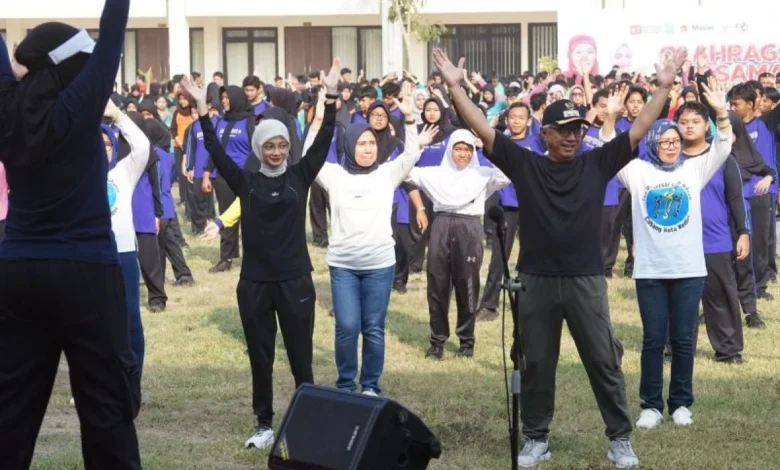
Every September 9, Indonesia pauses to commemorate National Sports Day, known locally as Hari Olahraga Nasional (Haornas). While often viewed as a mere celebratory date on the calendar, the day carries profound historical weight, serving as a reminder of the nation’s resilience, the quest for sovereignty through physical excellence, and the ongoing mission to foster a healthier, more disciplined society. As the nation marks the 43rd anniversary of the official declaration of Haornas in 2026, it is essential to look back at the origins of this movement, which began not in a modern stadium, but in the spirit of a newly independent nation striving for global recognition.
The Genesis of a Movement: The First PON of 1948
The roots of Indonesia’s sports culture are inextricably linked to the first Pekan Olahraga Nasional (PON), held in Solo, Central Java, from September 9 to 12, 1948. At the time, the Republic of Indonesia was in its infancy, grappling with the complexities of post-colonial governance and the constant threat of external pressures.
The decision to organize the inaugural PON was a bold political statement. In 1948, the Indonesian government aspired to participate in the XIV Olympic Games in London. However, the international community had not yet widely recognized Indonesia as a sovereign state, leading to insurmountable administrative hurdles that barred the national contingent from flying the red-and-white flag on the world stage. Faced with this rejection, the leaders of the young republic decided to host their own multi-sport event. By holding the PON, Indonesia asserted its existence and unity. The event in Solo served as a powerful symbol of national identity, proving that even under the shadow of conflict, the Indonesian people possessed the infrastructure, organizational capability, and spirit to host a sophisticated national competition.
From Symbolic Gesture to Official Decree
While the spirit of sportsmanship thrived throughout the decades following 1948, it was not until 1983 that the government formalized the commemoration of National Sports Day. On September 9, 1983, President Soeharto officially inaugurated the renovated Sriwedari Stadium in Surakarta. This act was not merely a ceremonial opening of a sports facility; it was the formal declaration of September 9 as the official National Sports Day.
The legal foundation was solidified shortly thereafter with the issuance of Presidential Decree (Keppres) Number 67 of 1985. This decree codified the importance of sports in national development, emphasizing that the advancement of sports was not just a pursuit of medals, but a vital component of human resource development and national character building. Since then, September 9 has remained a permanent fixture in the Indonesian national agenda, serving as a benchmark for the Ministry of Youth and Sports (Kemenpora) to evaluate progress in both elite athletics and mass participation.
Data and Trends: The Evolution of Indonesian Sports
The trajectory of Indonesian sports since the first PON has been marked by significant shifts in policy and infrastructure. Data from the Ministry of Youth and Sports indicates that the focus of national sports policy has evolved from purely symbolic competition to a dual-track strategy: achieving international glory through high-performance training and promoting public health through mass sports initiatives.
Recent years have seen substantial government investment in sports science and infrastructure. As of 2026, the demand for specialized training facilities has reached a critical juncture. The Ministry has recently highlighted the necessity of a Rp1.5 trillion budget allocation for the construction of comprehensive academies and centralized training centers. This financial requirement reflects the shift toward professionalization; the days of sporadic training are being replaced by data-driven, long-term development plans aimed at producing world-class athletes capable of competing in the Olympics and Asian Games.
Furthermore, the integration of sports into the tourism sector, or "sport tourism," has become a key economic driver. The government’s recent initiative to designate regions like Sumba Timur as hubs for sport tourism exemplifies the trend of leveraging athletic events to boost regional economies. By hosting national and international events in diverse geographic settings, the state is effectively creating a circular economy where sports, tourism, and infrastructure development mutually reinforce one another.
Institutional Perspective: Beyond the Podium
Official discourse surrounding Haornas 2026 emphasizes that the true value of sports lies in the societal benefits it generates. The Ministry of Youth and Sports has frequently articulated that while medals are a source of national pride, the broader objective is to cultivate a "sporting culture" within the daily lives of citizens.
"The development of the sports sector is not limited to the achievements of our athletes on the field; it is about the ripple effects it brings to the national economy and public health," a Ministry spokesperson noted in recent briefings. The health implications are particularly significant. With the rise of sedentary lifestyles in urban centers, the government views the promotion of regular physical activity as a preventive measure against the growing burden of non-communicable diseases.
Furthermore, sports are recognized as a tool for social cohesion. In a diverse nation like Indonesia, sports events like the PON function as a platform for interaction between various ethnic, social, and economic groups. The shared passion for competition serves to strengthen the national fabric, fostering values such as discipline, fair play, and resilience—traits that are essential for the youth of the nation to compete in a globalized economy.
Challenges and Future Prospects
Despite the historical successes and the robust legal framework, the path forward for Indonesian sports is not without challenges. The primary obstacle remains the equitable distribution of sports infrastructure. While metropolitan areas benefit from advanced facilities, remote regions often struggle with access to basic training equipment and coaching. Addressing this gap is a priority for the coming decade, as the government seeks to democratize access to sports.
The upcoming "Beach PON" scheduled to be held in Ancol, Jakarta, in November 2026, serves as a test case for diversifying the types of sports promoted in the country. By moving away from traditional field sports and embracing niche or climate-specific disciplines, the organizers aim to broaden the scope of the national athletic landscape. This strategy is part of a larger, long-term vision to ensure that Indonesia remains relevant in international sports federations.
Moreover, the sustainability of high-performance centers remains a topic of intense debate. The proposed Rp1.5 trillion investment is not just about concrete and steel; it is about creating an ecosystem that integrates medical care, nutritional support, and psychological coaching for athletes. Experts argue that without this holistic approach, the cycle of talent development will remain fragile.
The Societal Call to Action
On the occasion of the 43rd Haornas, the call to action for the general public is multifaceted. The commemoration serves as an invitation for citizens to move beyond the role of spectators. From engaging in routine exercise to participating in community-based sports clubs, the government encourages a "bottom-up" approach to national fitness.
As the nation reflects on the journey from the modest grounds of Solo in 1948 to the sophisticated, multi-million-dollar sports landscape of 2026, the underlying message remains consistent: sports are a vital expression of national life. Whether through the pursuit of excellence in global arenas or the simple act of maintaining personal health, every Indonesian contributes to the national sports agenda.
The legacy of the first PON, which proved that a young nation could organize itself in the face of adversity, continues to inspire modern initiatives. Today, the challenge is no longer about proving existence; it is about sustaining quality, fostering inclusivity, and ensuring that the health and character-building benefits of sports are accessible to all.
Conclusion: A Legacy in Motion
The commemoration of National Sports Day each September 9 is a vital institutional mechanism that keeps the history and the future of Indonesian athletics in focus. By reconciling the past—a time of revolutionary struggle and the birth of a nation—with the present realities of economic investment, public health, and technological advancement, Indonesia continues to redefine what it means to be a sporting nation.
As we look toward the future, the integration of professional sports management with grassroots community engagement will likely determine the country’s success. The 43rd anniversary of Haornas serves as a bridge, connecting the pioneering spirit of 1948 with the ambitious, modernized goals of 2026 and beyond. Ultimately, the success of this endeavor will be measured not just by the trophies in a cabinet, but by the physical vitality and the unified spirit of the Indonesian people as they navigate the complexities of the 21st century. Through continued dedication to the principles established by the founders of the national sports movement, Indonesia is well-positioned to maintain its status as a competitive and healthy nation on the world stage.
Related posts: