Profile and Career of Sidharto Reza Suryodipuro the New President of the United Nations Human Rights Council

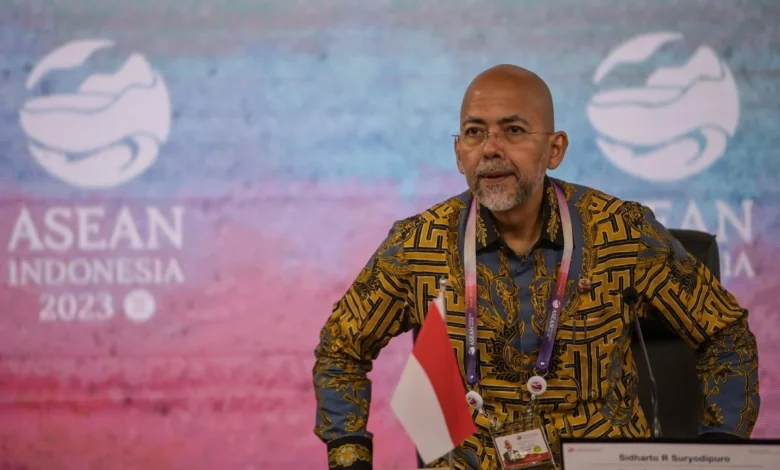
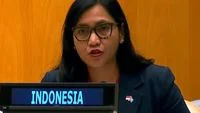
Indonesia has reached a significant milestone in its diplomatic history following the election of senior diplomat Sidharto Reza Suryodipuro as the President of the United Nations Human Rights Council (UNHRC) for the 2026 term. This appointment serves as a profound testament to Indonesia’s growing influence in the multilateral arena and its enduring commitment to the promotion and protection of human rights on a global scale. The election, which took place in Geneva, marks a pivotal moment for Indonesian foreign policy, placing one of its most seasoned diplomats at the helm of the world’s premier human rights body during a period of intense global geopolitical volatility.
Sidharto Reza Suryodipuro’s ascension to this prestigious role is not merely a personal achievement but a reflection of Indonesia’s strategic "Free and Active" (Bebas Aktif) foreign policy. As the international community grapples with complex humanitarian crises, the role of the UNHRC President becomes increasingly vital in moderating debates, fostering consensus, and ensuring that the voices of both the Global North and the Global South are heard with equal weight.
A Legacy of Public Service and Noble Heritage
Born on September 29, 1966, in Cologne, Germany, Sidharto Reza Suryodipuro was raised in an environment deeply rooted in the traditions of Indonesian diplomacy and public service. He hails from a distinguished lineage associated with the Mangkunegaran Royal House, a historic principality in Surakarta, Central Java. This background instilled in him a sense of duty and statesmanship from an early age.
The Suryodipuro name is synonymous with the foundational years of the Indonesian republic. His grandfather, Suyoto Suryodipuro, was a towering figure in the nation’s early history, serving as one of the founders of the Ministry of Foreign Affairs and the national radio station, Radio Republik Indonesia (RRI). This family legacy of nation-building provided a natural trajectory for Sidharto to pursue a career in the foreign service.
Sidharto’s academic journey began at the Catholic University of Parahyangan (UNPAR) in Bandung, where he joined the International Relations department in 1986. During his time at UNPAR, he was known for his sharp analytical mind and keen interest in global power dynamics. Upon completing his undergraduate degree, he successfully entered the Ministry of Foreign Affairs (Kemlu), embarking on a career that would span over three decades and multiple continents.
Seeking to further refine his expertise, Sidharto pursued advanced studies in the United States. He was awarded the prestigious Fulbright scholarship to attend the Naval Postgraduate School in Monterey, California. In 2003, he earned a Master of Arts in National Security Affairs with distinction. This academic background in security studies provided him with a unique perspective on the intersection of human rights, national sovereignty, and international security—a triad of concerns that often dominates the agenda at the United Nations.
A Career Defined by Multilateral Excellence
Sidharto’s diplomatic career began in earnest in 1992. His early assignments at the Ministry of Foreign Affairs quickly steered him toward the world of multilateralism. He was assigned to the Permanent Mission of the Republic of Indonesia to the United Nations in New York, where he served as a delegate to the Special Committee on Peacekeeping Operations under the UN General Assembly. This role was crucial, as Indonesia has historically been one of the largest contributors of personnel to UN peacekeeping missions, and Sidharto was tasked with navigating the complex logistical and political frameworks of these operations.
His experience in the UN system was further solidified between 2006 and 2009. During this period, he served as a member of the Indonesian delegation to the UN Security Council. This was a high-stakes environment where he focused on African affairs and humanitarian issues. Dealing with the Security Council’s agenda required a delicate balance of protecting national interests while contributing to global peace—a skill set that would later prove invaluable in his leadership roles.
Strengthening Bilateral Ties: From Canberra to Washington
While much of his career has been defined by the UN, Sidharto also demonstrated exceptional skill in bilateral diplomacy. From 2004 to 2006, he served at the Indonesian Embassy in Canberra, Australia. During this tenure, he was instrumental in strengthening economic ties between the two neighbors. His work focused on expanding trade, encouraging cross-border investment, and fostering cooperation in tourism and education. His ability to navigate the often-complex relationship between Jakarta and Canberra highlighted his pragmatism and focus on mutual benefit.
In 2014, Sidharto was appointed as the Deputy Chief of Mission (DCM) at the Indonesian Embassy in Washington, D.C. Serving in the United States during a period of significant global shifts, he played a key role in deepening the Indonesia-U.S. Comprehensive Partnership. He was particularly active in promoting cooperation in countering violent extremism and facilitating interfaith dialogues. By emphasizing Indonesia’s identity as a democratic, Muslim-majority nation with a pluralistic society, he helped build bridges of understanding between the two nations.
Pioneering Roles in India and Bhutan
In 2017, Sidharto’s career reached a new height when he was appointed as the Indonesian Ambassador to India. This role was strategically significant given the burgeoning "Act East" policy of India and Indonesia’s "Global Maritime Fulcrum" vision. Notably, Sidharto also became the first-ever Indonesian Ambassador accredited to the Kingdom of Bhutan.
His tenure in New Delhi was marked by a focus on maritime cooperation, defense, and digital economy. In 2020, his dedication to the protection of Indonesian citizens abroad—particularly during the challenging early months of the COVID-19 pandemic—earned him the Hassan Wirajuda Award. This accolade is the highest honor bestowed by the Indonesian Ministry of Foreign Affairs for excellence in citizen protection, reflecting his hands-on approach to diplomacy.
Stewardship of ASEAN and the Path to Geneva
Following his successful term in India, Sidharto returned to Jakarta in 2020 to take on the role of Director General for ASEAN Cooperation. In this capacity, he served as the Indonesian ASEAN Senior Officials’ Meeting (SOM) Leader. This was a period of intense pressure for the regional bloc, as it faced the dual challenges of the pandemic recovery and the escalating crisis in Myanmar. Sidharto was at the forefront of Indonesia’s efforts to maintain ASEAN centrality and push for the implementation of the Five-Point Consensus.
In 2025, his career came full circle as he was appointed as the Permanent Representative of the Republic of Indonesia to the United Nations and other international organizations in Geneva. This posting placed him at the heart of global human rights, trade, and health governance. Shortly after his arrival, Indonesia nominated him for the Presidency of the UN Human Rights Council for the 2026 term.
The election process for the UNHRC Presidency follows a system of annual rotation among the five UN regional groups. For 2026, it was the turn of the Asia-Pacific Group to provide the President. On January 8, 2026, after receiving overwhelming support from member states, Sidharto Reza Suryodipuro was officially confirmed as the President of the Council.
Vision for the 2026 UNHRC Presidency
As President, Sidharto faces the daunting task of leading a body that is often criticized for its politicization and internal divisions. However, his initial statements reflect a commitment to inclusivity and constructive dialogue. Indonesia’s vision for its presidency centers on several key pillars:
- Bridging the Divide: Utilizing Indonesia’s position as a "bridge-builder" to narrow the gap between different ideological blocs within the Council.
- Inclusivity: Ensuring that civil society organizations, national human rights institutions, and smaller member states have a meaningful seat at the table.
- Institutional Integrity: Maintaining the Council’s credibility by ensuring that human rights issues are addressed through a lens of universality and non-selectivity.
- Addressing Emerging Challenges: Integrating discussions on climate change, digital privacy, and economic rights into the traditional human rights framework.
Indonesia’s leadership comes at a time when the world is witnessing a regression in human rights protections in various regions. From the ongoing conflicts in the Middle East and Eastern Europe to the systemic challenges of poverty and inequality, the Council’s agenda is more crowded than ever. Sidharto’s experience in security affairs and his deep understanding of the Global South’s perspectives are expected to bring a balanced approach to these contentious issues.
Analysis of Implications and Global Impact
The election of Sidharto Reza Suryodipuro carries significant implications for both Indonesia and the international community. For Indonesia, it is a validation of its democratic journey and its ability to lead on the world stage. It provides Jakarta with a platform to showcase its "Pancasila" values—emphasizing social justice and humanity—as a viable model for international cooperation.
For the United Nations, a presidency led by a seasoned diplomat from a major developing nation offers an opportunity to revitalize the Council. There is a growing demand for the UNHRC to move beyond rhetoric and deliver tangible improvements in the lives of individuals. Sidharto’s reputation for pragmatism suggests that his presidency may focus on "technical cooperation" and capacity building, helping nations improve their human rights records through support rather than just condemnation.
Furthermore, this role will require Sidharto to navigate the intense rivalry between major powers. As the U.S., China, and Russia continue to clash within UN forums, the President of the Council must act as a neutral arbiter. Sidharto’s background in Washington, his deep ties to Asian neighbors, and his extensive UN experience make him uniquely qualified to manage these tensions.
Conclusion
The journey of Sidharto Reza Suryodipuro from a young diplomat in 1992 to the President of the UN Human Rights Council in 2026 is a testament to the power of professional diplomacy and consistent engagement. His career has been defined by a rare combination of academic depth, bilateral expertise, and multilateral mastery.
As he prepares to take the gavel in Geneva, the international community looks toward his leadership with a mixture of hope and expectation. In an era where human rights are often used as a tool for political leverage, Sidharto’s presidency offers a chance to return to the core mission of the UNHRC: the protection of human dignity for all, without exception. Indonesia’s "active role" has never been more visible, and under Sidharto’s guidance, the nation is set to leave an indelible mark on the global human rights landscape.
Related posts: