Wreckage of Pan American Airways Flight 526A Discovered After Seven Decades in the Atlantic Ocean


The discovery of the wreckage belonging to Pan American Airways Flight 526A marks the conclusion of a 72-year-old maritime mystery that has lingered in the depths of the Atlantic Ocean since the early years of the Cold War. A specialized deep-sea search team, utilizing advanced autonomous underwater vehicles (AUV), located the remains of the Douglas DC-4 aircraft at a depth of approximately 610 meters (2,000 feet) off the northern coast of Puerto Rico. The find not only provides a definitive location for one of the most significant aviation accidents of the mid-20th century but also serves as a somber reminder of a tragedy that claimed 52 lives and fundamentally reshaped the landscape of international aviation safety protocols.
The identification of the aircraft was confirmed through high-resolution imagery captured by the AUV, which clearly depicted the iconic Pan American World Airways logo emblazoned on the nose of the fuselage. Despite seven decades of immersion in the corrosive saltwater environment, the structural integrity of certain sections of the plane remains remarkably recognizable, allowing investigators to correlate the debris field with historical records of the 1952 ditching. The expedition, supported by Warner Bros. Discovery, represents a triumph of modern marine archaeology and subsea technology, bringing closure to a narrative that began on a turbulent April morning in San Juan.
The Ill-Fated Journey of the Clipper Endeavour
On April 11, 1952, the Pan American Airways Douglas DC-4, christened the "Clipper Endeavour," was scheduled for a routine flight from San Juan’s Isla Grande Airport to Idlewild Airport (now John F. Kennedy International Airport) in New York City. On board were 64 passengers and five crew members. The flight was part of a burgeoning era of post-World War II civil aviation, where the Douglas DC-4 served as a workhorse for transoceanic travel, known for its range and reliability.
The flight took off at approximately 12:11 PM local time. However, the routine nature of the journey evaporated within minutes of departure. As the aircraft climbed through 1,500 feet, the number three engine suffered a catastrophic failure. The flight crew, led by Captain John C. Burn, immediately feathered the propeller and attempted to return to San Juan. The situation deteriorated rapidly when the number four engine also began to lose power, making it impossible for the heavily laden aircraft to maintain altitude or reach the shoreline.
Faced with an imminent stall and unable to sustain flight on two failing engines, Captain Burn was forced to execute an emergency ditching in the open ocean. At approximately 12:20 PM, just nine minutes after takeoff, the Clipper Endeavour struck the water roughly 11 miles north of San Juan. The impact was severe, and while the aircraft remained buoyant for several minutes, the rough seas and the rapid influx of water created a chaotic environment for the passengers and crew attempting to evacuate.
The Tragedy and the Rescue Effort
The ditching of Flight 526A resulted in the deaths of 52 of the 69 people on board. While the initial impact did not kill the majority of the passengers, the subsequent evacuation was hampered by a lack of adequate safety equipment and the prevailing sea conditions. At the time, aviation regulations regarding over-water flights were significantly less stringent than they are today. The aircraft was equipped with life rafts, but deploying them in the heavy swells proved nearly impossible for the panicked passengers and the limited crew.
Many of the victims perished due to drowning or exposure in the shark-infested waters of the Atlantic before rescue vessels could arrive. The United States Coast Guard and local civilian vessels launched a massive search and rescue operation immediately following the distress signal, but by the time they reached the site, the fuselage had slipped beneath the waves, taking many of those still trapped inside to the ocean floor. The 17 survivors, including Captain Burn, were plucked from the water, many suffering from injuries and severe shock.
The loss of life was particularly devastating for the local Puerto Rican community, as many of the passengers were migrant workers and families traveling to the United States mainland in search of economic opportunities. The disaster cast a long shadow over the island and prompted an immediate federal investigation into the cause of the engine failures and the high fatality rate following a successful water landing.
Technological Breakthroughs in Subsea Discovery
The recent discovery of the wreckage was made possible by a convergence of historical research and cutting-edge subsea exploration technology. The search team employed Autonomous Underwater Vehicles (AUVs) equipped with side-scan sonar and multi-beam echo sounders to map the seabed in the high-probability search zone identified through historical flight paths and Coast Guard rescue coordinates.
The 610-meter depth presented significant challenges, as the pressure at such levels is immense, and the terrain off the coast of Puerto Rico is characterized by steep underwater trenches and volcanic outcrops. The AUVs operated independently of a surface tether, allowing them to cover vast areas of the seafloor with high precision. When the sonar detected a man-made object inconsistent with the natural topography, the team deployed a Remotely Operated Vehicle (ROV) equipped with 4K cameras to conduct a visual inspection.
The moment of discovery was described by team members as both exhilarating and haunting. The sight of the Pan Am logo—a symbol of a bygone era of glamour in air travel—appearing through the dark, silt-laden water provided the definitive proof needed to close the case. The debris field is scattered over a significant area, suggesting that the aircraft may have broken apart either upon impact with the seafloor or during its long descent through the water column.
Historical Context and the Douglas DC-4
To understand the significance of this discovery, one must look at the role of the Douglas DC-4 in the 1950s. Originally developed as a military transport (the C-54 Skymaster) during World War II, the DC-4 was converted for civilian use and became the backbone of international airlines like Pan Am. It was the first four-engine transport to enter widespread service, capable of crossing the Atlantic, though it lacked the pressurized cabins that would become standard in later models like the DC-6 and the Lockheed Constellation.
Pan American World Airways, under the leadership of Juan Trippe, was the premier international carrier of the United States. The "Clipper" service was synonymous with luxury and global reach. However, the 1952 crash of Flight 526A highlighted the inherent risks of long-distance over-water travel during a period when engine reliability was not yet absolute and safety infrastructure was in its infancy.
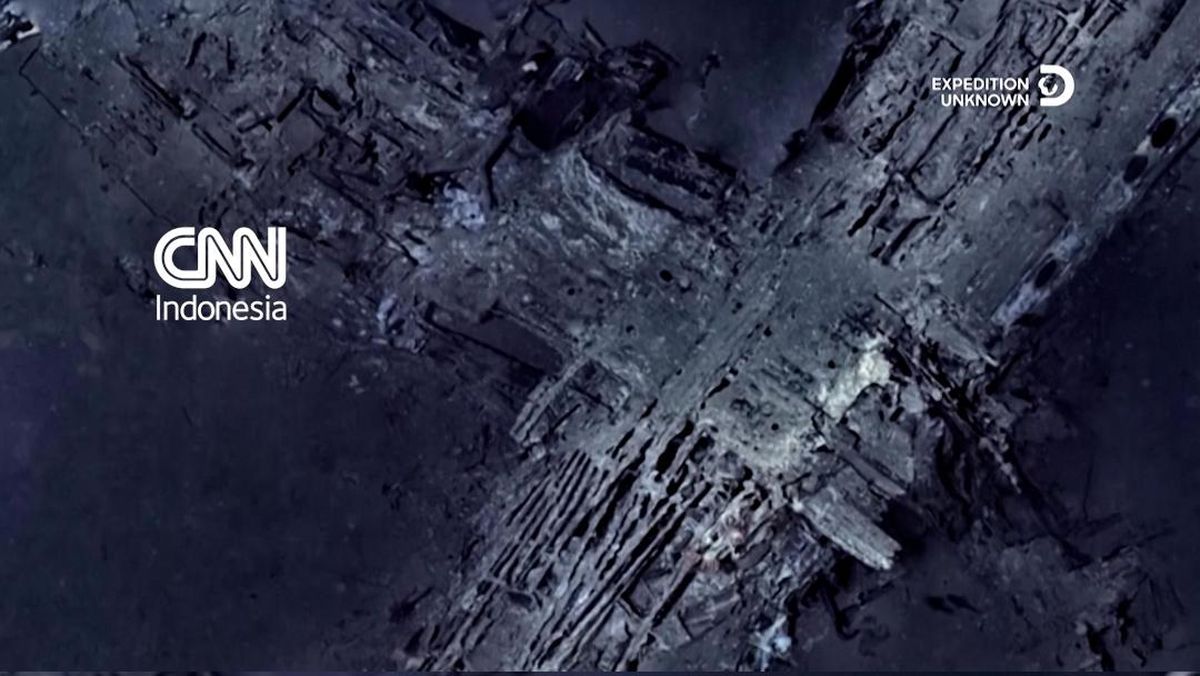
The DC-4 involved in the crash, registration N88899, had been a reliable part of the Pan Am fleet. The failure of two engines on the same side of the aircraft was a rare and catastrophic event, later attributed to a combination of mechanical fatigue and maintenance oversights that were common in the high-tempo operations of the post-war aviation boom.
Implications for Aviation Safety Reform
The legacy of Pan Am Flight 526A is most visible in the stringent safety regulations that govern modern aviation. The Civil Aeronautics Board (CAB), the predecessor to the National Transportation Safety Board (NTSB), conducted an exhaustive inquiry into the disaster. Their findings were instrumental in mandating several key changes that are now taken for granted by every airline passenger today.
One of the most significant reforms was the requirement for comprehensive pre-flight safety demonstrations. Investigators found that many passengers on Flight 526A did not know how to don their life vests or where the emergency exits were located. This led to the standardization of safety briefings, including the demonstration of life vest usage for all flights traveling over water.
Furthermore, the tragedy prompted the redesign of life vest storage. On the Clipper Endeavour, life vests were often stored in overhead racks or locations that were difficult to reach during a crisis. Following the crash, regulations were updated to ensure that flotation devices were located directly under or within immediate reach of each passenger seat. The aviation industry also improved the design of inflatable life rafts, ensuring they could be deployed more quickly and reliably from exterior compartments of the aircraft.
The crash also influenced the "ditching" protocols taught to pilots. Captain Burn’s ability to bring the plane down on the water without it immediately breaking apart was lauded, but the subsequent loss of life showed that a successful landing was only half the battle. Training was expanded to include better coordination between flight crews and cabin attendants during the evacuation phase.
Reactions from the Aviation and Historical Communities
The discovery has elicited emotional responses from aviation historians and the descendants of those who were on board. For many families, the knowledge of exactly where the aircraft rests provides a sense of peace that has been absent for seven decades.
"This is not just a piece of twisted metal at the bottom of the ocean; it is a graveyard and a monument to a pivotal moment in history," said an aviation historian associated with the project. "Finding the Clipper Endeavour allows us to honor the 52 souls lost and to recognize the progress we have made in ensuring that such a tragedy is never repeated."
Aviation safety experts have also weighed in, noting that the discovery provides an opportunity to study the effects of long-term submersion on aircraft alloys, which can provide data for forensic investigators dealing with more recent underwater wreckage. The location of the site will likely be treated as a maritime memorial, with calls from various organizations to ensure the site remains undisturbed by salvors or treasure hunters.
Analysis of Broader Implications and Deep-Sea Exploration
The successful location of Pan Am Flight 526A underscores the increasing capability of private and documentary-led expeditions to solve historical mysteries. As technology becomes more accessible, the "final frontiers" of the deep ocean are being mapped with unprecedented detail. This trend has significant implications for both archaeology and the environment, as more shipwrecks and downed aircraft are identified.
From a geopolitical and cultural perspective, the discovery highlights the shared history between Puerto Rico and the United States mainland. The disaster was a touchstone for the Puerto Rican diaspora, and its resolution serves as a bridge to a past era of migration and struggle.
The find also reinforces the importance of maintaining historical records. Without the detailed logs of the 1952 Coast Guard response and the CAB’s original accident report, the search area would have been too vast to cover effectively. The synergy between archival research and 21st-century robotics is the hallmark of modern exploration.
As the search team concludes its operations, the data gathered will be turned over to relevant authorities and historical societies. While there are currently no plans to raise the wreckage—a task that would be monumentally expensive and technically complex—the imagery and sonar maps will serve as a digital archive of the Clipper Endeavour.
In the quiet, pressurized darkness 610 meters below the surface, the Douglas DC-4 remains a silent witness to the dawn of the jet age and the hard-learned lessons that made modern air travel the safest mode of transportation in the world. The discovery of Flight 526A ensures that the 52 individuals who lost their lives on that April day are no longer lost to the sea, but are instead remembered as part of the enduring story of human flight.
Related posts: