U.S. President Donald Trump Announces Tariff Hike on South Korean Imports Citing Legislative Delays in Trade Agreement Ratification

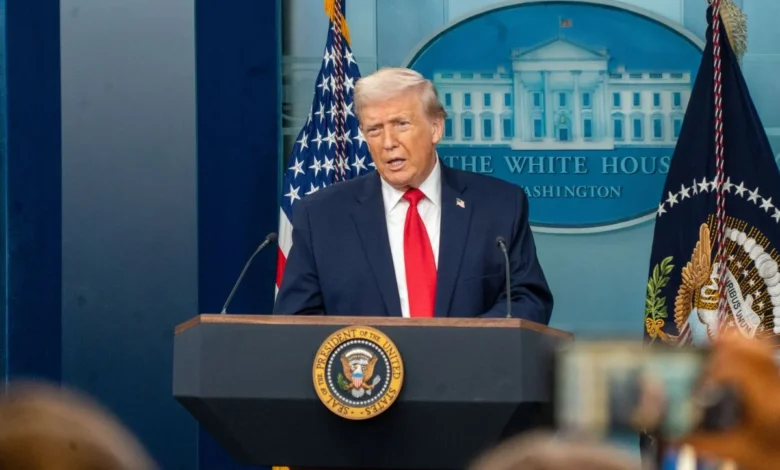
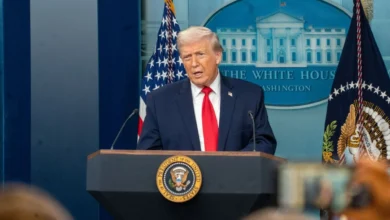
United States President Donald Trump announced on Monday, January 26, a significant escalation in trade tensions by declaring an increase in tariffs from 15 percent to 25 percent on a wide range of South Korean imports, specifically targeting the automotive, wood, and pharmaceutical sectors. The decision, communicated through a series of social media posts, stems from what the U.S. administration characterizes as a failure by the South Korean National Assembly to ratify a bilateral trade agreement finalized between the two nations in late 2025. President Trump asserted that the legislative body in Seoul had not fulfilled its obligations under the "Historic Trade Agreement," prompting a return to higher reciprocal tariff rates that had previously been a point of contention during negotiations.
The announcement marks a sudden shift in the trade relationship between Washington and Seoul, which had appeared to stabilize following high-level summits in July and October of 2025. President Trump noted that the agreement reached with South Korean President Lee Jae-myung on July 30, 2025, and reaffirmed during a state visit to Korea on October 29, 2025, was intended to provide a stable framework for economic cooperation. Under the terms of that deal, the United States had agreed to a 15 percent blanket tariff on Korean goods—down from an earlier threat of 25 percent—in exchange for a commitment from South Korea to invest $350 billion into the American economy. However, with the South Korean legislature yet to grant formal approval, the U.S. executive branch has moved to reinstate the more aggressive 25 percent rate.
The Evolution of the 2025 Trade Framework
To understand the current friction, it is necessary to examine the diplomatic trajectory of the past year. In early 2025, the Trump administration signaled a desire to renegotiate existing trade terms with South Korea, citing a persistent trade deficit and a need for greater "reciprocity" in market access. These negotiations culminated in a landmark meeting on July 30, 2025, where President Trump and President Lee Jae-myung announced the "Great Agreement." This deal was designed to be a win-win for both nations: the U.S. would secure massive capital infusions for its domestic manufacturing sector, while South Korea would avoid the most punitive tariff brackets.
The centerpiece of the July agreement was a South Korean pledge to invest $350 billion in the United States over a multi-year period. These investments were slated for high-tech sectors, including semiconductor fabrication plants, electric vehicle (EV) battery facilities, and infrastructure projects. In return, the U.S. government agreed to cap tariffs on South Korean exports at 15 percent. This was viewed as a significant concession at the time, as the White House had been weighing a 25 percent "Section 232" style tariff on national security grounds, particularly concerning the automotive industry.
The commitment was further solidified on October 29, 2025, during President Trump’s visit to Seoul. During that trip, both leaders emphasized the strength of the U.S.-ROK (Republic of Korea) alliance, stating that the economic partnership was as vital as their security cooperation. However, while the executive branches of both countries were in alignment, the domestic political landscape in South Korea proved more complex. The South Korean National Assembly, where the opposition holds significant influence, has been slow to move the ratification process forward, citing concerns over the impact of the $350 billion capital outflow on domestic employment and the potential for increased costs for Korean farmers and small businesses.
Breakdown of Targeted Sectors and Economic Impact
The move to a 25 percent tariff rate is expected to have immediate and profound consequences for three specific pillars of the South Korean economy: automobiles, wood products, and pharmaceuticals.
The Automotive Industry
South Korea’s automotive sector is perhaps the most vulnerable to this policy shift. Giants such as Hyundai Motor Company and Kia Corporation rely heavily on the American market for a substantial portion of their global revenue. In recent years, South Korea has exported over $30 billion worth of vehicles and parts to the United States annually. A jump from 15 percent to 25 percent in tariffs significantly erodes the price competitiveness of Korean vehicles compared to domestic U.S. manufacturers and other foreign brands that may not be facing similar hikes. Analysts suggest that this could lead to a reduction in sales volume and may force Korean automakers to accelerate the relocation of their production lines to U.S. soil—a move that aligns with President Trump’s broader "Made in America" agenda but risks hollowing out the industrial base in South Korea.
Wood and Timber Products
While less publicized than the auto sector, the wood and timber industry represents a vital link in the trans-Pacific supply chain. South Korea exports specialized wood products, including plywood, veneer, and engineered wood used in the U.S. construction industry. The 10-percentage-point increase in tariffs is likely to be passed on to American builders and consumers, potentially raising the cost of residential and commercial construction at a time when housing affordability remains a critical issue in the United States.
Pharmaceuticals and Biologics
South Korea has rapidly emerged as a global hub for pharmaceutical manufacturing, particularly in the realm of biosimilars and contract development and manufacturing organizations (CDMOs). Companies like Samsung Biologics and Celltrion have become essential partners for U.S. healthcare providers seeking cost-effective alternatives to expensive name-brand drugs. By targeting the pharmaceutical sector, the Trump administration is exerting pressure on a high-growth industry. However, industry experts warn that these tariffs could inadvertently lead to higher drug prices for American patients if supply chains are disrupted or if the cost of importing essential medications increases.
A Chronology of Recent U.S.-South Korea Trade Developments
The current crisis is the result of a series of events that have unfolded over the past six months:
- July 30, 2025: President Trump and President Lee Jae-myung meet in Washington D.C. and announce the preliminary "Great Agreement." South Korea pledges $350 billion in U.S. investments, and the U.S. agrees to a 15% tariff rate.
- August – September 2025: Technical teams from both nations work on the legal text of the agreement. U.S. trade representatives emphasize that the tariff reduction is contingent upon "timely and full implementation."
- October 29, 2025: President Trump visits Seoul. A formal signing ceremony for the finalized agreement takes place. Trump praises the deal as "historic" and "reciprocal."
- November 2025: The agreement is submitted to the South Korean National Assembly for ratification. Domestic opposition parties raise questions regarding the scale of the investment pledge.
- December 2025: Legislative sessions in Seoul end without a vote on the trade deal. The South Korean government requests more time to address internal political concerns.
- January 15, 2026: The White House issues a private warning to Seoul, indicating that the U.S. patience regarding the ratification delay is "exhausted."
- January 26, 2026: President Trump officially announces the tariff hike to 25 percent via social media, citing the National Assembly’s inaction.
Official Responses and Diplomatic Maneuvering
The response from Seoul has been one of measured urgency. Following President Trump’s announcement, the Blue House (the South Korean presidential office) released a brief statement noting that they had not yet received a formal diplomatic notification through official channels at the time of the social media post. However, the administration of President Lee Jae-myung is treating the threat with the utmost seriousness.
The South Korean Ministry of Trade, Industry and Energy (MOTIE) announced that the Trade Minister would be departing for Washington immediately to seek an emergency meeting with U.S. Trade Representative (USTR) officials. The goal of the mission is to negotiate a "grace period" or a stay of the tariff implementation while the National Assembly works toward a resolution.
"We remain committed to the spirit of the October agreement," a spokesperson for the South Korean trade ministry stated. "While the legislative process is an independent prerogative of our National Assembly, we understand the urgency of the situation and will work tirelessly to bridge the gap between our two nations’ expectations."
In the United States, the reaction has been split along predictable lines. Supporters of the President’s "America First" policy have lauded the move as a necessary tactic to ensure that trade partners follow through on their commitments. They argue that the $350 billion investment is a crucial component of U.S. economic renewal and that any delay in ratification is a breach of trust. Conversely, some economists and trade advocacy groups have expressed concern that the sudden hike could trigger retaliatory measures from Seoul, potentially harming U.S. agricultural exports—such as beef and fruit—which have enjoyed significant market share in South Korea under the KORUS FTA framework.
Broader Implications and Economic Analysis
The escalation of tariffs between the United States and South Korea has implications that reach far beyond bilateral trade. As the world’s 10th largest economy, South Korea is a linchpin in the global supply chain, particularly for semiconductors and electronics. While the current tariffs do not explicitly target chips, the broader climate of economic uncertainty could dampen investment and disrupt integrated production cycles.
Furthermore, the $100 billion-plus in annual imports from South Korea to the U.S. represents a significant portion of American consumer and industrial goods. A 25 percent tariff serves as a de facto tax on American businesses and consumers who rely on these products. Fact-based analysis suggests that if the tariffs remain in place for an extended period, the U.S. could see a marginal increase in inflationary pressure within the targeted sectors.
From a geopolitical perspective, the friction comes at a sensitive time. The U.S. and South Korea are traditional security allies, and their coordination is essential for maintaining stability in Northeast Asia. Diplomatic observers worry that economic disputes could spill over into security cooperation, potentially weakening the unified front required to address regional challenges.
The $350 billion investment pledge remains the "X-factor" in this dispute. If the South Korean National Assembly perceives the 25 percent tariff as a permanent fixture, the incentive to move forward with massive capital investments in the U.S. may diminish. Conversely, if the Trump administration views the tariff hike as a temporary "pressure lever," it may succeed in forcing a quick ratification in Seoul.
As the South Korean Trade Minister arrives in Washington, the focus will be on whether a middle ground can be found. The original 15 percent compromise was intended to be a sign of goodwill. By reverting to 25 percent, the U.S. administration is signaling that it prioritizes immediate, binding commitments over long-term diplomatic patience. The coming weeks will be critical in determining whether this "reciprocal" trade strategy leads to a ratified historic agreement or a protracted trade war between two of the world’s closest allies.
Related posts: