Yemeni Government Moves to Restore Oil Exports Amid Persistent Houthi Blockade and Economic Strain

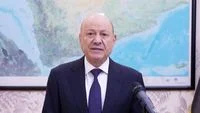
President Rashad al-Alimi, the head of Yemen’s Presidential Leadership Council (PLC), announced on Monday, July 20, that his internationally recognized government is intensifying efforts to resume oil exports with the critical backing of the Kingdom of Saudi Arabia. This strategic move comes as the war-torn nation grapples with a debilitating economic crisis exacerbated by a long-standing blockade enforced by Houthi rebels. President al-Alimi emphasized that while the government has exercised a high degree of self-restraint and strategic patience in the face of repeated provocations, the restoration of oil revenues is now an existential necessity for the state’s survival and the welfare of the Yemeni people.
The announcement marks a pivotal moment in the protracted Yemeni conflict, which has seen the country’s economy divided and its primary source of foreign currency—crude oil exports—choked off for nearly two years. The Houthi movement, which controls the capital Sana’a and much of the northern highlands, has maintained a firm stance against the resumption of exports, framing their blockade as a retaliatory measure against what they describe as Saudi-led economic aggression and the "looting" of Yemen’s natural resources.
The Economic Stranglehold: Context of the Oil Export Halt
To understand the gravity of President al-Alimi’s announcement, one must look back to the final quarter of 2022. Following the expiration of a United Nations-brokered truce that had brought a relative lull in fighting, the Houthi rebels launched a series of coordinated drone and missile attacks targeting oil export terminals in government-held areas. The primary targets were the Al-Dhabba terminal in Hadramout province and the Qana terminal in Shabwa.
While these attacks resulted in minimal casualties, their strategic impact was devastating. The strikes effectively scared off international shipping companies and insurance providers, making it impossible for the Yemeni government to load tankers for export. Consequently, the government was forced to halt production in its major oil fields, including those in the Masila Basin and the Marib region.
Before the escalation, oil exports accounted for approximately 70% to 80% of the Yemeni government’s total revenue. The loss of this income has led to a catastrophic budget deficit, a sharp depreciation of the Yemeni Rial in government-controlled areas, and an inability to consistently pay the salaries of hundreds of thousands of public sector employees, including healthcare workers and teachers.
A Timeline of Escalation and Economic Warfare
The current crisis is the result of a multi-year timeline of economic maneuvers and military stalemates:
- September 2014: Houthi rebels seize Sana’a, eventually leading to the exile of the internationally recognized government and the intervention of a Saudi-led coalition in March 2015.
- 2016: The Central Bank of Yemen is moved from Sana’a to Aden, creating a bifurcated financial system.
- April 2022: A UN-brokered truce is established, significantly reducing violence and allowing for fuel imports through Hodeidah port.
- October 2022: The truce expires after the Houthis demand that the government pay the salaries of all public employees, including Houthi military personnel, using oil and gas revenues.
- October – November 2022: Houthis conduct "warning strikes" on the Al-Dhabba and Qana oil terminals, effectively halting all maritime oil exports.
- 2023 – Early 2024: The "Economic War" intensifies. The Houthis ban the import of goods through government-controlled ports in Aden and Mukalla, forcing traders to use the Houthi-controlled Hodeidah port.
- July 2024: President al-Alimi confirms a renewed push to break the export deadlock with Saudi assistance, amid rising tensions in the Red Sea.
The Role of Saudi Arabia and Regional Support
Saudi Arabia remains the primary benefactor of the Yemeni government. President al-Alimi’s statement specifically credited Riyadh for its continued support, which has evolved from direct military intervention to a focus on economic stabilization and diplomatic mediation.
In recent months, Saudi Arabia has provided several tranches of financial aid to the Central Bank of Yemen in Aden to prevent a total collapse of the currency. This includes a $1.2 billion grant announced in late 2023 intended to cover the government’s budget deficit and stabilize food prices. However, Saudi officials have communicated that such aid is a temporary bridge and that Yemen must regain the ability to generate its own revenue through oil and gas sales to ensure long-term stability.
The Saudi-led Program for the Development and Reconstruction of Yemen (SDRPY) has also been active in rehabilitating infrastructure that would support a return to export readiness. This includes technical repairs to damaged pipelines and security enhancements around coastal facilities to mitigate the threat of future drone incursions.
Houthi Demands and the "Salary Crisis"
The Houthi leadership in Sana’a has remained defiant. Their primary leverage in negotiations remains the threat of renewed attacks on energy infrastructure. The Houthis argue that oil and gas located in the eastern provinces of Hadramout, Shabwa, and Marib are the "wealth of all Yemenis."
The core of their demand is a mechanism to share oil revenues, specifically to pay the salaries of civil servants and military forces in Houthi-controlled territories who have not received regular pay since 2016. The Yemeni government and the Saudi-led coalition have resisted this, fearing that such funds would be used to bolster the Houthi military machine rather than civilian welfare.
This impasse has created a zero-sum game: the government cannot export oil without Houthi consent (enforced by the threat of drones), and the Houthis cannot access the revenue without government and international cooperation.
Supporting Data: The Cost of the Export Ban
The human and economic cost of the export halt is underscored by data from international financial institutions and humanitarian agencies:
- Revenue Loss: Estimates suggest the Yemeni government has lost over $2 billion in potential revenue since the export ban began in October 2022.
- Currency Devaluation: In Aden, the Yemeni Rial has fluctuated wildly, at times trading at over 1,600 units to the US dollar, compared to approximately 600 units in Houthi-controlled Sana’a (where the rebels have banned the use of newer banknotes issued by the Aden bank).
- Inflation: The price of basic food items in government-controlled areas has risen by more than 30% annually, pushing millions more into food insecurity.
- Public Services: Electricity shortages have become chronic in Aden and other southern cities, as the government lacks the foreign currency to purchase fuel for power plants.
International Reactions and Diplomatic Stalemate
The international community, led by UN Special Envoy Hans Grundberg, has repeatedly called for an end to the economic warfare. The United Nations has proposed a comprehensive roadmap that includes a nationwide ceasefire, the payment of salaries, and the resumption of oil exports. However, progress has been glacial.
The situation is further complicated by the broader regional context. The Houthi attacks on international shipping in the Red Sea—launched in solidarity with Palestinians in Gaza—have drawn the United States and the United Kingdom into a direct military confrontation with the rebels. This "Red Sea Crisis" has diverted international diplomatic attention and made the Houthis less likely to compromise on internal economic issues, as they perceive themselves to be in a position of regional strength.
Western diplomats have expressed concern that if the Yemeni government cannot resume oil exports soon, the PLC itself could fracture. The council is a coalition of diverse anti-Houthi factions, and the lack of resources to govern is placing immense pressure on its internal unity.
Analysis: Implications of Restoring Exports
President al-Alimi’s commitment to restoring exports is a high-stakes gamble. If the government attempts to load tankers without a formal agreement with the Houthis, it risks a major military escalation. A successful Houthi strike on a foreign-owned tanker could lead to an environmental disaster in the Gulf of Aden and a complete withdrawal of international shipping from the region.
Conversely, if the government succeeds—perhaps through a combination of Saudi-guaranteed security and a backdoor deal on revenue sharing—it could mark the beginning of a genuine recovery. The resumption of exports would:
- Stabilize the Rial: An influx of foreign currency would allow the Central Bank to intervene in the market and lower the cost of imports.
- Provide Essential Services: Increased revenue would enable the government to address the electricity crisis and repair crumbling infrastructure.
- Strengthen the PLC’s Legitimacy: By proving it can provide for the citizenry, the government would gain political capital against the Houthi narrative.
Conclusion
The announcement by President Rashad al-Alimi reflects a government pushed to the brink. The "restraint" mentioned by the President suggests that the government has reached the limit of what it can endure through diplomatic channels alone. With Saudi support, the move to restore oil exports is not merely a financial objective but a critical component of Yemen’s sovereignty and territorial integrity.
As the situation develops, the focus will remain on the Al-Dhabba and Qana terminals. Whether the coming weeks bring a breakthrough in exports or a return to active hostilities will depend on the effectiveness of Saudi mediation and the willingness of the Houthi movement to transition from a strategy of economic sabotage to one of national compromise. For the millions of Yemenis living in poverty, the stakes could not be higher.
Related posts: