Iranian Media Publishes Targeted Assassination List of Thirteen Global Leaders Following the Death of Ayatollah Ali Khamenei

The geopolitical landscape of the Middle East has entered a period of unprecedented volatility following the publication of a provocative "revenge list" by Hamshahri, a prominent media outlet closely affiliated with the Tehran municipality and the Iranian government. The publication, which features thirteen high-ranking global political figures and military officials, identifies these individuals as primary targets for retribution following the death of Iran’s Supreme Leader, Ayatollah Ali Khamenei. This development comes at a time of extreme friction between the Islamic Republic of Iran, the United States, and Israel, signaling a potential shift from shadow warfare to direct, state-sanctioned threats against international heads of state and cabinet members.
The infographic, circulated widely across Iranian social media platforms and state-aligned news agencies, depicts the thirteen figures dressed in orange jumpsuits—a visual trope often associated with prisoners of war or those awaiting execution. Several of the figures, most notably United States President Donald Trump and Israeli Prime Minister Benjamin Netanyahu, are shown with digital crosshairs superimposed over their heads. The accompanying text reinforces the narrative of a "national demand" for justice, framing the potential assassination of these leaders as a legitimate response to the joint military operation that resulted in the death of Ali Khamenei.
Detailed Breakdown of the "Target 13"
The list published by Hamshahri is notable not only for its inclusion of American and Israeli officials but also for its targeting of several European heads of government, indicating Iran’s broadening perception of culpability in the regional conflict. The thirteen individuals identified in the publication are:
- Donald Trump: President of the United States, identified as the primary architect of the "maximum pressure" campaign and the commander-in-chief during the operation that targeted the Supreme Leader.
- Benjamin Netanyahu: Prime Minister of Israel, whose intelligence services and military are credited by Tehran as being the co-executors of the strike.
- Israel Katz: The Israeli Minister of Defense, responsible for the tactical oversight of operations against Iranian interests.
- Pete Hegseth: The United States Secretary of Defense, representing the military might and strategic planning of the Pentagon.
- Marco Rubio: The United States Secretary of State, targeted for his role in diplomatic isolation and the implementation of crippling economic sanctions.
- Emmanuel Macron: President of France, included likely due to France’s support for Israeli security and its condemnation of Iranian proxy activities.
- Keir Starmer: Prime Minister of the United Kingdom, representing Britain’s long-standing alliance with the U.S. and its recent military posture in the Eastern Mediterranean.
- Friedrich Merz: The Chancellor of Germany, whose inclusion highlights Iran’s grievances with the European Union’s leading economic power and its shift toward a more hawkish stance on Tehran.
- Giorgia Meloni: Prime Minister of Italy, targeted as part of the broader European coalition supporting the current Western security architecture.
- Mike Huckabee: The United States Ambassador to Israel, viewed by Tehran as a key figure in the "Zionist-American" ideological alignment.
- Brad Cooper: Commander of the United States Central Command (CENTCOM), the military body directly responsible for U.S. operations in the Middle East.
- Gideon Sa’ar: The Israeli Minister of Foreign Affairs, who has been vocal in advocating for the total dismantling of Iran’s nuclear and proxy capabilities.
- (Note on Duplication): While the original list published in some media iterations repeated Friedrich Merz, the focus remains on the collective leadership of the G7 and the Israeli security cabinet.
Background Context: The Death of Ali Khamenei
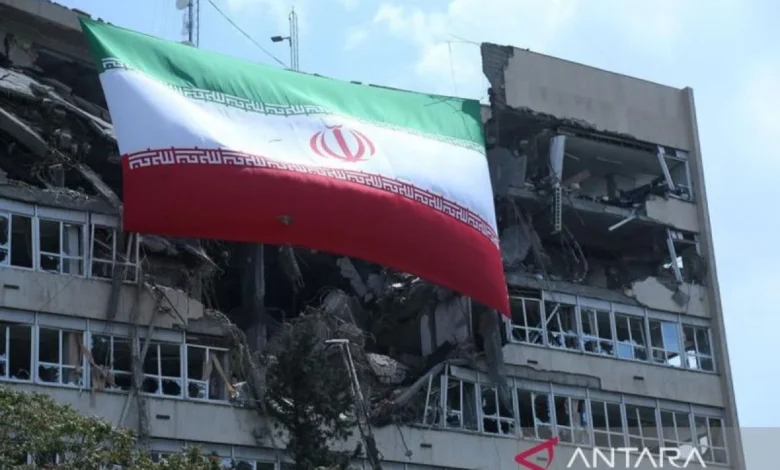
The catalyst for this surge in hostile rhetoric was the death of Ayatollah Ali Khamenei, the long-serving Supreme Leader of the Islamic Republic. According to reports from the region, Khamenei was killed during a highly sophisticated joint operation conducted by American and Israeli forces. The strike, which reportedly utilized advanced stealth technology and precision-guided munitions, targeted a secure facility during a period of heightened regional tensions.
The loss of Ali Khamenei represents the most significant blow to the Iranian establishment since the 1979 Revolution. As the ultimate arbiter of state policy and the spiritual leader of the "Axis of Resistance," his death has left a vacuum that the regime is moving quickly to fill with a narrative of martyrdom and inevitable vengeance. The transition of power was swift, with Ayatollah Mojtaba Khamenei, the son of the deceased leader, assuming the mantle of Supreme Leader. In his inaugural address, Mojtaba Khamenei avoided naming specific targets but emphasized that the "blood of the father" would be the fuel for a new era of Iranian resistance. He stated that the demand for retribution is not merely a government policy but a "sacred mandate" from the Iranian people.
Chronology of Escalation
The timeline leading to the publication of the "Target 13" list reflects a rapid descent into open hostility:
- Pre-Strike Period: Tensions reached a breaking point following a series of maritime skirmishes in the Persian Gulf and increased drone attacks by Iranian-backed militias on U.S. bases in Iraq and Syria.
- The Operation: A joint US-Israeli strike successfully targets a high-level security meeting in Tehran, resulting in the death of the Supreme Leader and several top commanders of the Islamic Revolutionary Guard Corps (IRGC).
- The Succession: Mojtaba Khamenei is confirmed as the new Supreme Leader within 48 hours. He delivers a televised speech to the nation, declaring a period of mourning and a vow of "harsh retaliation."
- The Media Campaign: Hamshahri and other state-aligned outlets begin a coordinated propaganda campaign. This culminates in the release of the "Target 13" infographic, designed to project strength and intimidate Western leadership.
- International Response: Western intelligence agencies elevate the threat levels for the named individuals, while diplomatic channels between the East and West effectively freeze.
Official Responses and Diplomatic Friction
Despite the inflammatory nature of the Hamshahri publication, the official Iranian government—specifically the Ministry of Foreign Affairs—has maintained a level of strategic ambiguity. As of this report, the Iranian government has not formally endorsed the list as an official state "kill list." Diplomatic observers note that this is a common tactic employed by Tehran: using state-affiliated media to issue threats that provide the government with "plausible deniability" while still achieving the desired psychological impact.
In Washington, the White House has characterized the list as "irresponsible and dangerous rhetoric." A spokesperson for the National Security Council stated that any attempt to harm U.S. officials would be met with "unparalleled consequences." Similarly, the Israeli Prime Minister’s Office issued a brief statement asserting that Israel remains undeterred by "Iranian propaganda" and will continue to take all necessary measures to ensure its national security.
In Europe, the reaction has been one of stern condemnation mixed with heightened security protocols. In Berlin and Paris, security details for Chancellor Merz and President Macron have reportedly been augmented. European diplomats have warned that such threats only serve to further isolate Iran from the global community and may trigger a new round of multi-lateral sanctions targeting the IRGC’s leadership and financial networks.
Broader Impact and Geopolitical Implications
The publication of this list has far-reaching implications that extend beyond the safety of the thirteen individuals mentioned. The most immediate concern for global markets is the security of the Strait of Hormuz. Iran has historically used its influence over this narrow waterway—through which approximately 20% of the world’s petroleum passes—as a lever in times of crisis. Following the death of Khamenei, Iranian officials have hinted that the "security of the Persian Gulf" is contingent upon the behavior of external powers.
Furthermore, the "Target 13" list serves as a rallying cry for the "Axis of Resistance," including Hezbollah in Lebanon, the Houthis in Yemen, and various paramilitary groups in Iraq. By naming specific Western and Israeli leaders, the Iranian media is providing a target set for non-state actors who may seek to carry out "lone wolf" attacks or organized strikes on Western interests globally.
From an analytical perspective, the inclusion of European leaders like Keir Starmer and Emmanuel Macron suggests that Iran no longer views Europe as a potential mediator or a "soft power" alternative to the United States. Instead, the Iranian establishment appears to be consolidating its view of the West as a monolithic hostile entity. This shift effectively kills any lingering hopes for a return to the Joint Comprehensive Plan of Action (JCPOA) or any other diplomatic framework regarding Iran’s nuclear program.
Conclusion: A Region on the Brink
The publication of the "Target 13" list by Hamshahri is more than just a piece of media propaganda; it is a manifestation of the deep-seated anger and the survivalist instinct of the Iranian regime in a post-Ali Khamenei era. While the actual capacity of Iran to reach and harm many of the individuals on this list is subject to debate among security experts, the symbolic weight of the threat cannot be ignored.
As Mojtaba Khamenei settles into his role as Supreme Leader, the international community watches with trepidation. The move from covert operations to public, individualized death threats marks a dangerous new chapter in Middle Eastern diplomacy. For now, the world remains in a state of high alert, waiting to see if the rhetoric of the "Target 13" will remain confined to the pages of a newspaper or if it will manifest in a new wave of global instability. The security of the Strait of Hormuz, the stability of global energy markets, and the lives of world leaders now hang in the balance of this escalating cycle of provocation and response.
Related posts: