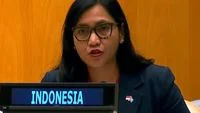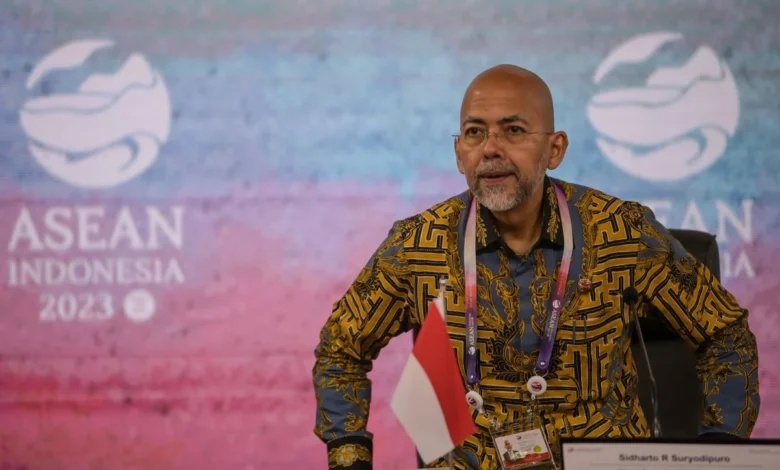
In a historic move that underscores Indonesia’s growing influence in the global diplomatic arena, senior diplomat Sidharto Reza Suryodipuro has been elected as the President of the United Nations Human Rights Council (UNHRC) for the 2026 term. This appointment, finalized on January 8, 2026, represents a significant achievement for Indonesian foreign policy and a testament to the nation’s sustained commitment to the promotion and protection of human rights on a global scale. The election comes at a critical juncture for the international community, as the UNHRC faces increasingly complex challenges ranging from geopolitical conflicts and humanitarian crises to the emerging human rights implications of climate change and digital technology.
Indonesia’s successful bid for the presidency is the culmination of years of active engagement within the Council. Currently serving as a member of the UNHRC for the 2024–2026 term—having secured the highest number of votes (186) during the election at the UN General Assembly in late 2023—Indonesia has positioned itself as a "bridge-builder" between the Global North and the Global South. The election of Sidharto Reza Suryodipuro is seen not only as a personal recognition of his extensive diplomatic expertise but also as a validation of Indonesia’s "Free and Active" (Bebas Aktif) foreign policy, which emphasizes dialogue, inclusivity, and the peaceful resolution of disputes.
A Legacy of Diplomacy: The Profile of Sidharto Reza Suryodipuro
Sidharto Reza Suryodipuro was born on September 29, 1966, in Cologne, Germany, into a family with deep roots in Indonesian statecraft and culture. He is a descendant of the Mangkunegaran noble family of Surakarta, a lineage known for its historical contributions to Indonesian arts and governance. His grandfather, Suyoto Suryodipuro, was a towering figure in the early days of the Indonesian Republic, serving as one of the founding members of the Ministry of Foreign Affairs and playing a pivotal role in the establishment of Radio Republik Indonesia (RRI). This heritage of public service and international engagement provided a foundational backdrop for Sidharto’s own career path.
Sidharto’s formal entry into diplomacy began after he completed his undergraduate studies in International Relations at the Catholic University of Parahyangan (UNPAR) in 1986. Seeking to deepen his strategic and academic understanding of global security, he later pursued postgraduate education in the United States. As a Fulbright scholar, he attended the Naval Postgraduate School in Monterey, California, where he earned a Master of Arts in National Security Affairs in 2003, graduating with distinction. This academic background in security affairs would later prove invaluable in his handling of complex humanitarian and peace-building issues at the United Nations.
Chronology of a Distinguished Career
Sidharto Reza Suryodipuro’s diplomatic journey spans over three decades, characterized by high-stakes assignments in major global capitals and multilateral hubs. His career began in 1992 at the Ministry of Foreign Affairs, where he was quickly funneled into the world of multilateralism. His early assignments included serving at the Permanent Mission of Indonesia to the United Nations in New York, where he worked on the Special Committee on Peacekeeping Operations under the UN General Assembly. This role allowed him to witness firsthand the intricacies of international intervention and the human rights frameworks governing conflict zones.
In the mid-2000s, Sidharto transitioned to bilateral diplomacy, serving at the Indonesian Embassy in Canberra from 2004 to 2006. During this period, he was tasked with strengthening the economic pillars of the Indonesia-Australia relationship. His work focused on expanding trade, investment, and educational exchanges, demonstrating his versatility in handling both "hard" security issues and "soft" power diplomacy.
His return to the United Nations in New York from 2006 to 2009 marked a significant escalation in his responsibilities. During Indonesia’s tenure as a non-permanent member of the UN Security Council (2007–2008), Sidharto was a key member of the delegation, specifically managing portfolios related to African affairs and humanitarian issues. This period was crucial in shaping his perspective on the intersection of security and human rights, particularly in post-conflict reconstruction.
Between 2009 and 2014, Sidharto shifted his focus back to regional dynamics, handling Asia-Pacific and African cooperation. He was instrumental in the preparations for Indonesia’s chairmanship of APEC in 2013, ensuring that the regional economic agenda aligned with Indonesia’s domestic development goals. His subsequent appointment as Deputy Chief of Mission (DCM) at the Indonesian Embassy in Washington D.C. (2014–2017) saw him navigating the complexities of the Indonesia-US Comprehensive Partnership. In Washington, he became a prominent voice for interfaith dialogue and counter-extremism, advocating for a moderate and inclusive approach to global security.
Sidharto’s leadership reached a new milestone in 2017 when he was appointed as the Indonesian Ambassador to India. Notably, he also became the first Indonesian Ambassador accredited to the Kingdom of Bhutan. His tenure in New Delhi was marked by a deepening of the strategic partnership between the two Asian giants, particularly in the fields of maritime security and digital economy. In 2020, his contributions to the protection of Indonesian citizens abroad—a core pillar of Indonesian diplomacy—were recognized when he received the prestigious Hassan Wirajuda Award.
Prior to his current trajectory toward the UNHRC presidency, Sidharto served as the Director General for ASEAN Cooperation starting in 2020. In this capacity, he led the ASEAN Senior Officials’ Meetings (SOM) during a period of extreme regional volatility, including the COVID-19 pandemic and the ongoing crisis in Myanmar. His ability to maintain ASEAN centrality and facilitate consensus in a divided regional environment further solidified his reputation as a skilled negotiator.
The Path to the UNHRC Presidency
The presidency of the UN Human Rights Council rotates annually among the five UN regional groups: African States, Asia-Pacific States, Eastern European States, Latin American and Caribbean States, and Western European and Other States. For the year 2026, the presidency was slated for the Asia-Pacific Group. Indonesia, having demonstrated a consistent and moderate approach to human rights—balancing civil and political rights with economic, social, and cultural rights—emerged as the consensus candidate for the group.
In 2025, Sidharto was appointed as the Permanent Representative of the Republic of Indonesia to the United Nations and other International Organizations in Geneva. This placement was a strategic move by the Indonesian government to prepare for his candidacy. Following a period of intensive lobbying and consultations with member states, Indonesia’s nomination received overwhelming support. The formal election on January 8, 2026, confirms Sidharto as the presiding officer of the Council, a role that requires impartiality, procedural expertise, and the ability to foster dialogue among often-polarized factions.
Strategic Implications and Global Responsibilities
As President of the UNHRC, Sidharto Reza Suryodipuro will be responsible for overseeing the Council’s three regular sessions per year, as well as any special sessions required to address urgent human rights crises. The role is pivotal in setting the tone for international human rights discourse.
Indonesia has signaled that its presidency will be guided by several key principles:
- Inclusivity and Dialogue: Moving away from the "naming and shaming" culture that often paralyzes the Council, Indonesia aims to promote a culture of constructive engagement and technical cooperation.
- The Right to Development: Consistent with the priorities of many developing nations, Indonesia is expected to champion the Right to Development as a fundamental human right, arguing that economic progress and human rights are mutually reinforcing.
- Strengthening the UPR Process: The Universal Periodic Review (UPR) is a unique mechanism where every UN member state’s human rights record is reviewed. Indonesia intends to strengthen this process to ensure it remains a credible and non-politicized tool for improvement.
- Addressing Global Crises: With ongoing conflicts in the Middle East, Eastern Europe, and Southeast Asia, the Council under Sidharto’s leadership will be tasked with responding to mass human rights violations while navigating the veto-heavy politics of the UN system.
Official Reactions and International Standing
The announcement of Sidharto’s election has been met with widespread acclaim within Indonesia and among international observers. Analysts suggest that this presidency is a "crowning achievement" for Indonesian diplomacy, reflecting the country’s transition from a nation once criticized for its own human rights record during the New Order era to a global leader in human rights governance.
The Ministry of Foreign Affairs emphasized that Indonesia’s leadership will prioritize the integrity of the Council. "Indonesia is committed to ensuring that the UN Human Rights Council remains a relevant and effective body that produces tangible benefits for people on the ground," a ministry spokesperson stated. International human rights organizations have also expressed cautious optimism, noting that Indonesia’s experience in managing a diverse, multi-ethnic, and multi-religious democracy provides a unique perspective that could help bridge ideological divides in Geneva.
Conclusion: A Vision for 2026
The election of Sidharto Reza Suryodipuro as President of the UN Human Rights Council marks a defining moment for Indonesia’s role in the 21st-century global order. It reflects a shift in the center of gravity of international diplomacy toward emerging powers that can act as intermediaries in an increasingly fractured world.
As Sidharto prepares to take the gavel in 2026, the expectations are high. His tenure will be measured by the Council’s ability to move beyond rhetoric and deliver substantive protection for the vulnerable. For Indonesia, the presidency is not just a prestigious title; it is an opportunity to shape a global human rights architecture that is more equitable, representative, and effective in upholding the dignity of every individual, regardless of their geographic or political context. Through Sidharto’s leadership, Indonesia seeks to prove that a commitment to human rights is not a Western imposition, but a universal necessity and a shared global responsibility.
Related posts: