Iran Affiliated Media Releases Retaliation List of Thirteen Global Figures Following Death of Ayatollah Ali Khamenei

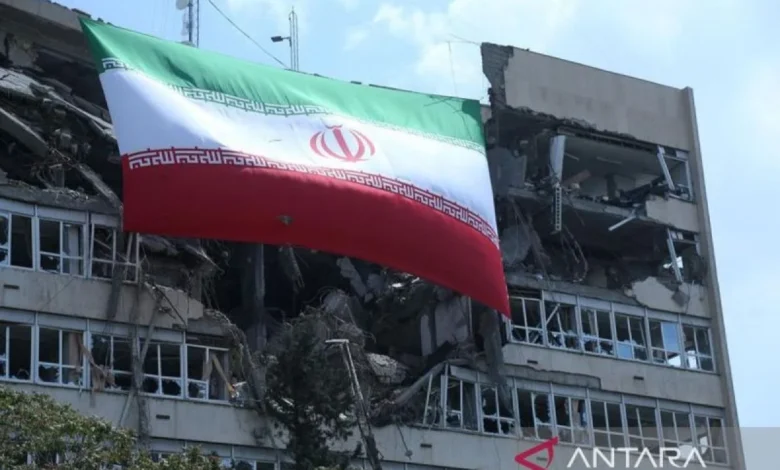
The geopolitical landscape of the Middle East has entered a period of unprecedented volatility following the publication of a targeted "retaliation list" by Hamshahri, a prominent media outlet closely affiliated with the Iranian government and the Tehran municipality. This provocative move comes in the wake of the reported death of Iran’s Supreme Leader, Ayatollah Ali Khamenei, an event that has sent shockwaves through international diplomatic circles and triggered a rapid succession in the Islamic Republic’s leadership. The list, presented through a graphic infographic, identifies thirteen high-ranking political and military figures from the United States, Israel, and several European nations, labeling them as primary targets for vengeance.
The publication of this list is not merely a localized media event but is seen by international observers as a calculated signal of intent from within the Iranian political establishment. While the Iranian government has yet to formally adopt the list as official state policy, its dissemination through Hamshahri—a publication often used to broadcast the sentiments of hardline factions within the Iranian power structure—suggests a significant shift toward a more aggressive post-Khamenei foreign policy. The timing of the release coincides with the first official address by the newly appointed Supreme Leader, Ayatollah Mojtaba Khamenei, who has already signaled that avenging his father’s death is a "national demand" and a cornerstone of his burgeoning leadership.
The Targeted Figures and the Visual Rhetoric of Retaliation
The infographic published by Hamshahri is striking in its visual aggression. It depicts thirteen global leaders and officials dressed in orange jumpsuits, a garment historically associated with detainees at the United States’ Guantanamo Bay detention camp and, more infamously, used in propaganda videos by non-state militant groups. For several individuals on the list, including United States President Donald Trump and Israeli Prime Minister Benjamin Netanyahu, the imagery includes a crosshair target overlaid on their heads, accompanied by captions in Persian and English vowing "inevitable retribution."
The thirteen individuals identified in the publication include:
- Donald Trump: The President of the United States, whom Tehran holds responsible for the strategic and military directives leading to the escalation.
- Benjamin Netanyahu: The Prime Minister of Israel, identified as a primary architect of the joint military operations against Iranian interests.
- Israel Katz: The Israeli Minister of Defense, cited for his role in coordinating the specific tactical strikes.
- Pete Hegseth: The United States Secretary of Defense, targeted for his oversight of American military assets in the region.
- Marco Rubio: The United States Secretary of State, included for his role in diplomatic and economic pressure campaigns against Iran.
- Emmanuel Macron: The President of France, representing European involvement and support for the Western-Israeli security apparatus.
- Keir Starmer: The Prime Minister of the United Kingdom, cited for British intelligence and naval support in the Middle East.
- Friedrich Merz: The Chancellor of Germany, included as a key European leader supporting the current security paradigm against the Islamic Republic.
- Giorgia Meloni: The Prime Minister of Italy, identified for her administration’s alignment with Mediterranean security initiatives.
- Mike Huckabee: The United States Ambassador to Israel, viewed as a symbol of the deep-seated diplomatic alliance between Washington and Jerusalem.
- Brad Cooper: Admiral and Commander of CENTCOM (U.S. Central Command), the operational lead for American military movements in the Persian Gulf and surrounding areas.
- Gideon Sa’ar: The Israeli Minister of Foreign Affairs, targeted for his international efforts to isolate Iran.
- General Staff Representatives: Additional military planners involved in the specific operation that resulted in the death of Ali Khamenei.
Chronology of the Crisis and the Rise of Mojtaba Khamenei
The current crisis traces its roots to a series of coordinated military strikes purportedly conducted by a coalition of United States and Israeli forces. These strikes, which targeted high-level command centers within Iran, resulted in the death of Ayatollah Ali Khamenei, who had led the nation since 1989. The vacuum left by his passing was filled almost immediately by his son, Mojtaba Khamenei, whose transition to power has been the subject of intense speculation for years.
The timeline of the escalation is as follows:
- The Strike: In late 2025, a sophisticated aerial and cyber operation targeted a secure facility where the Supreme Leader was located. While the U.S. and Israel did not initially claim responsibility, Iranian state media immediately blamed the "Zionist regime" and its "American backers."
- The Succession: Within 48 hours of the announcement of Ali Khamenei’s death, the Assembly of Experts convened to confirm Mojtaba Khamenei as the new Supreme Leader. This move was intended to project stability but has been met with varied reactions from the Iranian public and the international community.
- The First Address: In his inaugural speech as Supreme Leader, Mojtaba Khamenei adopted a fiercely nationalistic tone. He stated that the "blood of the martyr" would be the catalyst for a new era of resistance, explicitly calling for "hard revenge" against those who planned and executed the attack.
- The Publication: Shortly after the speech, Hamshahri released the "Thirteen Targets" list, providing a visual and specific focus for the rhetoric of revenge.
Propaganda vs. Policy: An Analytical Perspective
Political analysts specializing in Middle Eastern affairs suggest that the Hamshahri list serves multiple purposes. First and foremost, it functions as internal propaganda designed to galvanize the Iranian domestic population and the broader "Axis of Resistance"—which includes groups like Hezbollah in Lebanon, the Houthis in Yemen, and various militias in Iraq and Syria. By naming specific individuals, the Iranian establishment seeks to channel the national grief and anger into a focused narrative of justice.
However, the distinction between media-driven rhetoric and official state policy remains a critical nuance. The Iranian Ministry of Foreign Affairs has not issued a diplomatic document echoing the "hit list." This allows the Iranian state to maintain a degree of "plausible deniability" on the international stage while simultaneously allowing its affiliated media outlets to broadcast threats that keep its adversaries on high alert.
The use of orange jumpsuits in the imagery is particularly telling. Analysts note that this is a psychological warfare tactic intended to flip the script of "prisoner and captor." By depicting world leaders as prisoners, the Iranian media seeks to project a future where the current global order is overturned and those currently in power are held accountable under Iranian terms.
Global Reactions and Security Implications
The international response to the list has been one of heightened vigilance. In the United States, the Secret Service and the Department of State have reportedly reviewed security protocols for all individuals named. Similar measures are being taken in European capitals. While many Western officials have dismissed the list as "desperate propaganda," the threat of asymmetric warfare—such as cyberattacks or proxy-led operations—remains a significant concern for intelligence agencies.
Israel has responded with characteristic defiance. Sources within the Prime Minister’s Office indicated that such threats only serve to "reinforce the necessity of dismantling the Iranian terror apparatus." Meanwhile, in Europe, the inclusion of leaders like Macron and Starmer has prompted calls for a unified European Union stance on Iranian sanctions and security cooperation.
The maritime implications are also severe. Following the escalation, India has already banned its citizens from working on vessels transiting the Strait of Hormuz, fearing that Iran might use its control over the strategic waterway to seize ships or take hostages as a form of indirect retaliation. The Strait of Hormuz is a vital artery for global energy supplies, and any disruption there could lead to a spike in global oil prices and economic instability.
Broader Impact on Middle Eastern Stability
The death of Ali Khamenei and the subsequent threats against world leaders mark the end of an era and the beginning of a much more unpredictable chapter in Middle Eastern history. For decades, the Supreme Leader’s policy was one of "strategic patience," often preferring to act through proxies rather than direct confrontation with major powers. The rise of Mojtaba Khamenei, coupled with the explicit naming of targets by state-affiliated media, suggests that the era of patience may be over.
The "Thirteen Targets" list also places a significant strain on any remaining diplomatic channels. Efforts to revive nuclear negotiations or discuss regional de-escalation are effectively frozen as long as the rhetoric of assassination and retaliation dominates the airwaves in Tehran.
Furthermore, the inclusion of military commanders like Admiral Brad Cooper highlights the risk of direct military friction. CENTCOM has increased its presence in the Persian Gulf, and the likelihood of miscalculation in the narrow waters of the region has reached its highest point in decades.
Conclusion
As the world watches the transition of power in Tehran, the Hamshahri list remains a potent symbol of the current animosity. Whether it remains a piece of political theater or evolves into a series of actionable plots is the primary question facing global intelligence services. For now, the infographic serves as a chilling reminder of the deep fissures in international relations and the potential for a localized conflict to spiral into a global crisis. The international community remains on edge, waiting to see if the new Supreme Leader will translate the fiery rhetoric of his media affiliates into the official policy of the Iranian state, a move that would almost certainly lead to further military confrontation.
Related posts: