Brake Failure on a Descending Road Claims Four Lives in Probolinggo: A Stark Reminder of Road Safety Deficiencies

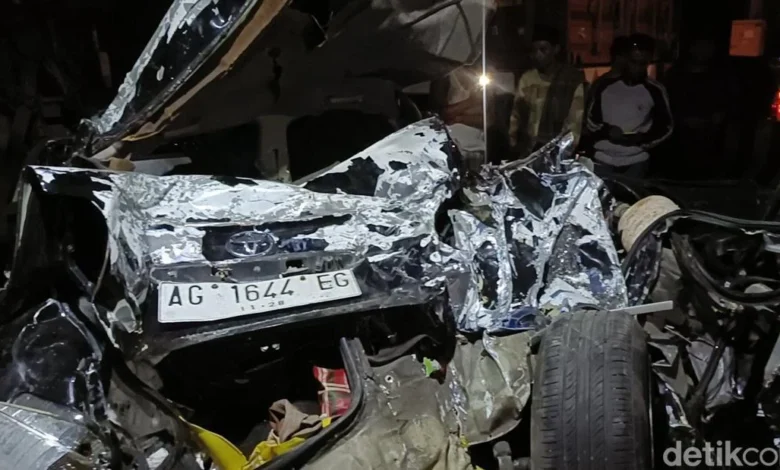
A catastrophic brake failure incident involving a trailer truck on a steep descent in Probolinggo, East Java, has resulted in the tragic deaths of four individuals and highlighted persistent systemic failures in road safety management. The horrifying accident, which occurred on Saturday, April 18, 2026, at approximately 11:30 PM Western Indonesian Time (WIB), saw a Nissan trailer truck, bearing license plate B-9625-UEJ, lose control and plow into five other vehicles stopped at a railway crossing. The collision, described as devastating by authorities, underscores a recurring problem of commercial vehicle maintenance and driver preparedness in Indonesia.
The Devastating Collision
The incident unfolded on Jalan Raya in the village of Malasan Wetan, Tegalsiwalan District, Probolinggo Regency. According to initial reports from detikJatim, the trailer truck, laden with plywood, was traveling downhill from Lumajang towards Probolinggo when its braking system reportedly failed. The truck was unable to stop and crashed into a queue of five vehicles that were halted due to a passing train and the closure of the railway crossing gates. The vehicles struck were a Toyota Vios Limo (AG-1644-EG), a Daihatsu Granmax pickup (P-8361-GL), another pickup truck (N-8387-YH), a Toyota Hi-Ace (P-7022-QB), and a Hino Tractor Head truck (T-9698-TA).
"As a result of this accident, due to the failure of the braking system of the container trailer truck carrying plywood, on a downhill road, and at that time all the vehicles that were hit were stopped, because the gate was closed, a train was passing, and it hit a total of 5 vehicles," stated Iptu Aditya Wikrama, Head of the Enforcement Unit of the Probolinggo Police Traffic Unit.
The immediate aftermath of the collision was grim. The driver of the Toyota Vios Limo, along with three of its passengers, were pronounced dead at the scene. The driver of the trailer truck reportedly confessed that his vehicle’s brakes had failed while navigating the steep incline.
A Pattern of Neglect: Expired KIR Status Revealed
Further investigation into the catastrophic event by detikOto uncovered a deeply concerning detail: the trailer truck involved, with license plate B-9625-UEJ, had an expired mandatory vehicle inspection (KIR) status. An examination of the vehicle’s periodic inspection records via the Ministry of Transportation’s Mitra Darat application revealed that its KIR certificate had been overdue since 2023.
The truck’s last recorded periodic inspection was on April 28, 2023, with its validity expiring on October 28, 2023. This means the Nissan PK215 trailer truck had been operating without valid mandatory inspection for at least six months prior to the fatal incident. This revelation points to a potential systemic failure in enforcement and compliance, allowing a vehicle with potentially compromised safety features to remain on public roads.
Expert Analysis: Systemic Failures and Driver Preparedness
Erreza Hardian, a road safety practitioner and a member of the Policy and Advocacy division of the Indonesian Motor Association (IMI) Road Safety Directorate, offered a stark assessment of the accident’s implications. He emphasized that the severity of such accidents is directly proportional to the speed and mass of the vehicles involved. A complete loss of braking power on a downhill slope amplifies the kinetic energy, leading to more devastating impacts and a greater number of casualties.
"It can be concluded that if one vehicle is much heavier than others, lighter vehicles tend to suffer greater damage in an accident," Reza told detikOto on Sunday, April 19, 2026.
Reza attributed the recurring nature of brake failure accidents involving trucks to a fundamental lack of a "safe system" within the nation’s road transport infrastructure and broader societal mobility. He defined a "safe system" as a revolutionary approach to road safety management based on the principle that traffic systems should be sufficiently safe to prevent fatalities and serious injuries even when accidents occur.
He further elaborated that many brake failure incidents stem from a combination of poor maintenance and human error, indicating that the envisioned "safe system" is not functioning effectively. "Why does maintenance not happen, KIR is expired, even though they are not working individually but as a corporation or company, or at least a management? The contributing factors regarding maintenance and incorrect handling by the driver in an emergency situation are recurring and indeed technical. But if it’s recurring, even with many victims, it means a safe system is not working," Reza stated.
Reza also highlighted that the intensity and increased fatality rate in brake failure incidents are exacerbated by drivers’ incorrect emergency handling procedures when faced with such critical situations. Unfortunately, he noted, these essential handling techniques have not been adequately taught.
"IMI will step in to teach them directly. Because currently, the situation on the road is full of hazards, so drivers’ skills, knowledge, and ethics are important to be improved through education and practice via competency-based training," he said.
Understanding the Technicalities of Brake Failure
Reza outlined several technical reasons behind brake failures in large vehicles, which contribute to the ongoing safety concerns:
- Brake Fade: This occurs when brake pads overheat due to prolonged or heavy braking. The friction material loses its effectiveness, significantly reducing stopping power. On steep descents, continuous braking can easily lead to this condition.
- Air Leak (Tekor Angin): In air brake systems, common in heavy vehicles, a rapid drop in air pressure can occur during repeated braking. This depletion of compressed air means the system can no longer generate sufficient force to apply the brakes effectively.
- Vapor Lock: This phenomenon happens when the brake fluid overheats and boils, creating vapor bubbles within the brake lines. These bubbles are compressible, unlike the fluid, rendering the brake pedal spongy and unresponsive, and ultimately leading to brake failure.
- Improper Gear Selection during Emergency: In an attempt to slow down, drivers might mistakenly shift the transmission into neutral. This is counterproductive, as the engine’s braking effect, crucial for controlling speed on descents, is lost. Attempting to shift to a lower gear when the vehicle is already moving too fast can also be ineffective or even dangerous if not executed correctly.
Broader Implications and the Path Forward
The Probolinggo tragedy is not an isolated incident. Similar accidents involving commercial vehicles, often attributed to brake failure, have plagued Indonesian roads for years. This latest fatality serves as a stark warning that existing regulations and enforcement mechanisms are insufficient to guarantee the safety of the public.
The expired KIR status of the involved truck suggests a breakdown in the oversight of vehicle roadworthiness. While vehicle owners are responsible for maintaining their vehicles and undergoing regular inspections, the authorities are tasked with ensuring compliance. The fact that a vehicle with an expired inspection sticker, potentially indicating compromised safety features, was allowed to operate raises questions about the effectiveness of road checks and surveillance.
The involvement of a heavy trailer truck on a downhill slope further emphasizes the critical need for specialized safety protocols for such vehicles. The immense weight and momentum of these trucks demand stringent maintenance standards and highly skilled drivers.
The statement from Iptu Aditya Wikrama, highlighting the vehicles being stopped at a railway crossing, adds another layer of vulnerability. Accidents occurring at such points, where traffic is often forced to stop, become particularly perilous when a runaway vehicle is involved.
The implications of this accident extend beyond the immediate loss of life. It raises concerns about the safety of goods transportation, the reliability of logistics networks, and the general sense of security for road users across Indonesia. The economic impact of such accidents, including damage to infrastructure, loss of productivity, and increased insurance claims, also cannot be overlooked.
The call by IMI for enhanced driver training and education, particularly in emergency handling, is a crucial step. Providing drivers with the knowledge and skills to manage critical situations like brake failure can significantly mitigate the severity of accidents. However, this must be complemented by robust regulatory frameworks and diligent enforcement to ensure that vehicles on the road are mechanically sound.
The "safe system" approach advocated by experts like Erreza Hardian needs to be more than just a theoretical concept. It requires a comprehensive, multi-faceted strategy involving vehicle manufacturers, operators, drivers, law enforcement, and regulatory bodies. This includes investing in better infrastructure, promoting advanced vehicle safety technologies, and fostering a culture of safety consciousness among all road users.
As Indonesia continues to experience economic growth and increased transportation of goods and people, addressing the persistent issue of commercial vehicle safety is paramount. The tragic events in Probolinggo serve as a grim reminder that the cost of inaction is measured in human lives and the erosion of public trust in the safety of the nation’s roads. Urgent and decisive action is required to prevent future tragedies and ensure that all journeys are as safe as possible.