The Strokes Close Coachella 2026 Second Weekend with Powerful Political Statement Against US-Israel Actions in Iran and Gaza

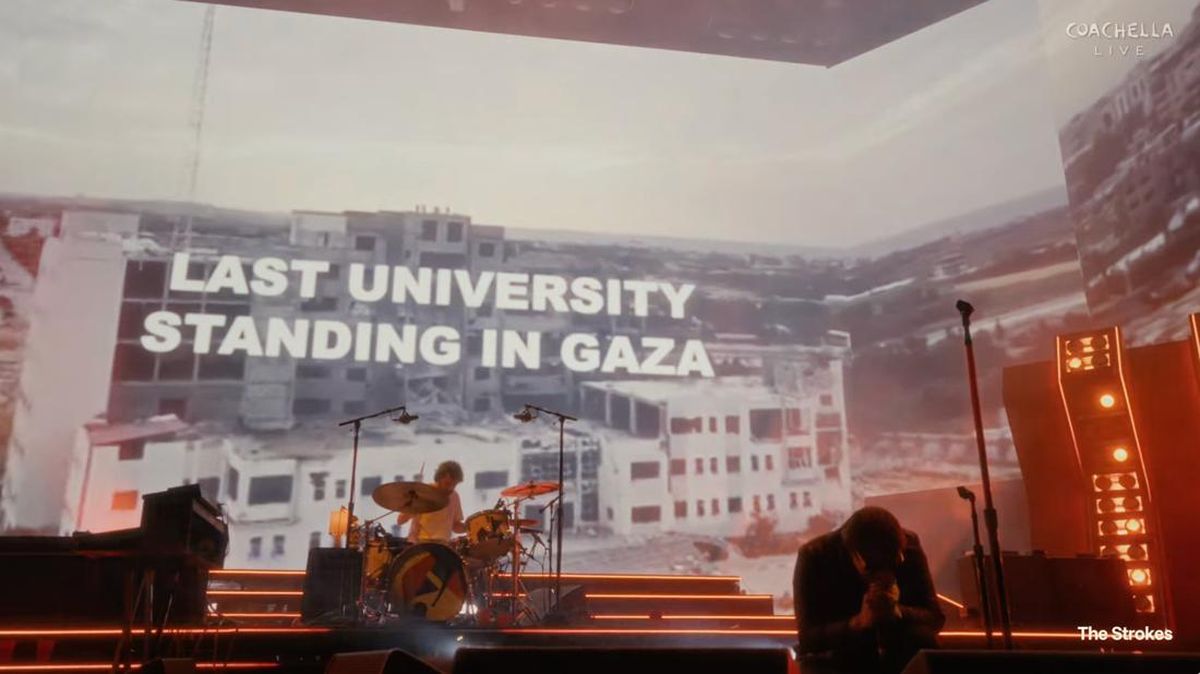
Indio, California – The Strokes concluded their second weekend performance at the Coachella Valley Music and Arts Festival 2026 on Saturday, April 18th, with a potent and politically charged visual statement that resonated far beyond the festival grounds. Eschewing the more typical celebratory atmosphere of festival closers, the acclaimed New York rock band utilized their massive LED screen to broadcast a damning montage criticizing the United States and Israel’s involvement in conflicts in Iran and Gaza, a stark contrast to their first-weekend appearance.
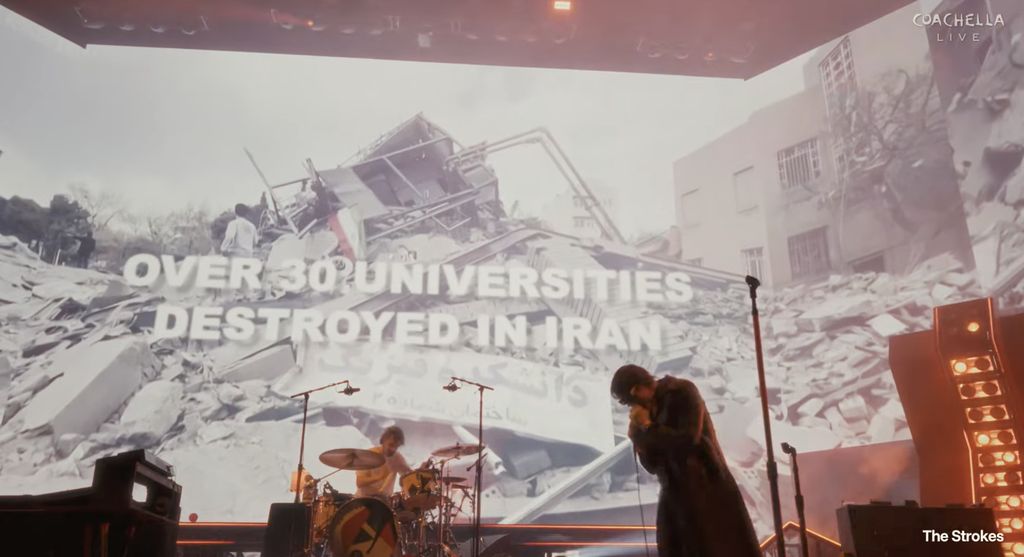
The impactful display unfolded during the band’s rendition of "Oblivius," a track that had not been performed live since 2016, adding an extra layer of significance to its resurgence. As the familiar guitar riffs filled the desert air, the giant screen behind the band transformed into a canvas of protest. For several minutes, powerful imagery accompanied by stark text declarations articulated the band’s grievances, drawing the attention of tens of thousands of festival-goers and a global online audience.
A Visual Indictment of Conflict
The visual narrative began with footage of airstrikes, accompanied by the bold declaration: "Over 30 universities destroyed in Iran." This was followed by imagery of a devastated building in Gaza, captioned, "Last university standing in Gaza." These initial statements immediately framed the band’s message within the context of educational infrastructure destruction and the broader humanitarian crisis in the region.
The montage, however, extended its critique to encompass a broader historical perspective of American foreign policy. It delved into decades of alleged US interventionism across the globe, showcasing clips and text referencing historical events such as the Central Intelligence Agency’s (CIA) involvement in the overthrow of democratically elected governments in Latin America. Specific instances cited included the alleged 1973 coup against Salvador Allende in Chile and the 1976 ousting of Juan Torres in Bolivia. The band also highlighted the documented 1953 coup in Iran, which led to the removal of Prime Minister Mohammed Mossadegh, a pivotal moment in Iranian history that continues to shape the nation’s relationship with Western powers.
Furthermore, the video touched upon controversial theories surrounding the assassination of civil rights leader Martin Luther King Jr. It presented claims that the US government was found guilty in a 1999 civil trial, a statement that, while factually contested by the US Department of Justice in 2000 which found no valid evidence for the jury’s verdict, served to underscore the band’s intent to question official narratives and historical accounts.
Fan Reactions and Festival Response
The band’s bold political stance elicited a wide spectrum of reactions across social media platforms. On Instagram, the band’s official account and fan pages were flooded with largely positive comments. Many fans expressed gratitude for The Strokes using their prominent platform to draw attention to the humanitarian crises in Gaza and Iran, praising the band for their courage and conviction. Hashtags such as #TheStrokesForGaza and #StandWithIran began trending, amplifying the message beyond the immediate festival audience.
However, the move was also anticipated to draw criticism from pro-Israel groups and conservative commentators in the United States. The sensitive nature of the geopolitical issues addressed meant that the band’s statement was likely to ignite debate and potentially backlash.
Interestingly, the festival organizers, Goldenvoice, appeared to adopt a different approach compared to previous years where political statements by artists have sometimes led to friction. Unlike the incident involving the Irish group Kneecap in 2025, which reportedly caught organizers off guard, Coachella’s official live stream on YouTube prominently featured The Strokes’ entire visual montage without apparent censorship or redaction. This decision, as noted by Variety in a report on Sunday, April 19th, suggested either a tacit acceptance or a prepared stance by the festival towards politically charged performances. This contrasts with past instances where festival organizers have been perceived as more cautious or even obstructive of overtly political artistic expressions.
Enduring Influence and Future Engagements
Despite the potential for controversy, The Strokes’ position within the music industry appears unlikely to be jeopardized. Lead vocalist Julian Casablancas has a documented history of activism and support for Palestine. He was a signatory to the "Musicians for Palestine" open letter and statement in 2021, signaling his long-standing commitment to the cause. This prior engagement lends credibility and consistency to the band’s current public stance.
The band’s commitment to their artistic and political message extends beyond Coachella. They are still slated to headline the Just Like Heaven festival in Pasadena in August 2026, working with the same production team that facilitated their Coachella performances. This indicates a continued strategy of integrating impactful visual elements into their live shows.
The second weekend performance at Coachella served as a dramatic and memorable conclusion to their festival appearances for the year. It also marks a significant point before the band embarks on their extensive world tour, scheduled to run from June through the autumn of 2026. This tour is expected to reach a global audience, potentially carrying their message to new territories and demographics.
Context and Broader Implications
The Strokes’ statement at Coachella 2026 occurs against a backdrop of heightened global awareness and concern regarding ongoing conflicts. The situation in Gaza has been a focal point of international humanitarian efforts and political discourse for years, with recent escalations drawing widespread condemnation. Similarly, Iran has faced internal unrest and international scrutiny over its regional policies and domestic human rights record.
The destruction of educational institutions in conflict zones is a critical issue, impacting not only the immediate generation but also the long-term development and stability of affected regions. Reports from organizations like UNESCO have consistently highlighted the devastating impact of war on education infrastructure, emphasizing the need for protection of schools and universities during armed conflicts. The targeting of universities, as alleged by The Strokes, represents a severe violation of international humanitarian law and a direct assault on the future of a nation.
The band’s inclusion of historical US foreign policy interventions adds another layer of complexity to their message. It suggests a view that current conflicts are not isolated incidents but are potentially rooted in a pattern of geopolitical maneuvering and interventionism. This perspective, while debated, is a significant element of critical analysis concerning international relations and the roots of contemporary global instability.
The fact that the Coachella livestream did not censor the political content is a notable development in how major music festivals navigate the intersection of art, entertainment, and political expression. In an era where social media amplifies every artistic statement, the decision by Goldenvoice to fully broadcast the band’s message could be interpreted as a shift towards greater tolerance for artists using their platforms for social commentary. This could potentially encourage other artists to engage more directly with pressing global issues, transforming festival stages into more significant arenas for public discourse.
The implications of The Strokes’ Coachella performance are multi-faceted. For their fans, it reinforces their image as an artistically authentic and socially conscious group. For those directly affected by the conflicts mentioned, it offers a moment of global solidarity and amplified awareness. For political observers, it highlights the growing influence of cultural figures in shaping public opinion on complex geopolitical matters. The band’s decision to use their considerable platform to address these critical issues at one of the world’s most prominent music festivals underscores the evolving role of artists in contemporary society. Their message, delivered through music and powerful visuals, is poised to spark conversations and debates that extend far beyond the final notes of their set.