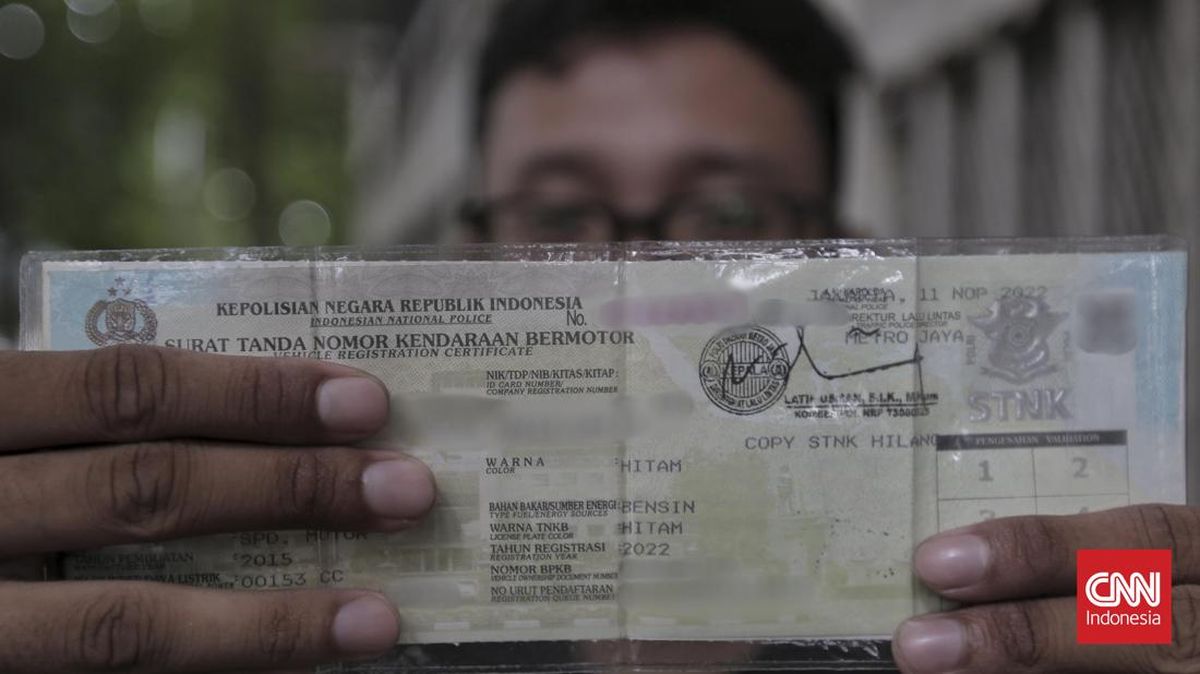
Vehicle owners in Indonesia are being strongly advised by the National Police Traffic Corps (Korlantas Polri) to promptly block the registration of their vehicles (Surat Tanda Nomor Kendaraan – STNK) immediately after selling them. This crucial step is not merely a bureaucratic formality but a vital measure to update vehicle registration data and, more importantly, to prevent potential financial burdens, particularly concerning progressive taxes, and to mitigate legal liabilities.
The Korlantas Polri has emphasized that failing to block a sold vehicle’s STNK can lead to significant disadvantages for the previous owner. A primary concern is the imposition of progressive taxes. This tax system, designed to discourage multiple vehicle ownership by individuals, levies a higher tax rate on subsequent vehicles registered under the same name. When an STNK is not blocked after a sale, the vehicle remains officially registered to the former owner. Consequently, if that individual purchases a new vehicle, the system will interpret it as their second or subsequent vehicle, triggering the higher progressive tax rates.
"When you buy a new car, you will not be subject to progressive tax by blocking the STNK of the sold vehicle," stated the Korlantas in its official online dissemination. This directive is further underpinned by Indonesian law, specifically Article 87, paragraph 3 of Regulation of the National Police (Perpol) Number 7 of 2021. This regulation explicitly mandates STNK blocking to prevent various administrative processes, including vehicle re-registration, STNK replacement, and the enforcement of traffic violations.
The Financial and Legal Imperative of STNK Blocking
The implications of neglecting STNK blocking extend beyond mere tax liabilities. The progressive tax system, implemented to manage urban traffic congestion and encourage the use of public transportation, relies on accurate and up-to-date vehicle ownership data. In 2023, for instance, data from the Ministry of Transportation indicated a steady increase in vehicle ownership across major Indonesian cities, underscoring the relevance of such tax policies in managing this growth. Without timely updates through STNK blocking, the effectiveness of these policies is compromised, and individual vehicle owners bear the brunt of inaccurate taxation.
For example, if a person sells a car and fails to block its STNK, and the new owner subsequently commits traffic violations, the electronic traffic law enforcement (ETLE) system may still send electronic tickets to the original owner’s registered address. This can lead to a cascade of administrative problems, including potential legal complications if the violations are not addressed, even though the original owner no longer possesses the vehicle.
Beyond Taxes: Security and Law Enforcement Benefits
The importance of blocking an STNK after a vehicle sale is not limited to financial considerations; it also plays a critical role in public safety and law enforcement. The Korlantas Polri highlights that blocking the STNK makes it significantly easier for law enforcement officials to track and identify a vehicle if it is involved in criminal activities. When a vehicle is used as a tool in a crime, law enforcement agencies rely on accurate registration data to quickly apprehend suspects and recover stolen property. An unblocked STNK creates a significant impediment in such investigations, potentially delaying justice and allowing criminals to evade capture.
"Blocking the STNK is intended to make it easier for officers to trace the identity of the vehicle if it is used as a means of crime," the Korlantas explained. This proactive measure by vehicle owners contributes directly to a safer community by ensuring that vehicle registration data accurately reflects current ownership.
The Electronic Traffic Law Enforcement (ETLE) Connection
The advent and widespread implementation of the Electronic Traffic Law Enforcement (ETLE) system across Indonesia have further amplified the necessity of timely STNK blocking. ETLE systems capture traffic violations through cameras and automatically generate electronic tickets. These tickets are then sent to the registered owner’s address based on the vehicle’s STNK data. If the STNK has not been blocked after a sale, the original owner will continue to receive these tickets for violations committed by the new owner. This can lead to significant confusion and a complex bureaucratic ordeal to prove that the vehicle was no longer in their possession at the time of the violation.
The Korlantas Polri has acknowledged that blocking STNK can enhance the accuracy of the ETLE system. By ensuring that vehicle ownership data is current, the ETLE system can more effectively identify the actual perpetrator of traffic offenses, thereby improving the fairness and efficiency of traffic law enforcement. Furthermore, if there are outstanding vehicle tax payments, the local tax office (Samsat) will continue to send warning letters to the registered owner. In cases of ETLE violations, police can also issue confirmation letters based on the registered data if a report is received from the ETLE system.
Addressing the Challenges of the Used Car Market
The Indonesian used car market is vibrant, with millions of transactions occurring annually. This dynamic market presents a continuous challenge for maintaining accurate vehicle registration data. Reports from automotive industry associations suggest that a significant percentage of vehicle sales are conducted through informal channels, where the proper administrative procedures, including STNK blocking, are sometimes overlooked. This oversight can be attributed to a lack of awareness among sellers, a desire to avoid minor administrative fees, or simply the absence of a robust follow-up mechanism for sellers.
The Korlantas Polri’s persistent public awareness campaigns are a response to this ongoing challenge. The aim is to educate both buyers and sellers on their respective responsibilities in ensuring a smooth and legally compliant transfer of vehicle ownership. The potential financial and legal repercussions for the seller can be substantial, often outweighing the minor inconvenience or cost associated with the blocking procedure.
A Step-by-Step Guide to Blocking Your STNK
To facilitate this essential process, the Korlantas Polri has outlined the necessary steps and required documents for blocking an STNK. Vehicle owners must visit the Samsat office corresponding to the address where the vehicle is registered. The following documents are typically required:
- Photocopy of the vehicle owner’s Identity Card (KTP): This is the primary identification document for the registered owner.
- Letter of attorney with stamp duty and its photocopy (if authorized): If the owner cannot be present, they can authorize someone else to act on their behalf. This requires a formal letter of attorney, stamped and photocopied.
- Photocopy of the deed of transfer and proof of payment: This document officially records the transfer of ownership from the seller to the buyer and should include proof of payment for the sale.
- Photocopy of the STNK/BPKB: Copies of the vehicle’s current STNK and the Vehicle Ownership Certificate (BPKB) are usually required to verify the vehicle’s registration details.
- Photocopy of the Family Card (Kartu Keluarga): This document may be required for verification purposes.
It is advisable for vehicle owners to contact their local Samsat office in advance to confirm the exact list of required documents, as procedures can sometimes vary slightly between regions. The process typically involves submitting these documents at the Samsat counter, where officials will verify the information and proceed with the STNK blocking.
Broader Implications and Future Outlook
The consistent enforcement of STNK blocking regulations has several broader implications for Indonesia’s automotive ecosystem and governance. Firstly, it contributes to the accuracy of national vehicle registration databases, which are crucial for urban planning, traffic management, and national security. Secondly, it promotes greater accountability among vehicle owners, ensuring that individuals are responsible for the vehicles registered under their names.
Looking ahead, the Indonesian government may explore further technological solutions to streamline the STNK blocking process, potentially integrating it more seamlessly with online vehicle sales platforms or digital identity systems. Enhanced public awareness campaigns, perhaps in partnership with automotive associations and dealerships, could also play a significant role in ensuring compliance. The proactive blocking of STNK is a small but vital act that benefits not only the individual vehicle owner but also contributes to a more orderly, secure, and efficiently governed society. The Korlantas Polri’s continued emphasis on this administrative procedure serves as a clear reminder that responsible vehicle ownership extends beyond the point of sale.