Supreme Court Rejects BYD’s Appeal in Denza Trademark Dispute, Company Vows to Continue Legal Fight

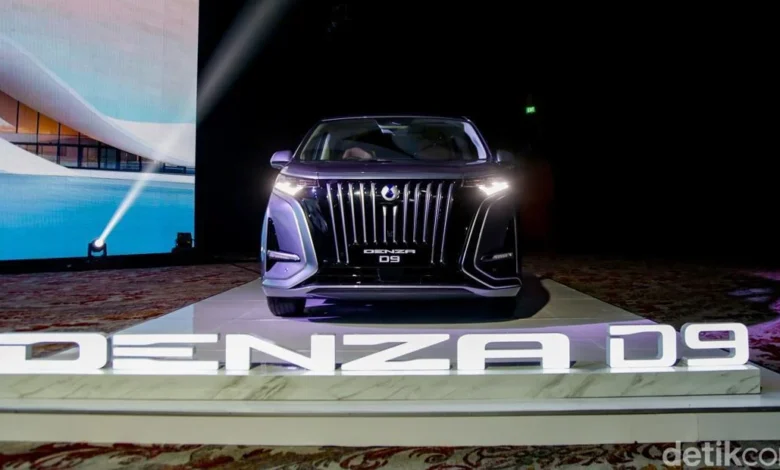
The Supreme Court of Indonesia has upheld a lower court’s decision, rejecting the appeal filed by BYD Company Limited (BYD) concerning the trademark dispute over the "Denza" brand. This ruling follows an earlier dismissal of BYD’s lawsuit by the Central Jakarta District Court in April 2025. Despite the Supreme Court’s verdict, BYD asserts that the legal process surrounding the Denza trademark is far from over, indicating a potential for further legal avenues to be explored.
The legal battle, detailed in Supreme Court Decision No. 1338 K/PDT.SUS-HKI/2025, centers on BYD’s claim to the Denza brand name, which was contested by PT Worcas Nusantara Abadi. The initial judgment by the Central Jakarta District Court, led by Chief Judge Betsji Siske Manoe and Judges Sutarno and Adeng Abdul Kohar, found entirely in favor of PT Worcas Nusantara Abadi, ordering BYD to bear the legal costs amounting to Rp 1,070,000.
Following this unfavorable ruling at the district court level, BYD escalated the case to the Supreme Court through a cassation appeal. However, the highest judicial body in Indonesia ultimately sided with the previous decision, denying BYD’s request. The Supreme Court’s judgment explicitly stated: "Adjudicating, rejects the cassation appeal from Appellant II BYD Company Limited. Grants the cassation appeal from Appellant I PT Worcas Nusantara Abadi." This dual outcome suggests a nuanced consideration by the court regarding the parties involved.
Crucially, the Supreme Court’s decision highlighted a critical point regarding the ownership of the Denza trademark. According to the court’s findings, based on the presented evidence, the Denza trademark had already transferred ownership to PT Raden Reza Adi. This transfer of ownership was deemed a significant factor, leading the court to consider BYD’s lawsuit as "error in persona," meaning the suit was filed against the wrong party. The court’s reasoning implies that BYD’s dispute should have been with the current rightful owner, PT Raden Reza Adi, rather than solely with PT Worcas Nusantara Abadi, whose role in the dispute seems to have shifted or been superseded by the subsequent ownership transfer.
Despite the Supreme Court’s ruling, BYD Motor Indonesia’s Head of Public and Government Relations, Luther Panjaitan, expressed a firm belief that the legal proceedings are ongoing. He clarified that the Supreme Court’s decision does not definitively declare that BYD does not own the Denza trademark but rather points to a discrepancy in the legal subjects targeted by the lawsuit. Panjaitan assured that BYD has already secured the "Danza" name in Indonesia, indicating a proactive approach to brand protection.
"BYD believes in a fair and balanced legal system, and we are currently studying and considering our next steps. However, it is confirmed that we hold the DANZA trademark in Indonesia," Luther told detikOto, underscoring their confidence in their legal position and brand ownership within the Indonesian market.
Panjaitan further elaborated on BYD’s global standing regarding the Denza brand, stating that BYD is the recognized global rights holder for DENZA, with its ownership acknowledged in numerous international jurisdictions. He acknowledged that such situations are not uncommon when entering new markets. "This also serves as an introduction for us to the dynamics of investment in Indonesia. Nevertheless, this does not alter our commitment to Indonesia. BYD will continue to contribute with real and proven products and technology that provide added value to the national industry," he added, emphasizing BYD’s long-term vision and commitment to the Indonesian automotive sector.
Background of the Denza Trademark Dispute
The Denza brand, a joint venture between BYD Auto and Mercedes-Benz, was initially intended to be a premium electric vehicle marque targeting the Chinese market. Established in 2010, Denza aimed to leverage BYD’s battery technology and manufacturing prowess with Mercedes-Benz’s design and luxury expertise. However, the brand has experienced shifts in its operational and ownership structure over the years, leading to complexities in trademark management, particularly as BYD expands its global footprint.
The dispute in Indonesia appears to stem from BYD’s efforts to establish its presence and protect its brand assets in the Indonesian market. The legal challenge initiated by BYD against PT Worcas Nusantara Abadi for alleged unauthorized use of the Denza name suggests a perceived infringement on their intellectual property rights. The subsequent legal maneuvers, including the cassation appeal to the Supreme Court, highlight the significance BYD places on securing its brand identity in this burgeoning automotive market.
Chronology of Legal Proceedings
The legal saga surrounding the Denza trademark in Indonesia can be traced through the following key stages:
- Early 2025: BYD Company Limited initiates a lawsuit against PT Worcas Nusantara Abadi concerning the use of the "Denza" brand name.
- April 2025: The Central Jakarta District Court rules against BYD, dismissing their lawsuit entirely and ordering BYD to cover legal costs. The court’s decision is documented under Decision No. 1/Pdt.Sus-HKI/Merek/2025/PN.Niaga.Jkt.Pst.
- Post-District Court Ruling: BYD files a cassation appeal to the Supreme Court of Indonesia, seeking to overturn the district court’s verdict.
- Supreme Court Ruling (Undated, referenced as 2025 in case number): The Supreme Court of Indonesia, under Decision No. 1338 K/PDT.SUS-HKI/2025, rejects BYD Company Limited’s cassation appeal. Simultaneously, it grants the cassation appeal of PT Worcas Nusantara Abadi. The ruling points to a transfer of Denza trademark ownership to PT Raden Reza Adi.
Analysis of Implications and Broader Context
The Supreme Court’s decision, while a setback for BYD’s immediate legal objective, underscores the importance of meticulous due diligence and proper registration of intellectual property rights when entering new markets. The "error in persona" finding suggests that BYD may have targeted the wrong entity or overlooked critical changes in trademark ownership prior to initiating legal action.
For BYD, this ruling necessitates a strategic reassessment of its approach to brand protection in Indonesia. The company’s statement about securing the "Danza" name implies that they are pursuing alternative or complementary legal strategies, possibly involving direct claims against the current registered owner or a re-evaluation of their original filing strategy. Their assertion of global ownership rights and commitment to the Indonesian market indicates a determination to resolve this issue and continue their business operations.
The involvement of PT Worcas Nusantara Abadi and the subsequent mention of PT Raden Reza Adi also raise questions about the chain of ownership and any potential prior agreements or disputes concerning the Denza trademark in Indonesia. Understanding the historical context of the trademark’s registration and any subsequent transfers is crucial for a comprehensive view of the situation.
Furthermore, this case serves as a valuable lesson for foreign investors and businesses operating in Indonesia, highlighting the intricacies of the Indonesian legal system and the critical need for robust legal counsel to navigate intellectual property laws. The emphasis on registered ownership and the potential for "error in persona" rulings underscore the importance of thoroughly verifying trademark status and ownership chains.
BYD’s commitment to contributing to the national industry with its products and technology remains a key takeaway. The company’s resilience in the face of legal challenges and its continued focus on market entry and technological contribution signal a long-term engagement with Indonesia. The automotive sector in Indonesia is experiencing significant growth, particularly in the electric vehicle segment, making brand protection and market positioning vital for all players. BYD’s experience, while challenging, is a common facet of establishing a presence in dynamic and evolving markets. The company’s proactive stance in securing the "Danza" name and its pledge to continue investing suggests that this legal hurdle, though significant, is unlikely to deter their broader strategic ambitions in the archipelago. The outcome of BYD’s future legal steps will be closely watched by industry observers and competitors alike, as it could set precedents for trademark disputes in Indonesia’s rapidly expanding automotive landscape.