Way Kambas National Park Announces Double Pregnancy of Critically Endangered Sumatran Rhinos in Milestone for Global Conservation

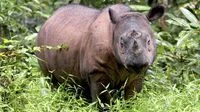
Conservationists and wildlife officials in Indonesia have shared a remarkably optimistic update regarding one of the planet’s most imperiled megafauna species. Two female Sumatran rhinos residing within the Way Kambas National Park (TNWK) in Lampung, Sumatra, are currently pregnant, prompting intensive medical monitoring and widespread celebration across the international conservation community. The announcement was officially made public during the commemoration of World Rhino Day 2026, held at Taman Safari Indonesia in Bogor.
The two expectant mothers, Ratu and Delilah, are staples of the specialized breeding and protection initiatives housed within the Sumatran Rhino Sanctuary (SRS) at TNWK. Their ongoing pregnancies represent a monumental stride forward for the long-term survival strategy designed to pull the Sumatran rhino species back from the brink of extinction. As wildlife authorities race against time to reverse decades of population decline, these two anticipated births underscore the vital role that semi-natural breeding programs play in modern zoological and ecological management.
Current Status of the Expectant Mothers and Paternal Lineages
According to official medical and administrative records registered as of October 3, 2026, both pregnancies are progressing steadily under the watchful eyes of veteran veterinarians, animal keepers, and conservation managers.
Ratu, an experienced mother within the sanctuary, is currently carrying her fourth calf. The father of this upcoming offspring is Andalas, a prominent resident male at the facility. As of the early October milestone, Ratu’s gestation period has reached 238 days, translating to approximately 7.9 months. Given that the typical gestation period for a Sumatran rhino spans an extraordinary 15 to 16 months, Ratu is roughly halfway through her pregnancy journey, requiring specialized nutritional adjustments and continuous physiological checks to ensure her well-being.
Meanwhile, Delilah—who is Ratu’s own daughter—is expecting her second calf, sired by the sanctuary bull Harapan. Delilah’s gestation milestone on October 3 stood at 251 days, or approximately 8.3 months. Delilah’s journey holds a unique historical significance for the facility, as she herself was born at the SRS in 2016 and successfully delivered her first calf, Indra, in November 2023. Her second pregnancy highlights the successful generational progression of captive-born Sumatran rhinos reaching reproductive maturity and contributing directly to the sustainability of the population.
The Sumatran Rhino Sanctuary: A Model of Semi-In-Situ Conservation
The sanctuary where Ratu and Delilah reside, the Sumatran Rhino Sanctuary (SRS) at Taman Nasional Way Kambas, operates under a specialized management framework known as semi-in-situ conservation. This methodology bridges the gap between wild habitation and captive management. The rhinos are maintained within large, forested enclosures that closely mimic their natural ecological environment, allowing them to exhibit natural foraging, wallowing, and social behaviors with minimal direct human interference.
At the same time, the facility provides state-of-the-art veterinary care, nutritional supplementation, and rigorous reproductive monitoring. This dual approach ensures that the animals are protected from external threats such as poaching and habitat encroachment while receiving medical interventions that would be impossible to administer in the deep, remote tropical rainforests.
The operational success of the SRS is the result of a collaborative institutional partnership. The facility is jointly managed by the Ministry of Forestry through the Way Kambas National Park Authority, working hand-in-hand with the Rhino Foundation of Indonesia (Yayasan Badak Indonesia, or YABI). Through decades of meticulous planning, scientific research, and field dedication, the SRS has transformed from a speculative conservation project into the premier breeding facility for the species in the world.
A Proven Track Record of Births at Way Kambas
The dual pregnancies of Ratu and Delilah do not occur in a vacuum; rather, they are the culmination of a systematically refined breeding program that has yielded consistent, groundbreaking results over the past decade and a half. Since its inception, the breeding program at SRS TNWK has successfully welcomed five calves into the world, cementing its status as a global benchmark for captive propagation of critically endangered ungulates.
The milestone births began with Andatu, who was born at the facility in 2012, marking the first successful captive birth of a Sumatran rhino in Indonesia in over 124 years. Four years later, in 2016, Delilah was born, representing a crucial second-generation success. The momentum accelerated into the 2020s with the arrival of Sedah Mirah in 2022, followed closely by the dual births of Anggi and Indra in 2023.
With Ratu and Delilah now advancing through their respective gestation cycles, the total number of historical births under the program is poised to expand further. Each successful birth contributes vital demographic stability and diversifies the limited gene pool available for a species numbering fewer than a hundred individuals globally.
Global Implications and Official Reactions
The announcement of the two pregnancies has drawn praise from high-ranking government officials and international conservation leaders alike. Ahmad Munawir, the Director of Species and Genetic Conservation at the Ministry of Forestry, emphasized the profound global significance of the impending births during his address at the World Rhino Day event.
"The pregnancy of these two Sumatran rhinos is not only wonderful news for Indonesia, but for the entire global conservation community," Ahmad stated. "These gestations form an integral component of our long-term strategic efforts to secure the survival of the Sumatran rhino through planned breeding programs, rigorous reproductive health management, and intensive individual monitoring."
Ahmad further elaborated that sustaining genetic diversity is paramount. Because the wild population is heavily fragmented, the targeted pairings managed within the controlled yet naturalistic environment of the SRS allow conservation scientists to maximize genetic representation, mitigating the risks associated with inbreeding depression.
Echoing these sentiments, Jansen Manansang, Chairman of the Executive Board of the Rhino Foundation of Indonesia (YABI), underscored the unrelenting commitment of the sanctuary’s operational teams. He noted that veterinary personnel and animal keepers have elevated their monitoring protocols to safeguard both mothers through the remainder of their long gestation periods.
"Our team, alongside the Way Kambas National Park Authority, remains deeply committed to providing round-the-clock care and observation for the expectant mothers," Jansen remarked. "Intensive daily oversight ensures that any subtle shifts in health, temperament, or nutritional needs are immediately addressed, giving Ratu and Delilah the safest possible environment to carry their calves to full term."
The Dire Conservation Status of the Sumatran Rhino
Despite these localized triumphs, the broader ecological outlook for the Sumatran rhino (Dicerorhinus sumatrensis) remains perilous. Classified by the International Union for Conservation of Nature (IUCN) Red List as Critically Endangered—the highest category of threat before extinction in the wild—the species faces an existential crisis driven by historical habitat loss, agricultural encroachment, and historical poaching pressures.
Current estimates place the total global population of Sumatran rhinos at fewer than 80 individuals. Unlike their African counterparts, which often roam in open savannahs, Sumatran rhinos are solitary inhabitants of dense, mountainous tropical rainforests. This secretive behavior, combined with their fragmented distribution, makes them exceptionally difficult to locate, study, and protect in the wild.
Remaining wild populations are now restricted entirely to the Indonesian archipelago, surviving in isolated pockets across the Leuser Ecosystem in Aceh, Taman Nasional Way Kambas and Taman Nasional Bukit Barisan Selatan in Lampung, and select regions of East Kalimantan. Because these wild populations are often separated by vast distances of human-modified landscapes, natural inter-population breeding is virtually impossible. This geographic isolation makes intensive sanctuary breeding programs like the one at Way Kambas not merely an auxiliary conservation tool, but an absolute necessity for the prevention of total species extinction.
Long-Term Outlook and the Road Ahead
As Ratu and Delilah continue their respective pregnancies toward their anticipated delivery dates in the coming months, the global conservation community watches with bated breath. The journey does not end at birth; following a gestation period of roughly 15 to 16 months, a newborn Sumatran rhino requires up to two years of maternal nursing and intensive veterinary oversight before it is successfully weaned.
The sustained success of the Sumatran Rhino Sanctuary serves as a testament to what dedicated institutional collaboration, scientific rigor, and unwavering political will can achieve in the face of ecological adversity. While the shadow of extinction still looms over the species, the impending arrivals of Ratu and Delilah’s calves offer a tangible beacon of hope—proving that with meticulous intervention, humanity can pull a magnificent prehistoric species back from the very precipice of oblivion.
Related posts: