Driving the Future of Indonesian Motorsport: Pertamina Mandalika Racing Series 2026 Bridges Grassroots Talent with Global Ambitions

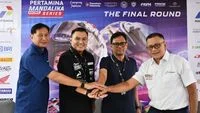
The Pertamina Mandalika Racing Series (Pertamina MRS) 2026 has firmly established itself as a cornerstone of national motorsport development, extending far beyond the boundaries of a conventional competitive racing calendar. Held at the world-class Pertamina Mandalika International Circuit in Lombok, Nusa Tenggara Barat, the grand finale of the 2026 season encapsulates a multifaceted national strategy. It serves as a vital crucible for driver talent development, a catalyst for the domestic automotive industry, and a powerful engine driving regional tourism and community economic empowerment. As the final round reached its thrilling crescendo on Saturday, November 7, industry leaders, government officials, and motorsport stakeholders converged to underscore the strategic necessity of sustained national competition in propelling Indonesian riders onto the global stage.
Background and Context of the Pertamina Mandalika Racing Series
The evolution of Indonesian motorsport has historically faced structural hurdles, chief among them the scarcity of standardized racing infrastructure and structured career pathways for young riders. For decades, highly talented grassroots racers faced a steep, often insurmountable financial and logistical wall when attempting to transition from local street or makeshift circuit racing to international championships like Moto2, Moto3, or the Asia Road Racing Championship (ARRC).
The construction and subsequent international homologation of the Pertamina Mandalika International Circuit fundamentally altered this landscape. Inaugurated as a premier sporting venue designed to host global events such as the MotoGP World Championship and the MOTUL FIM Superbike World Championship (WorldSBK), the circuit provided the missing physical anchor for domestic professional racing. Recognizing this asset, national stakeholders—led by state-owned energy giant PT Pertamina (Persero) in collaboration with the Mandalika Grand Prix Association (MGPA) and PRIDE Motorsport—conceptualized the Pertamina Mandalika Racing Series to bridge the gap between amateur passion and professional international competitiveness.
By establishing a standardized, high-level national championship, the organizers created a controlled, professional ecosystem where riders, teams, mechanics, and race-control personnel could operate under Fédération Internationale de Motocyclisme (FIM) guidelines. This exposure ensures that Indonesian motorsport talent matures not just in riding skill, but in technical comprehension, tactical discipline, and operational professionalism.
Chronology and Highlights of the 2026 Grand Finale
The journey of the Pertamina MRS 2026 season culminated in a high-stakes weekend at the Lombok circuit, drawing top-tier national teams and thousands of devoted racing enthusiasts.
- Thursday (Pre-Event & Technical Scrutineering): Teams arrived at the paddock for rigorous technical inspections, setup adjustments, and track familiarization. Engineers calibrated machinery to ensure compliance with national championship regulations while utilizing premium domestic fuels.
- Friday (Free Practice and Qualifying Sessions): Riders took to the 4.31-kilometer asphalt ribbon featuring 17 challenging turns. Qualifying sessions witnessed fierce competition across various classes, setting the grid for the ultimate showdowns and testing the physical endurance of both machines and athletes under the tropical Lombok sun.
- Saturday (Final Round Showdown): The focal point of the event unfolded as championship contenders battled wheel-to-wheel for national supremacy. The day’s events were complemented by fan zones, community gatherings, and stakeholder forums highlighting the commercial and developmental milestones achieved throughout the 2026 racing calendar.
Stakeholder Perspectives and Official Statements
The success and vision of the Pertamina Mandalika Racing Series 2026 are underpinned by robust institutional collaboration. Speaking from the paddock on Saturday, November 7, key figures articulated the long-term vision driving the championship forward.
Muhammad Baron, Vice President Corporate Communication of PT Pertamina (Persero), emphasized that Indonesia’s immense demographic advantage—characterized by one of the highest motorcycle penetration rates globally—creates a natural cultural affinity for two-wheeled motorsport. This widespread enthusiasm forms a fertile ground for discovering and nurturing exceptional talent.
"Pertamina is present alongside motorsport enthusiasts, automotive communities, and fellow sponsors to collaborate and turn aspirations into reality. We hope to be a tangible witness to the evolution of Indonesia’s automotive landscape and the future generations of racing talent emerging from our country," Baron stated in a formal release.
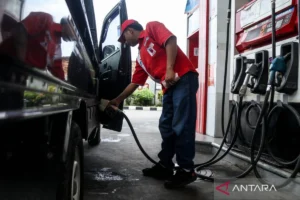
Baron elaborated that Pertamina’s involvement transcends traditional corporate sponsorship. The enterprise envisions itself as an active architect of a comprehensive national racing ecosystem encompassing riders, technical crews, loyal fans, and commercial partners. A critical component of this integration is the mandatory utilization of Pertamax Turbo across all competing teams in the Pertamina MRS 2026.
"Pertamax Turbo is one of the premier products utilized in this championship, and it has already proven its mettle as the official fuel for the Safety Car in international MotoGP events. This serves as undeniable proof that Pertamina’s domestically manufactured energy products match world-class quality standards," Baron asserted.
Echoing the necessity of infrastructural and operational excellence, Donny Mahardjono, Operational Director of the Mandalika Grand Prix Association (MGPA), highlighted the institutional commitment required to host events of this magnitude.
"The Pertamina Mandalika Racing Series represents the apex of national motorcycle racing in Indonesia. It is far more than just a sequence of races; it is a dedicated platform and a strategic momentum for nurturing riders, racing teams, and all associated industry operators," Mahardjono explained.
He underscored that MGPA’s primary mandate is to maintain the circuit facilities, safety infrastructure, and support personnel at peak international standards. By exposing local teams and racing personnel to a professional racing environment, Mandalika acts as a training ground that demystifies international competition and prepares stakeholders for global-level execution.
Meanwhile, Eddy Saputra, CEO of PRIDE Motorsport, placed strong emphasis on continuity as the ultimate prerequisite for athletic success. From its inception, the championship was engineered to provide a predictable, stable, and highly competitive ladder for development. The steadfast backing of corporate sponsors has allowed the championship to elevate its operational standards year after year, reinforcing the collaborative framework required to produce world-class athletes.
Economic Impact and Tourism Integration
While the roar of high-performance engines echoes across the grandstands, the ripple effects of the Pertamina Mandalika Racing Series extend deep into the socio-economic fabric of Lombok and the broader Nusa Tenggara Barat region. Major sporting events have increasingly become recognized as vital instruments for regional development, balancing sports tourism with tangible community economic elevation.
Hafiz Agung Rifai, Acting Deputy for Event Organizers Development at the Ministry of Tourism, pointed out that Mandalika’s status as one of Indonesia’s designated Super Priority Tourism Destinations makes it an ideal canvas for integrating major sporting events with national tourism promotion.
"With the execution of high-caliber events, we successfully attract domestic and international visitors, invigorate local economic activity, and drive destination traffic. We view this championship not merely as a sporting competition, but as a strategic medium to amplify national tourism branding and deliver measurable economic benefits to local communities," Hafiz noted.
The influx of thousands of attendees—comprising teams, officials, media, sponsors, and spectators—creates an immediate surge in demand across the hospitality, culinary, transportation, and retail sectors. Local hotels, homestays, and restaurants operate at near-maximum capacity during race weekends, while Micro, Small, and Medium Enterprises (MSMEs) positioned around the circuit experience a significant boost in revenue. This economic injection aligns with national directives to decentralize tourism revenue and foster community resilience through sustainable event tourism.
Furthermore, Hafiz expressed optimism that the Pertamina MRS will remain a permanent fixture on the national and regional tourism calendar, ensuring that the economic dividends continue to compound over successive racing seasons.
Fact-Based Analysis of Implications
The 2026 iteration of the Pertamina Mandalika Racing Series offers several key takeaways and strategic implications for the future of Indonesian sport and industry:
- Standardization of Talent Pathways: By bridging grassroots racing with a nationally standardized, high-performance championship held on an FIA/FIM-grade circuit, Indonesia has effectively closed the developmental gap that previously hindered promising riders from securing international seats.
- Validation of Domestic Industrial Capacity: The mandatory use of high-octane fuels like Pertamax Turbo in high-stress racing environments serves as a public validation of domestic petroleum refining capabilities. It disproves quality skepticism and reinforces national pride in home-grown technological achievements.
- Synergy Between State-Owned Enterprises and Private Sector: The collaborative framework uniting Pertamina (state-owned energy), MGPA (circuit management), PRIDE Motorsport (promoter), and the Ministry of Tourism exemplifies a successful public-private partnership model capable of sustaining long-term capital-intensive sports programs without relying solely on state budgets.
- Sustainable Regional Economic Impact: The positioning of Mandalika as a year-round motorsport and tourism hub mitigates the risk of white-elephant infrastructure, ensuring that multi-trillion rupiah investments continue to generate employment, business opportunities, and brand equity for Indonesia on the global tourism map.
Conclusion
As the checkered flag fell on the final round of the Pertamina Mandalika Racing Series 2026, the event solidified its position far beyond a weekend entertainment spectacle. It stands as a comprehensive national blueprint—interweaving athletic development, industrial self-sufficiency, and regional economic prosperity. Through steadfast institutional collaboration, visionary corporate sponsorship, and world-class infrastructure, Indonesia is methodically laying the tracks toward a future where its motorsport athletes compete and conquer on the world stage.
Related posts: