Love Blooms on the World Stage: Five Football Superstars Who Married Their Childhood Sweethearts


The FIFA World Cup 2026 is not only a grand spectacle of athletic prowess and national pride but also a canvas for enduring human connections. Beyond the roar of the crowds and the electrifying goals, a heartwarming trend has emerged: several of the tournament’s biggest stars found their lifelong partners long before they graced the global stage. These tales of enduring love, forged in the innocence of childhood and blossoming into powerful partnerships, offer a unique human dimension to the high-stakes world of professional football. From the sun-drenched streets of their hometowns to the pinnacle of international sport, these players’ journeys with their childhood sweethearts underscore the profound impact of early bonds.
The narrative of love transcending fame and fortune is a powerful one, and it resonates deeply within the context of the World Cup. For athletes who dedicate their formative years to rigorous training and sacrifice, the stability and comfort of a relationship that began in their youth can be an invaluable anchor. These stories highlight a grounding influence that predates the glitz and glamour, providing a steadfast support system through the intense pressures of elite competition. The upcoming World Cup in 2026, set to be hosted across North America, promises to be a landmark event, and the personal narratives of its stars will undoubtedly capture the imagination of fans worldwide.
Among the prominent figures whose love stories have captivated the footballing world are Lionel Messi of Argentina and Harry Kane of England. Both have achieved legendary status in the sport, yet their romantic lives have roots firmly planted in their respective childhoods. Messi, now a global icon, first met his wife, Antonela Roccuzzo, in their shared hometown of Rosario, Argentina. Similarly, Harry Kane, the talismanic captain of the English national team, shares a history with his wife, Kate, that stretches back to their school days. Adding to this distinguished group is Ronwen Williams, the formidable goalkeeper for South Africa. His connection with his wife, Roshni, is particularly remarkable, as they grew up in the same neighborhood, sharing the same streets during their formative years.
These relationships offer a poignant counterpoint to the transient nature of professional sports careers. They demonstrate that amidst the constant movement, the pursuit of victory, and the intense scrutiny, a deep and abiding love can provide an unwavering foundation. As the world eagerly anticipates the 2026 FIFA World Cup, these stories serve as a reminder of the enduring power of human connection, proving that even on the grandest stage, some of the most meaningful victories are found off the pitch.

Lionel Messi and Antonela Roccuzzo: A Rosario Romance
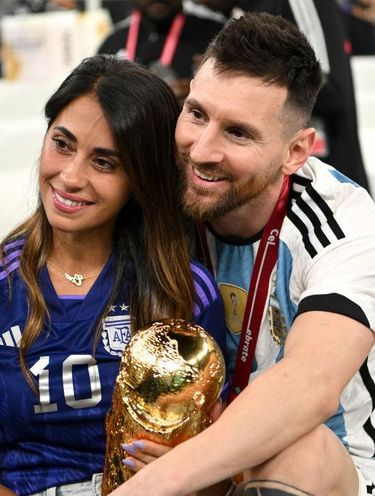
The story of Lionel Messi and Antonela Roccuzzo is a modern-day fairy tale, deeply rooted in their shared upbringing in Rosario, Argentina. Their first encounter predates Messi’s meteoric rise to global superstardom, when they were just children playing in the same neighborhood. The initial spark of their connection, forged in the familiar landscape of their hometown, would eventually ignite into a lifelong partnership.
Messi’s journey took him away from Rosario at the tender age of 13, as he moved to Barcelona to pursue his footballing dreams. The vast distance and the demanding nature of his early career in Europe could have easily severed their bond. However, fate intervened, and their connection was rekindled in 2005. According to reports from Argentinian publication Para Ti, Messi made a significant personal sacrifice to be there for Antonela during a time of immense grief. He returned to Argentina to support her following the tragic death of her close friend, Úrsula Notz, in a car accident. This act of profound empathy and support solidified their renewed connection, paving the way for their eventual marriage.
Their union in June 2017 was a star-studded affair, widely dubbed the "wedding of the century," a testament to Messi’s global celebrity. The ceremony, held in Rosario, was attended by a constellation of footballing greats and close friends, marking a joyous celebration of their enduring love. Since their marriage, Messi and Antonela have expanded their family, now raising three sons: Thiago, Mateo, and Ciro. Their family life, often portrayed as a sanctuary from the intense pressures of Messi’s career, remains a central pillar of his public persona, underscoring the importance of his childhood sweetheart in his life.
The early years of their relationship were marked by the challenges of long-distance and the demands of Messi’s burgeoning career. However, their unwavering commitment to each other, underscored by the profound gesture of support during a personal tragedy, laid the groundwork for a robust and enduring marriage. This foundational strength has been crucial in navigating the complexities of raising a family while Messi continues to be one of the most scrutinized athletes in the world.
Harry Kane and Kate Goodland: From School Days to England’s Captaincy
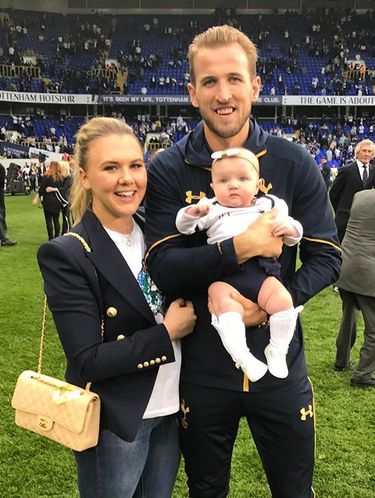
The journey of England’s captain, Harry Kane, and his wife, Kate Goodland, is a testament to the enduring power of schoolyard connections. Their relationship, which began in their childhood, has blossomed into a partnership that has seen them through the highs and lows of Kane’s remarkable footballing career. Kate herself has often shared anecdotes that highlight the early signs of Harry’s ambition. In a touching social media post, she recalled a childhood declaration from Harry, who boldly predicted that he would one day captain the England national team. This seemingly innocent childhood boast would later become a profound reality when Kane was officially appointed captain in May 2018, a moment that surely brought their shared history full circle.
Their early courtship included attending their secondary school prom together, a classic rite of passage that underscored their deep connection. The couple eventually exchanged vows in June 2019, marking another significant milestone in their shared life. Their family has since grown to include four children: two daughters, Ivy and Vivienne, and two sons, Louis and Henry. The presence of their children adds another layer of depth to their story, showcasing a family unit built on a foundation of long-standing love and mutual support.
Kane’s rise to the top of the footballing world has been characterized by relentless dedication and a remarkable ability to perform under pressure. The consistent presence of Kate by his side, a familiar face from his youth, provides a vital source of personal stability. This unwavering support system is crucial for any elite athlete, but for someone who carries the weight of national expectation as Kane does, the comfort of a lifelong partner is invaluable. Their story is not just about a footballer’s success but also about the enduring strength of relationships that begin in the formative years of life.
The narrative of Kane and Goodland serves as an inspiring example of how early bonds can withstand the test of time and the pressures of extraordinary success. Their shared history, from childhood dreams to global recognition, paints a picture of a love that has grown and evolved alongside their individual journeys.
Jordan Pickford and Megan Davidson: A Teenage Romance Blossoms
England’s dynamic goalkeeper, Jordan Pickford, and his wife, Megan Pickford (née Davidson), share a love story that began in their teenage years. Their paths first crossed while attending St Robert of Newminster School in Washington, England, a setting that laid the foundation for a lifelong partnership. According to reports from the Sunderland Echo, their romantic relationship officially began when Jordan was 16 and Megan was 14, a significant early commitment that foreshadowed their enduring bond.
The couple announced their engagement during the excitement of the 2018 FIFA World Cup, a period of intense national focus on Pickford’s performances. Two years later, in 2020, they exchanged wedding vows. Their wedding was a family affair, attended by their young son, Arlo, who was just one year old at the time. The family has since expanded, with the arrival of their two daughters: Ostara, born in September 2023, and Misty, born in April 2025. This growing family represents a tangible testament to their commitment and the deepening of their relationship over the years.
Pickford’s career has been marked by both spectacular saves and moments of intense pressure. Throughout his journey, the steadfast presence of Megan has undoubtedly provided a crucial emotional anchor. The stability of a relationship that began in adolescence offers a unique sense of continuity and comfort, allowing him to focus on the demands of professional football. Their story highlights the deep roots that can be formed during the impressionable teenage years, roots that can grow into a powerful and lasting partnership.
The progression from a teenage romance to a married couple with a growing family underscores the strength and resilience of their bond. It speaks to a shared history and a mutual understanding that has allowed them to navigate the complexities of life together, from school days to the global stage of international football.
Gio Reyna and Chloe Cagle: Growing Up with the Beautiful Game
Gio Reyna, a rising star for the United States men’s national soccer team, is another prominent figure whose romantic journey began with a childhood friend. He married Chloe Cagle, a woman with whom he shared not only a childhood but also a passion for the sport of soccer. Both grew up deeply involved in the sport within the United States, a shared experience that likely played a significant role in their connection. After graduating from high school, Chloe continued her athletic pursuits, playing NCAA Division I soccer for Providence College, demonstrating her own talent and dedication to the game.
Their engagement was announced in May 2024, and they tied the knot in July 2025, marking a significant step in their shared life. A particularly heartwarming moment occurred during the 2026 FIFA World Cup. Gio chose to announce Chloe’s pregnancy in a uniquely celebratory fashion. After scoring a goal in the USMNT’s opening match against Paraguay on June 12, he mimed putting a ball under his jersey and sucking his thumb, a clear and touching gesture that revealed their joyous news to the world.
"I’ve known about this for the last few months, so I was waiting for the right time [to announce it]," Gio shared with USA Today, explaining his thoughtful approach to the announcement. This public display of affection and celebration underscored not only his personal happiness but also the supportive partnership he shares with Chloe.

The fact that both Gio and Chloe have deep roots in the sport provides a unique understanding of each other’s lives and careers. This shared passion and understanding can be a powerful foundation for any relationship, but particularly for athletes navigating the demanding world of professional sports. Their story exemplifies how shared interests and a common upbringing can foster deep and lasting connections.
The announcement of their child during the World Cup added a layer of personal triumph to Gio’s individual achievements on the field, creating a memorable moment that resonated with fans both for its sporting significance and its heartfelt personal revelation.
Ronwen Williams and Roshni: Neighbors Turned Lifelong Partners
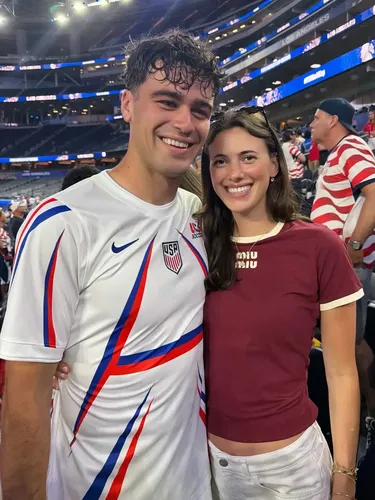
The captain of the South African national football team, Ronwen Williams, shares a remarkably close bond with his wife, Roshni, a connection that dates back to their very early years. Their story is a poignant illustration of how proximity and shared childhood experiences can forge unbreakable bonds. Both Ronwen and Roshni grew up in the same neighborhood, on the same street in Gqeberha, Eastern Cape, South Africa. This shared upbringing in a close-knit community laid the foundation for a friendship that would eventually blossom into a lifelong romance.
Roshni herself has spoken fondly of their childhood, recalling how they were "very close friends" and would often play football and cricket together in the streets. These shared moments of youthful camaraderie, innocent and pure, created a deep sense of familiarity and connection that would endure for years to come. This foundation of genuine friendship, built on shared experiences and mutual enjoyment, proved to be the perfect bedrock for a romantic relationship.
Their childhood friendship ultimately culminated in marriage, a testament to the enduring power of their bond. Today, Ronwen and Roshni are proud parents to two children: a son named Mikyle and a daughter named Mila. Their family life represents the culmination of a love story that began in the simple joys of childhood.
The story of Ronwen and Roshni Williams is a powerful reminder that sometimes, the greatest love stories are found closest to home. Their journey from childhood neighbors to lifelong partners underscores the profound impact of shared experiences and the enduring strength of bonds forged in the formative years of life. In the high-octane world of international football, their story offers a grounded and deeply human perspective on love, family, and the enduring power of childhood connections.
The FIFA World Cup 2026, while celebrated for its athletic achievements, also serves as a powerful platform for these personal narratives. The stories of Messi, Kane, Pickford, Reyna, and Williams, among others, reveal that behind the fame and the accolades, these athletes are individuals with deep-rooted connections and enduring loves. These tales of childhood sweethearts finding enduring happiness offer a heartwarming counterpoint to the intense competition, reminding us that some of life’s greatest victories are found in the quiet strength of personal relationships. As the tournament unfolds, these romantic narratives will undoubtedly add another layer of richness to the global spectacle, showcasing the universal themes of love and commitment that transcend even the grandest stages of sport.
Related posts: