Simple Stretching Exercises Offer Natural Relief for Abdominal Bloating and Digestive Discomfort

Abdominal bloating—clinically defined as a subjective feeling of fullness, distension, and general discomfort in the abdomen—remains one of the most common gastrointestinal complaints reported by adults worldwide. Often accompanied by increased flatulence, frequent burping, and visible swelling of the midsection, bloating can disrupt daily productivity and significantly diminish an individual’s quality of life. While modern pharmacies offer an array of over-the-counter antacids, antiflatulents, and digestive enzymes to combat this pervasive issue, a growing body of wellness and medical experts emphasize that mechanical interventions, specifically targeted physical stretches, can provide rapid, drug-free relief. By encouraging motility within the digestive tract and helping to release trapped gas pockets, gentle physical movements serve as an accessible, non-pharmacological first line of defense against gastrointestinal distress.
The physiological rationale behind utilizing physical movement to combat bloating is rooted in human anatomy and gastroenterology. According to recent insights highlighted by certified meditation instructor and breathwork facilitator Lindsey Benoit O’Connell, engaging in light physical activity directly supports intestinal motility—the rhythmic contractions of the digestive tract that propel food and gas through the system. Specific stretching protocols can physically manipulate the abdominal cavity, applying gentle compression and release that encourages trapped gas to navigate the complex turns of the large and small intestines more effectively. Furthermore, because the gut and the brain maintain a sophisticated, bidirectional communication network known as the gut-brain axis, psychological stress can profoundly impact digestive efficiency. Stress triggers the sympathetic nervous system—the body’s fight-or-flight response—which can slow down digestion, increase visceral sensitivity, and exacerbate bloating. Performing stretches in a calm, mindful state promotes relaxation, shifting the body back into the parasympathetic "rest and digest" mode and mitigating stress-induced gastrointestinal flare-ups.
To understand the rising popularity of movement-based digestive remedies, it is helpful to examine the historical and contemporary context of gastrointestinal health management. Over the past decade, shifts in dietary habits, sedentary lifestyles, and chronic high stress levels have contributed to a notable surge in functional gastrointestinal disorders, including irritable bowel syndrome (IBS) and chronic bloating. Epidemiological studies suggest that up to 30% of the general population experiences regular bouts of abdominal distension. Historically, the medical community heavily relied on dietary modifications—such as reducing the intake of fermentable oligosaccharides, disaccharides, monosaccharides, and polyols (FODMAPs)—alongside pharmacological treatments. However, lifestyle medicine has increasingly advocated for integrative approaches that combine nutrition with physical therapy, yoga, and somatic practices. The chronology of this wellness trend has seen a steady transition from purely clinical dietary restrictions toward holistic, movement-oriented self-care regimens that empower patients to manage minor symptoms independently in their own homes.
Health professionals and physical therapists have long endorsed specific yoga postures and gentle movements designed specifically to massage internal organs and relieve trapped gas. When a patient experiences acute abdominal discomfort, incorporating a targeted routine of restorative stretches can yield noticeable improvements within minutes. Below are seven scientifically and traditionally backed stretches that can be safely performed at home to alleviate bloating and enhance digestive motility.
Knee-to-Chest Pose (Apanasana)
The knee-to-chest pose is widely considered one of the most effective foundational movements for releasing trapped intestinal gas. To perform this stretch, lie flat on your back on a comfortable surface, pull both knees toward your chest, and wrap your arms gently around your shins. By hugging the thighs tightly against the abdomen, you apply direct, gentle pressure to the ascending, transverse, and descending colon. Holding this position for 30 to 60 seconds while taking slow, deep diaphragmatic breaths encourages peristalsis—the wave-like muscle contractions that move waste through the digestive tract—allowing trapped air to escape naturally.
Supine Spinal Twist
Stagnant gas often gets trapped at the sharp bends of the colon, particularly the hepatic flexure on the right side and the splenic flexure on the left side. The supine spinal twist helps to gently wring out the torso, stimulating blood flow to the digestive organs and mobilizing trapped air. While lying on your back, extend your arms out to the sides in a "T" shape, draw your knees toward your chest, and slowly drop them to one side while keeping your shoulders flat on the floor. Hold the stretch for several breaths before switching to the opposite side. This rotational movement stretches the oblique muscles and relieves abdominal tension.
Cat-Cow Stretch (Marjaryasana-Bitilasana)
Originating from traditional yoga practices, the cat-cow sequence is an exceptional dynamic movement for massaging the abdominal viscera. Starting on your hands and knees in a tabletop position, inhale as you drop your belly toward the floor, lifting your chest and tailbone upward into the "cow" pose. Upon exhaling, draw your spine toward the ceiling, tucking your chin to your chest and rounding your back into the "cat" pose. This continuous flowing motion alters the gravitational pull on the abdominal organs, gently compressing and decompressing the stomach and intestines to help dislodge stubborn gas bubbles.
Child’s Pose (Balasana)
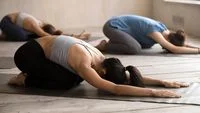
Child’s pose is a deeply restorative resting posture that naturally compresses the abdomen against the thighs, providing a soothing internal massage. To execute this stretch, kneel on the floor with your big toes touching and your knees spread apart about the width of your hips. Slowly sit your hips back onto your heels and extend your arms forward on the ground, lowering your forehead to the mat. The gentle, continuous pressure exerted by the thighs against the belly, combined with the meditative focus on deep breathing into the lower back, helps calm the nervous system and relaxes the abdominal wall, facilitating the release of trapped flatulence.
Happy Baby Pose (Ananda Balasana)
Happy baby pose is an excellent movement for opening the hips while simultaneously releasing tension in the pelvic floor and lower abdomen—areas that frequently hold stress and contribute to digestive discomfort. Lying on your back, bend your knees into your chest, reach up, and grab the outer edges of your feet (or ankles, depending on flexibility), opening your knees slightly wider than your torso. Gently rock from side to side while maintaining steady breaths. This rocking motion provides a gentle, localized self-massage to the lower abdominal region and helps alleviate pressure caused by gas buildup.
Deep Squat (Malasana)
Human anatomy is naturally optimized for elimination and digestion through squatting postures. A deep yogic squat, or Malasana, opens the pelvic outlet and straightens the anorectal angle, making it significantly easier for gas and waste to pass through the lower digestive tract. To perform this movement, stand with your feet slightly wider than shoulder-width apart and slowly lower your hips down toward the floor, bringing your hands together in a prayer position at your chest and using your elbows to gently press your knees outward. If your heels cannot touch the ground, place a rolled towel or yoga block underneath them for support.
Seated Forward Bend (Paschimottanasana or Seated Slump)
When dealing with mild daytime bloating at an office desk or sitting area, a simple seated forward fold or gentle torso compression can offer relief. Sitting upright with feet flat on the floor, gently hinge at the hips and fold your torso forward over your thighs, allowing your arms and neck to hang completely relaxed. This modified posture compresses the abdominal organs without requiring a full floor setup, making it a discreet and practical intervention for individuals experiencing sudden digestive discomfort while away from home.
The broader implications of utilizing movement-based therapies for minor gastrointestinal issues extend well beyond individual convenience; they reflect a significant shift in modern preventive healthcare. Gastrointestinal distress is among the leading causes of workplace absenteeism and diminished productivity globally. By integrating low-impact physical stretches into daily routines, individuals can proactively manage minor symptoms before they escalate into chronic conditions that require intensive medical intervention. Furthermore, relying on physical movement rather than immediate pharmaceutical solutions promotes bodily awareness and encourages a sustainable, lifestyle-oriented approach to digestive wellness.
Medical professionals generally support the integration of light stretching into daily wellness routines, though they offer important clinical caveats. Gastroenterologists and general practitioners emphasize that while stretching is highly effective for functional bloating caused by trapped gas, dietary indiscretion, or mild stress, it should not be viewed as a cure-all for severe underlying medical conditions. Patients experiencing persistent, unexplained abdominal distension accompanied by alarming "red flag" symptoms—such as severe abdominal pain, unexplained weight loss, chronic diarrhea, fever, or blood in the stool—must seek formal medical evaluation immediately, as these signs can indicate more serious pathologies such as inflammatory bowel disease, celiac disease, or bowel obstructions.
Ultimately, understanding how to manage acute bouts of bloating through accessible self-care techniques empowers individuals to take charge of their digestive health with confidence. By combining mindful breathing, targeted physical movement, and an awareness of bodily signals, anyone can effectively mitigate the discomfort of abdominal distension and restore normal gastrointestinal harmony naturally.
Related posts: