Ex-Religious Affairs Ministry Aide Claims $1 Million Hajj Quota Bribe Reached Lawmaker Nusron Wahid

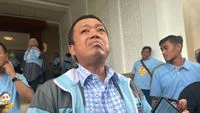
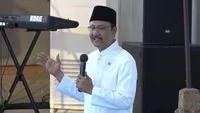
The ongoing legal proceedings surrounding the corruption scandal involving the 2023–2024 additional Hajj quota have taken a dramatic turn following testimony delivered at the Jakarta Corruption Court. Ishfah Abidal Azis, who served as a Special Staff Member to the Minister of Religious Affairs during the 2019–2024 tenure under Yaqut Cholil Qoumas, has made a definitive assertion before the panel of judges. Better known as Gus Alex, Ishfah stated under oath that he firmly believes a sum of $1 million United States dollars successfully reached the hands of Nusron Wahid, the lawmaker who chaired the House of Representatives (DPR) Special Committee on Hajj in 2024.
The testimony was provided during a court session held on Thursday at the Central Jakarta District Court. The allegations directly implicate a prominent legislative figure in the sprawling corruption case that has severely impacted Indonesia’s religious governance framework. As investigators and judges unravel the complex network of financial transactions tied to the allocation of additional Hajj quotas, this revelation introduces a critical political dimension to the judicial scrutiny of the Ministry of Religious Affairs’ past leadership.
The Mechanism of Alleged Delivery and Intermediaries
According to Ishfah’s testimony at the Corruption Crimes (Tipikor) Court, the substantial sum of $1 million was not handed directly to the parliamentary committee chairman. Instead, the funds were allegedly funneled through a carefully coordinated network of intermediaries. Ishfah pointed to an individual named Zainal Abidin, described as a close associate of Nusron Wahid, as the primary conduit for the transfer.
"For that specific Special Committee, it was 1 million US dollars," Ishfah told reporters and the court when questioned about the distribution of funds. He further elaborated on the mechanics of the delivery, stating with conviction that the money reached its intended destination through Zainal Abidin, with the operational assistance of individuals identified as Khomsen and Acong.
Media representatives from prominent news outlets have attempted to reach Nusron Wahid to secure an official response and obtain his perspective on these grave accusations. However, communication attempts have proven unsuccessful, with the lawmaker’s designated mobile telephone numbers remaining inactive at the time of publication. The absence of an immediate rebuttal leaves the courtroom claims as the primary focus of public and legal scrutiny regarding the legislative branch’s potential involvement in the quota allocation controversy.
Unraveling the Financial Trail: Testimony on the $400,000 Tranche
The claims regarding the $1 million payout build upon earlier testimonies presented during judicial sessions held earlier in September. During a prior hearing on Tuesday, September 1, Ishfah and Syaiful Bahri—a former staff member of the Executive Board of Nahdlatul Ulama (PBNU), also known as Bajak Laut—detailed a separate financial transaction involving approximately $400,000 directed toward the DPR Hajj Special Committee.
During the evidentiary proceedings, Ishfah engaged in a direct cross-examination with Syaiful Bahri to clarify the distribution of these funds. Ishfah explicitly asked Bahri if he recalled being instructed to meet an individual named Erik to hand over $400,000 specifically to fulfill a request made by Zainal Abidin, described as Nusron Wahid’s associate.
Bahri testified that while he was initially unaware of the ultimate purpose of the funds when he received them, he later sought clarification from his superior. "At that time I didn’t know, sir, but after a few days I asked you, who was that actually, then you told me," Bahri responded during the court session.
When Ishfah pressed further to confirm whether Bahri understood that the funds were requested by Zainal Abidin and handed over through Erik, Bahri answered in the affirmative. The funds themselves were initially entrusted to Bahri by Asrul Azis Taba, the General Chairman of the Kesthuri Association and Commissioner of PT Raudah Eksati Utama, who stands as one of the primary defendants in the legal proceedings. Furthermore, investigative findings indicate that an additional portion of the $400,000 pool was gathered by Mohammad Nuruzzaman, a former Special Staff Member to the Minister of Religious Affairs for Institutional Relations, who allegedly raised the capital by securing loans from various external sources.
The Broader Corruption Scandal and State Financial Losses
The trial at the Central Jakarta District Court is part of a comprehensive judicial prosecution addressing systematic corruption within the management of the additional Hajj quota for the 2023–2024 operational years. The legal actions target multiple high-ranking figures whose administrative decisions are believed to have compromised the fair and legal distribution of sacred pilgrimage slots, which are in extraordinarily high demand among Indonesian Muslims.
Official audits and investigative findings released by the Audit Board of the Republic of Indonesia (BPK) have quantified the financial devastation caused by the corruption scheme. The investigative report outlines staggering state financial losses amounting to Rp622,090,207,166.41—commonly cited as approximately Rp622 billion. This immense monetary loss reflects the scale of administrative manipulation and illicit financial flows that characterized the handling of the Hajj quotas during the specified period.
The judicial process currently implicates four primary defendants who are facing prosecution for their respective roles in the conspiracy. The roster of defendants includes former Minister of Religious Affairs Yaqut Cholil Qoumas, who held the cabinet portfolio from 2019 to 2024; Ishfah Abidal Azis, the former special staffer whose recent testimony has expanded the scope of the inquiry; Ismail Adham, serving as the Director of Operations for travel agency Maktour; and Asrul Azis Taba, the head of the Kesthuri Association and corporate commissioner.
Beyond the direct criminal culpability of these four individuals, the scope of the investigation suggests that the corrupt practices extended far beyond the walls of the Ministry of Religious Affairs. Investigators have indicated that the irregularities in quota distribution effectively enriched numerous external entities, prominently including 313 Special Hajj Pilgrimage Organizers (PIHK). These private travel operators capitalized on the illicit reallocation of quotas, bypassing regulatory frameworks designed to ensure equity and transparency for ordinary citizens waiting years for their pilgrimage opportunity.
Chronology of Events and Investigative Milestones
The unfolding of the Hajj quota corruption scandal follows a distinct timeline marked by administrative decisions, parliamentary inquiries, and subsequent legal enforcement:
- 2019–2024 Term: Yaqut Cholil Qoumas serves as the Minister of Religious Affairs, during which time critical decisions regarding the allocation of regular and additional Hajj quotas are executed.
- 2024 Hajj Season: Amid public dissatisfaction and allegations of procedural violations regarding the division of additional Hajj quotas between regular and special programs, the House of Representatives forms a dedicated Special Committee (Pansus Haji) chaired by Nusron Wahid to investigate potential administrative breaches.
- Mid-2024: Investigative bodies, spearheaded by the BPK, launch comprehensive audits into the Ministry’s operations, eventually compiling a formal report detailing state losses exceeding Rp622 billion.
- September 2024 (Early Hearings): Court proceedings commence at the Jakarta Corruption Court. Testimonies from figures such as Syaiful Bahri and Ishfah Abidal Azis begin to expose the internal mechanics of cash transfers, highlighting transactions involving intermediaries like Erik, Zainal Abidin, and Mohammad Nuruzzaman.
- September 24, 2024: During a pivotal court appearance, Ishfah Abidal Azis makes his definitive public statement asserting that a total of $1 million in illicit funds successfully reached Pansus Haji Chairman Nusron Wahid through established proxy channels.
Implications for Governance and Institutional Oversight
The emergence of testimony implicating a high-profile legislative oversight figure in a ministry-level corruption case underscores systemic vulnerabilities within Indonesia’s public administration and political oversight mechanisms. The Special Committee on Hajj was originally constituted as an institutional instrument of accountability, designed to investigate how the Ministry of Religious Affairs managed quota allocations and whether administrative guidelines were transgressed to favor specific private entities.
However, the courtroom revelations suggest that the boundaries between regulatory oversight and rent-seeking behavior may have been compromised. If proven in a court of law, the flow of substantial sums—such as the alleged $1 million routed through intermediaries—from ministry-affiliated actors to legislative oversight figures points to a deep-seated institutional rot. Such dynamics not only undermine the integrity of parliamentary inquiries but also inflict severe moral and financial injury upon the millions of Indonesian citizens who endure decades-long waiting lists to fulfill their religious obligations.
As the trial progresses at the Jakarta Corruption Court, legal analysts and anti-corruption watchdogs are urging law enforcement agencies, including the Corruption Eradication Commission (KPK), to subpoena all named intermediaries and political figures to corroborate the financial trails. The ultimate verdict in this landmark case will serve as a critical benchmark for transparency, accountability, and the rule of law within Indonesia’s religious administration and legislative institutions.