Indonesia’s Railway Renaissance: KAI’s Five Advanced Technologies Drive Unprecedented Connectivity and Growth

Jakarta, Indonesia’s sprawling capital, stands at the heart of a transformative era for the nation’s transportation infrastructure. PT Kereta Api Indonesia (Persero), or KAI, the state-owned railway operator, has emerged as a pivotal force, leveraging a sophisticated array of five advanced railway technologies to redefine connectivity across the vast archipelago. From the robust workhorses of diesel locomotives traversing diverse terrains to the futuristic marvel of high-speed rail, KAI’s multi-faceted approach is meticulously designed to meet the complex and evolving demands of passenger mobility and freight logistics. This strategic diversification has not only propelled KAI Group to serve an impressive 258,993,359 customers in the first half of 2026 but also to transport a substantial 32,498,043 tons of goods, cementing its indispensable role in the nation’s economic and social fabric.
A Legacy of Progress: KAI’s Historical Journey
The story of railways in Indonesia is a tapestry woven through centuries, beginning with the Dutch colonial era in the mid-19th century. The first railway line, connecting Semarang to Tanggung, opened in 1867, primarily serving the lucrative sugar and coffee plantations. Post-independence, the nationalization of these disparate railway companies under the banner of Djawatan Kereta Api (DKA) in 1945, later evolving into Perusahaan Jawatan Kereta Api (PJKA) and eventually PT Kereta Api Indonesia (Persero) in 1998, marked a new chapter. For decades, the network relied heavily on steam and then diesel locomotives, gradually expanding its reach across Java and parts of Sumatra. The introduction of Electric Multiple Units (KRL) in the Jabodetabek region in the 1970s signaled the first major leap towards modern urban transit. However, it is in the last two decades, particularly with the acceleration of infrastructure development under successive governments, that KAI has truly embarked on a renaissance, embracing cutting-edge technologies that position Indonesia’s railway system among the most dynamic in Southeast Asia. This journey from colonial-era tracks to automated LRT and high-speed rail underscores a relentless pursuit of efficiency, safety, and national connectivity.
The Five Pillars of Indonesian Rail: A Detailed Look
Anne Purba, Vice President Corporate Communication KAI, highlights the intricate management required for this diverse portfolio. "Each technology possesses distinct operational characteristics, power sources, control systems, and maintenance protocols," Purba stated in a written release on Friday, July 24, 2026. "These technological differences are managed through consistent standards of safety, reliability, worker competency, and operational discipline. The ultimate goal remains the same: to ensure every journey is safe, punctual, reliable, and comfortable for our customers." This commitment to operational excellence underpins the performance across KAI’s five key technological segments.
1. Diesel Locomotives: The Workhorse of the Archipelago
Diesel locomotives remain the bedrock of KAI’s extensive network, serving as the primary movers for intercity, local, tourist, and, critically, freight services. Their robust design and independence from electrified lines make them ideal for navigating Indonesia’s varied topography, including remote areas where electrification is not yet viable. In the first half of 2026, KAI’s long-distance and local services powered by diesel locomotives catered to 29,858,267 passengers, marking a significant 8.72% increase from 27,463,555 passengers in the same period of 2025. This growth reflects the continued preference for rail travel for medium to long distances, driven by improved services, punctuality, and comfort.
Beyond passenger transport, diesel locomotives are instrumental in supporting Indonesia’s supply chains. Throughout H1 2026, KAI moved an impressive 32.50 million tons of goods, a testament to its critical role in the logistics sector. This tonnage encompassed a diverse range of commodities, including 26,534,095 tons of coal—vital for the nation’s energy sector—and 5,963,948 tons of non-coal goods. These non-coal commodities include essential raw materials and finished products for various industries such as plantations, petrochemicals, containerized cargo, fuel, and cement, underscoring KAI’s contribution to industrial productivity and economic stability across both Java and Sumatra.
The versatility of diesel power also extends to the burgeoning tourism sector. KAI Wisata, KAI’s tourism subsidiary, saw remarkable growth, serving 164,743 customers in H1 2026, a substantial 64.45% increase from 100,176 customers in H1 2025. This surge is attributed to a rich array of offerings, including specialized tourist trains, the panoramic train experience, exclusive special trains, and other rail-based travel packages that offer unique perspectives of Indonesia’s scenic landscapes and cultural heritage. The continuous modernization of KAI’s diesel fleet, including the acquisition of newer, more fuel-efficient models and the overhaul of existing ones, further enhances their reliability and environmental performance, albeit with ongoing efforts to reduce emissions.
2. Electric Multiple Units (KRL): Powering Urban Commutes
In the dense urban agglomerations of Indonesia, particularly the Greater Jakarta area (Jabodetabek), Electric Multiple Units (KRL) and other commuter train facilities provided by KAI Commuter are the lifeblood of daily mobility. This technology is the largest contributor to KAI Group’s passenger volume, serving 204,151,200 customers in H1 2026, an increase of 6.58% from 191,540,583 customers in H1 2025. The KRL network efficiently connects millions of commuters daily, alleviating severe traffic congestion and reducing travel times in one of the world’s most populous metropolitan regions.
The success of the KRL model has led to its expansion beyond Jabodetabek, with services now operating in Bandung, the Yogyakarta-Solo corridor, Surabaya, and the Merak-Rangkasbitung route, among other regions. These services are crucial for fostering regional economic integration and providing accessible, affordable public transport options for urban residents. KRL trains are characterized by their high frequency, rapid acceleration, and zero direct emissions, making them an environmentally friendlier option for mass transit compared to road vehicles. The ongoing efforts to enhance KRL services include increasing train sets, extending operational hours, and improving station facilities to accommodate the ever-growing ridership, tackling challenges such as overcrowding during peak hours and maintaining an aging infrastructure while simultaneously expanding the network.
3. Diesel-Electric Multiple Units (KRDE): Bridging Regional Gaps
The Diesel-Electric Multiple Units (KRDE) represent a versatile solution for regional services and crucial airport connectivity, offering the benefits of both diesel and electric propulsion where full electrification is not practical or cost-effective. These hybrid trains provide a flexible option for routes that traverse areas with varying infrastructure, ensuring seamless travel. KAI Bandara, operating airport train services, facilitated 3,482,897 customers in H1 2026, a modest but steady 0.99% increase from 3,448,622 customers in H1 2025. These services, such as the Airport Rail Link connecting Jakarta’s Soekarno-Hatta International Airport to the city center, offer a swift and reliable alternative to road transport for air travelers, significantly reducing commute times and traffic stress.
Furthermore, KRDE technology is pivotal for newer, strategic regional lines like the Makassar-Parepare railway. This line, a cornerstone of railway development outside Java, served 172,011 customers in H1 2026, marking a significant 15.42% increase from 149,035 customers in H1 2025. The Makassar-Parepare line represents a crucial step in developing a robust railway network in Sulawesi, fostering economic growth and improving intercity connectivity in a region traditionally underserved by modern rail infrastructure. The hybrid nature of KRDE trains allows for efficient operation on these developing lines, providing a bridge to future full electrification while delivering immediate benefits to regional populations.
4. Automated Light Rail Transit (LRT): Smart City Mobility
Indonesia’s foray into fully automated railway operations is exemplified by the Light Rail Transit (LRT) systems, particularly the LRT Jabodebek. This system utilizes a communication-based signaling system with a Grade of Automation 3 (GoA3), representing a highly advanced level of automation. GoA3 allows for automatic train operation, including speed control, maintaining safe distances between trains, precise stopping at stations, and overall journey management, all remotely monitored and controlled from a central operation control center. This level of automation enhances safety, efficiency, and operational precision, minimizing human error.
The LRT Jabodebek, despite initial operational adjustments during its rollout, has quickly gained traction, serving 16,018,911 customers in H1 2026, a substantial 22.84% increase from 13,040,403 customers in the same period of 2025. This rapid growth underscores the public’s acceptance and reliance on this modern, automated transit solution for urban travel within Jakarta and its satellite cities. Similarly, the LRT Sumsel (South Sumatra LRT) in Palembang, which was initially developed to support the 2018 Asian Games, continues to be a vital urban transit system, serving 2,206,496 customers in H1 2026. These LRT systems represent a commitment to smart city development, aiming to create integrated, efficient, and sustainable urban transportation networks that can adapt to future growth and technological advancements.
5. Kereta Cepat (Whoosh): Redefining Intercity Travel
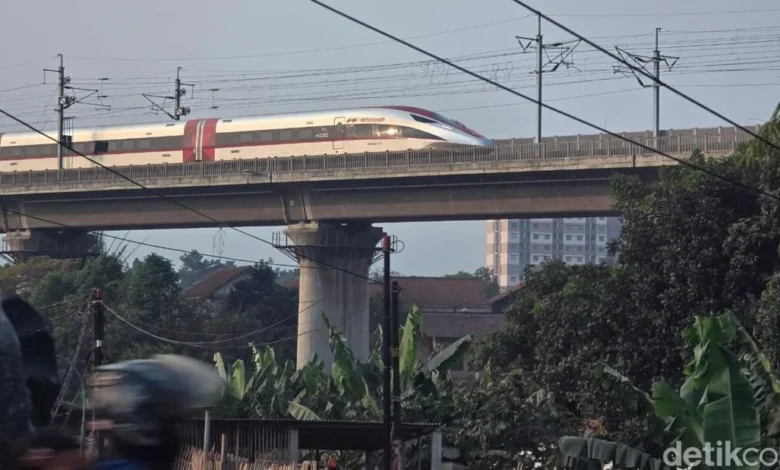
At the pinnacle of KAI’s technological prowess is the Kereta Cepat, famously known as Whoosh, Indonesia’s (and Southeast Asia’s) first high-speed rail line. Operating at speeds of up to 350 kilometers per hour, Whoosh has dramatically transformed intercity travel between Jakarta and Bandung, reducing a journey that once took several hours by car to a mere 30-45 minutes. This technological marvel, a joint venture with China, symbolizes Indonesia’s ambition to leapfrog into advanced transportation infrastructure.
In H1 2026, Whoosh served 2,938,834 customers, showing a slight but steady increase of 0.08% from 2,936,578 customers in H1 2025. This achievement, particularly given its relatively recent launch in late 2023, demonstrates a strong market acceptance and a clear demand for rapid, efficient intercity connections. The high-speed rail not only cuts travel time but also fosters economic development along its corridor, attracting investments, boosting tourism, and facilitating business connectivity between two of Indonesia’s most dynamic urban centers. Future plans envision the extension of the high-speed network further east, potentially connecting to Surabaya, which would further integrate Java’s major economic hubs and solidify Indonesia’s position as a regional leader in modern rail infrastructure. The successful operation of Whoosh, including overcoming initial challenges related to ticketing, integration, and public awareness, represents a monumental achievement in engineering and project management.
Strategic Growth and Operational Excellence
Anne Purba’s assertion that "each technology has a role commensurate with the character of people’s mobility" succinctly captures KAI’s strategic vision. The company’s impressive performance in the first half of 2026, marked by consistent growth across all segments, is not merely a reflection of increased demand but also a testament to KAI’s relentless focus on operational excellence. This involves continuous investment in human capital, with rigorous training programs for engineers, technicians, and operational staff to master the complexities of diverse modern railway systems. Furthermore, KAI implements advanced predictive maintenance technologies, leveraging data analytics and IoT to monitor equipment health and prevent breakdowns, thereby ensuring higher reliability and safety standards across its heterogeneous fleet. The integration of digital platforms for ticketing, customer service, and real-time information has also significantly enhanced the passenger experience, making rail travel more accessible and convenient.
Broader Impact: Driving National Development
KAI’s multifaceted technological adoption extends far beyond mere transportation, acting as a powerful engine for national development.
Economic Contributions: The expansion and modernization of KAI’s network directly stimulate economic activity. The freight services underpin supply chains for critical industries, reducing logistics costs and improving efficiency. Passenger services, from commuter to high-speed rail, facilitate labor mobility, support tourism, and foster regional business interactions. Massive infrastructure projects like Whoosh and LRT have created thousands of direct and indirect jobs, from construction to operations and maintenance, and spurred local economies along their routes. The investment in rail infrastructure also generates demand for local manufacturing and service industries, creating a multiplier effect throughout the economy.
Social Connectivity and Urban Livability: By offering efficient and reliable transportation options, KAI enhances social connectivity, allowing people to access education, healthcare, and employment opportunities more easily. In urban areas, KRL and LRT significantly reduce traffic congestion and commute times, improving the quality of life for millions of residents. This shift towards public transport also contributes to a more organized urban planning, fostering the development of transit-oriented communities. The enhanced connectivity across the archipelago strengthens national unity and cultural exchange, making distant regions more accessible.
Environmental Stewardship: While diesel locomotives still play a crucial role, KAI’s increasing reliance on electric-powered systems (KRL, LRT, Whoosh) represents a significant step towards environmental sustainability. Electric trains produce zero direct emissions, contributing to cleaner air in urban centers and reducing the nation’s overall carbon footprint from the transportation sector. The shift of passengers and freight from roads to rail also lessens reliance on fossil fuels and reduces road wear and tear, contributing to a more sustainable transportation ecosystem. KAI is also exploring greener fuel alternatives for its diesel fleet and investing in energy-efficient station designs and operational practices.
Looking Ahead: The Future of Indonesian Railways
KAI’s journey is far from over. The strategic blueprint for Indonesia’s railway system envisages further expansion and technological integration. Future plans include extending existing lines, developing new networks in underserved regions (such as Sumatra, Kalimantan, and Sulawesi), and enhancing intermodal connectivity with ports, airports, and bus terminals. There is a strong emphasis on digital transformation, including the implementation of advanced signaling systems, smart maintenance platforms, and AI-driven operational optimization. KAI is also keenly observing global trends in railway technology, potentially exploring innovations such as hydrogen-powered trains, maglev technology, or even more advanced autonomous systems, to ensure Indonesia remains at the forefront of railway innovation. The vision is to create a fully integrated, intelligent, and sustainable national railway network that serves as a pillar of Indonesia’s advanced economy by 2045.
Challenges and Opportunities
Despite its successes, KAI faces several challenges. Funding for massive infrastructure projects remains a constant hurdle, often requiring complex public-private partnerships and international cooperation. Land acquisition for new lines and expansions can be a protracted and sensitive process. Integrating disparate technologies and ensuring interoperability across different systems requires sophisticated engineering and management expertise. Maintaining a diverse fleet, from decades-old diesel locomotives to state-of-the-art high-speed trains, demands continuous investment in maintenance, spare parts, and skilled personnel. Furthermore, adapting to rapid urbanization and climate change impacts will necessitate resilient and adaptive infrastructure planning.
However, these challenges also present immense opportunities. Indonesia’s large and growing population, coupled with increasing urbanization and economic development, guarantees a sustained demand for efficient transportation. KAI’s diversified technological portfolio allows it to tailor solutions to specific regional needs, from high-density urban corridors to vast inter-island connections. By embracing innovation, fostering local talent, and leveraging strategic partnerships, KAI is well-positioned to overcome these obstacles and continue its trajectory as a leader in modern railway operations, contributing significantly to Indonesia’s prosperity and global standing.
Conclusion: A Dynamic Ecosystem
In conclusion, PT Kereta Api Indonesia (Persero) stands as a testament to strategic vision and operational dexterity. By seamlessly integrating five advanced railway technologies—diesel locomotives, KRL, KRDE, automated LRT, and high-speed rail—KAI has not only met the immediate demands of passenger and freight transport but has also laid a robust foundation for Indonesia’s future development. The impressive growth figures from H1 2026 across all segments underscore the efficacy of this multi-modal approach. Underpinned by a unwavering commitment to safety, efficiency, and customer comfort, KAI’s dynamic ecosystem of rail technologies is truly driving Indonesia’s railway renaissance, propelling the nation towards unprecedented levels of connectivity and economic dynamism.
Related posts: