Indonesia’s Diplomatic Ascent: Sidharto Reza Suryodipuro Elected as President of the United Nations Human Rights Council

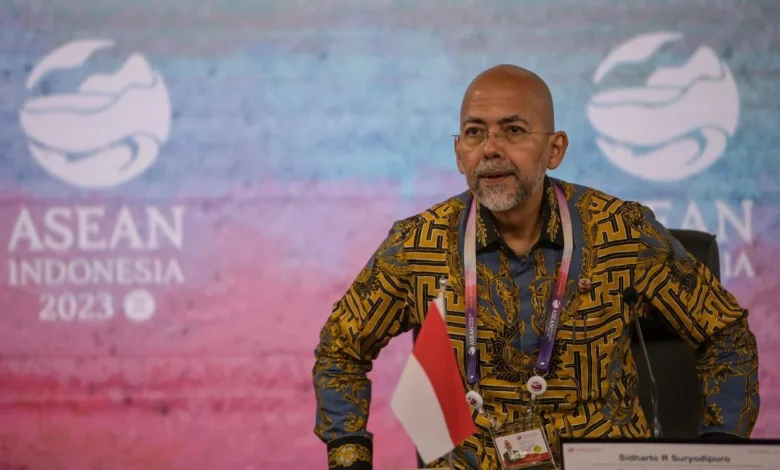
The international community has underscored its confidence in Indonesia’s growing diplomatic stature following the election of senior diplomat Sidharto Reza Suryodipuro as the President of the United Nations Human Rights Council (UNHRC). This appointment, finalized on January 8, 2026, serves as a landmark moment in Indonesia’s multilateral engagement, signaling the nation’s commitment to advancing and protecting fundamental human rights on the global stage. As the world navigates increasingly complex geopolitical challenges and humanitarian crises, Indonesia’s leadership at the helm of the UN’s primary human rights body represents a strategic shift toward a more inclusive and consensus-driven approach to international governance.
A Legacy of Service and Academic Rigor
Born on September 29, 1966, in Cologne, Germany, Sidharto Reza Suryodipuro brings a unique blend of heritage and modern diplomatic expertise to his new role. His lineage traces back to the Mangkunegaran Royal House, a background that has arguably fostered his deep-seated dedication to public service. His grandfather, Suyoto Suryodipuro, was a pivotal figure in Indonesian history, serving as a co-founder of both the Ministry of Foreign Affairs and Radio Republik Indonesia (RRI). This legacy of state-building has clearly influenced Sidharto’s trajectory, which began in earnest at the Universitas Katolik Parahyangan, where he earned a degree in International Relations in 1986.
His academic journey did not conclude with his undergraduate studies. A recipient of the prestigious Fulbright scholarship, Sidharto pursued advanced studies at the Naval Postgraduate School in Monterey, California. In 2003, he earned a Master of Arts degree in National Security Affairs, graduating with distinction. This academic foundation provided him with the analytical tools necessary to navigate the intersection of security, diplomacy, and human rights—a nexus that is critical for any leader of the UNHRC.
Chronology of a Diplomatic Career
Sidharto’s career within the Indonesian Ministry of Foreign Affairs (Kemlu) is characterized by a steady progression through some of the most challenging diplomatic theaters. His early career, beginning in 1992, saw him entrenched in the complexities of the UN system, where he served with the Permanent Mission of Indonesia to the United Nations. During this tenure, he participated extensively in the Special Committee on Peacekeeping Operations, gaining firsthand experience in the mechanisms that govern international peace and stability.
The following decades saw him take on increasingly senior roles across various continents:
- 2004–2006: Served at the Indonesian Embassy in Canberra, Australia, where he focused on strengthening bilateral economic ties, trade, and investment, as well as fostering cooperation in tourism and education.
- 2006–2009: Returned to the UN in New York as a delegate to the UN Security Council. His focus during this period included managing humanitarian affairs and regional issues concerning the African continent.
- 2009–2014: Managed Asia-Pacific and African affairs within the Ministry, playing a crucial role in preparations for Indonesia’s leadership of APEC in 2013.
- 2014–2017: Served as the Deputy Ambassador of Indonesia to the United States. His tenure in Washington D.C. was marked by efforts to expand bilateral cooperation, particularly in combating violent extremism and fostering interfaith dialogue.
- 2017–2020: Appointed as the Ambassador of Indonesia to India and Bhutan. As the first Indonesian Ambassador to Bhutan, he was instrumental in formalizing and deepening diplomatic relations with the Himalayan nation.
- 2020–2025: Led as the Director General of ASEAN Cooperation, overseeing the bloc’s senior officials’ meetings during a period of significant regional instability.
- 2025–Present: Appointed as the Permanent Representative of the Republic of Indonesia to the UN and other international organizations in Geneva, leading to his election as President of the UNHRC in 2026.
The Significance of the UNHRC Presidency
The UN Human Rights Council, established in 2006, is tasked with the promotion and protection of human rights globally. The presidency is a rotating position, and its occupant is responsible for overseeing the Council’s sessions, facilitating dialogue, and ensuring that the body’s resolutions are addressed with the appropriate level of scrutiny.
Sidharto’s election is a testament to Indonesia’s "middle power" diplomacy. By positioning itself as a bridge-builder, Indonesia has sought to distance itself from the polarization that often characterizes the Council’s debates. In his address following his appointment, Sidharto emphasized an inclusive approach, noting that the Council must engage not only with member states but also with observer nations, UN specialized agencies, national human rights institutions, civil society organizations, and regional bodies.
The recognition of civil society’s role is particularly noteworthy. Critics of the UNHRC have often argued that the Council can become a tool for political posturing. However, by pledging to recognize the "vital role" of non-governmental actors, Sidharto has signaled an intent to bolster the transparency and integrity of the institution.
Data-Driven Governance and Human Rights
Sidharto’s leadership comes at a time when the UNHRC is facing immense pressure to address global conflicts, ranging from the humanitarian catastrophe in Gaza to ongoing political crises in Myanmar and the Sudan. His 2020 receipt of the Hassan Wirajuda Protection of Indonesian Citizens Award highlights his practical experience in protecting human rights in high-risk environments. This experience will be vital as he steers the Council through the Universal Periodic Review (UPR) processes, which require rigorous, evidence-based assessment of human rights conditions in member states.
The Council’s effectiveness is often measured by its ability to pass resolutions that result in tangible change on the ground. Indonesia’s track record in balancing sovereignty with international human rights obligations provides a template for the kind of "moral leadership" the country aims to project. By fostering a culture of dialogue rather than confrontation, Indonesia hopes to ensure that the UNHRC remains a relevant arbiter of international standards.
Implications for Indonesia’s Foreign Policy
For Indonesia, this presidency is more than a ceremonial honor; it is a platform to demonstrate that a developing nation with a diverse demographic can lead global policy-making. The implications of this leadership are three-fold:
- Elevated Soft Power: Holding the presidency of a core UN body enhances Indonesia’s influence in other multilateral forums, such as the G20 and ASEAN. It demonstrates that Indonesia’s voice carries weight beyond its regional borders.
- Increased Diplomatic Responsibility: With the leadership position comes increased scrutiny. Indonesia will be expected to lead by example, ensuring that its domestic human rights practices align with the standards it advocates for at the international level.
- Conflict Mediation: Given Sidharto’s extensive background in peacekeeping and regional cooperation, his presidency is likely to see an increase in initiatives aimed at conflict resolution, particularly in the Global South, where the UNHRC has traditionally been criticized for having limited influence.
Official Responses and Future Outlook
The reaction from the international diplomatic community has been largely positive. Representatives from various regional groups have welcomed the appointment, citing Sidharto’s reputation as a pragmatist and a seasoned negotiator. Within the Indonesian government, the appointment is viewed as the culmination of years of consistent, values-based diplomacy.
In his initial statements, Sidharto emphasized that the integrity of the Council depends on the participation of all stakeholders. "We are committed to working closely with all member states, observers, and civil society to ensure that the UNHRC serves as a space for genuine progress," he stated. This collaborative ethos is expected to be the hallmark of his presidency.
As the UNHRC moves through the 2026 session, all eyes will be on Geneva. The challenges are daunting—the erosion of multilateralism, the rise of authoritarianism, and the uneven application of human rights standards. However, under the guidance of a leader with deep roots in both Asian diplomatic traditions and the Western academic school of national security, Indonesia is well-positioned to navigate these complexities. The election of Sidharto Reza Suryodipuro is a pivotal chapter in Indonesia’s foreign policy, one that seeks to transform the UNHRC from a site of geopolitical friction into a mechanism for global humanitarian advancement.
The journey ahead for the Council will require a delicate balancing act. Sidharto must maintain the trust of the Global South while simultaneously addressing the concerns of Western nations regarding transparency and accountability. If his past performance is any indicator, his tenure will be defined by meticulous preparation, a focus on regional stability, and an unwavering belief in the power of institutional dialogue to change the status quo.
Related posts: