Trump Asserts Cuba Cannot Survive Without Venezuelan Oil Following Massive US Military Operation and Arrest of Maduro

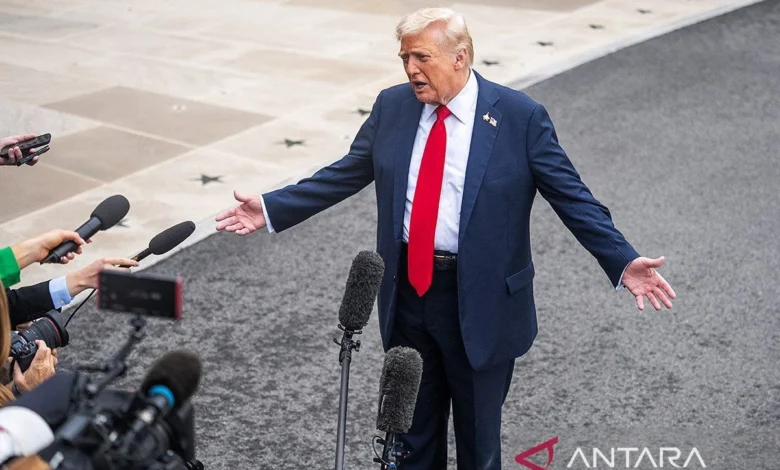
The geopolitical landscape of the Western Hemisphere has undergone a seismic shift following a series of unprecedented military and diplomatic maneuvers by the United States in Venezuela. President Donald Trump, in a comprehensive interview with Fox News on Friday, declared that Cuba’s economic and political stability is now in a state of terminal decline, asserting that the island nation cannot survive without the consistent flow of subsidized oil and financial support from Venezuela. The President’s remarks come in the wake of a massive U.S. military operation that resulted in the apprehension of Nicolas Maduro, a move that has effectively severed the long-standing "oil-for-security" lifeline between Caracas and Havana.
"In total, Cuba depends on Venezuela, both for money and for oil," President Trump stated during the interview. "Cuba provides protection to Venezuela, and Venezuela provides money to Cuba through oil. That relationship is now over." The President emphasized that the bilateral framework which sustained the Cuban government for over two decades has been dismantled following the U.S. intervention, leaving the administration in Havana without its primary benefactor. When asked directly if Cuba could maintain its current state without Venezuelan crude, Trump was unequivocal: "No, Cuba is completely dependent on Venezuela, both financially and in terms of oil."
The January 3rd Operation and the Fall of the Maduro Administration
The current crisis reached a breaking point on January 3, 2026, when United States forces launched a large-scale tactical operation in Caracas. The mission, which targeted high-level government installations, culminated in the arrest of Nicolas Maduro and his wife, Cilia Flores. Following their capture, both were immediately transported to New York to face federal charges. The Trump administration had previously indicted Maduro and several key members of his inner circle on charges of "narco-terrorism," alleging that the Venezuelan leadership had conspired with paramilitary groups to flood the United States with cocaine as a means of destabilizing the country.
President Trump reiterated on Friday that Maduro and Flores would face the full force of the American legal system. "They will be tried for their involvement in narco-terrorism and for being a direct threat to the national security of the United States," Trump said. The removal of Maduro has created a power vacuum that was quickly filled by the Venezuelan Supreme Court, which temporarily transferred the duties of the head of state to Vice President Delcy Rodriguez. Rodriguez was officially sworn in as the interim president before the National Assembly on January 5, though the legitimacy of the transition remains a subject of intense international debate.
The Economic Reconfiguration of Venezuelan Energy
A central component of the U.S. strategy in the region involves the immediate redirection of Venezuela’s vast petroleum reserves. President Trump revealed that the United States is currently receiving Venezuelan oil valued at approximately $4 billion per day, a figure he expects to rise as infrastructure is stabilized and modernized. "The oil we are taking is worth $4 billion in a single day, and that number will increase," Trump told Fox News. "We are going to rebuild it; all the big oil companies will go in, they will make a lot of profit, and Venezuela will get a share of that money."
The President further disclosed that the interim authorities in Caracas have agreed to transfer between 30 and 50 million barrels of oil to the United States. While critics have raised concerns regarding the sovereignty of Venezuela’s natural resources, the Trump administration has promised that the crude will be sold at market prices. The resulting revenue, according to the White House, will be funneled into a fund designed to benefit both the Venezuelan people—who have suffered through years of hyperinflation and scarcity—and the American economy.
The Historical Context: The Cuba-Venezuela "Lifeline"
To understand the gravity of Trump’s assertions, one must look at the historical "Convenio Integral de Cooperación" (Comprehensive Cooperation Agreement) signed in 2000 by Fidel Castro and Hugo Chávez. For twenty-six years, this agreement served as the bedrock of the "Pink Tide" in Latin America. Under the deal, Venezuela shipped upwards of 100,000 barrels of oil per day to Cuba at highly subsidized rates, often in exchange for medical services, teachers, and, more critically, intelligence and security personnel.
Cuban security advisors and intelligence officers were widely reported to be integrated into the highest levels of the Venezuelan military and the "colectivos" (pro-government militias). This "protection" mentioned by Trump was essential for Maduro’s survival during previous waves of civil unrest and attempted coups. In return, the Venezuelan oil allowed the Cuban government to maintain its aging power grid and provide basic services without having to purchase fuel at international market rates, which the cash-strapped island could never afford. With the U.S. military now overseeing the flow of Venezuelan crude, that exchange has been abruptly terminated.
International Reactions and Diplomatic Friction
The U.S. military intervention and the subsequent arrest of a sitting head of state have sent shockwaves through the international community. In Caracas, the remnants of the Maduro-aligned government and the new interim administration under Delcy Rodriguez have requested an emergency meeting of the United Nations Security Council. They argue that the U.S. operation constitutes a violation of international law and national sovereignty.
Regionally, the response has been divided. In a recent telephone briefing, the presidents of Colombia and Brazil discussed the unfolding situation. Both nations have been heavily impacted by the Venezuelan refugee crisis, with millions of migrants crossing their borders over the last decade. While expressing concerns about regional stability, there is a cautious optimism in Bogota and Brasilia that a transition in Caracas could lead to the eventual repatriation of refugees and the restoration of trade.
Meanwhile, global powers with significant investments in Venezuela have signaled their intent to protect their interests. China, which has loaned tens of billions of dollars to Venezuela over the years—often repaid in oil—issued a statement through its Foreign Ministry. Beijing asserted that it would "consistently deepen economic relations with Venezuela," regardless of the change in leadership, signaling that it does not intend to abandon its foothold in the South American energy sector.
Analysis: The Implications for Regional Stability
The collapse of the Maduro-Havana axis presents both opportunities and significant risks for the Western Hemisphere. For the United States, the primary objective is the installation of a stable, pro-market government in Caracas that can restore oil production to its early-2000s peak of 3 million barrels per day. The involvement of "big oil companies" suggests a return to the pre-Chávez era of foreign investment, which could provide the capital necessary to repair PDVSA’s (Petróleos de Venezuela, S.A.) crumbling infrastructure.
However, the implications for Cuba are potentially catastrophic. Deprived of its energy subsidy, Havana faces a return to the "Special Period" of the 1990s—a time of extreme economic contraction following the collapse of the Soviet Union. Without Venezuelan oil, the Cuban government will be forced to seek alternative suppliers, likely at a much higher cost, or implement drastic austerity measures that could lead to widespread domestic unrest.
Chronology of Recent Events
- January 3, 2026: U.S. forces launch a massive military operation in Venezuela. Nicolas Maduro and Cilia Flores are arrested and transported to New York.
- January 4, 2026: The U.S. Department of Justice formalizes narco-terrorism charges against the former Venezuelan leadership.
- January 5, 2026: Delcy Rodriguez is sworn in as interim president of Venezuela by the National Assembly.
- January 7, 2026: President Trump announces the transfer of 30-50 million barrels of Venezuelan oil to the U.S.
- January 9, 2026: Trump grants an interview to Fox News, declaring the end of the Cuba-Venezuela bilateral relationship and highlighting Cuba’s vulnerability.
- January 10, 2026: China reaffirms its commitment to economic ties with Venezuela; UN Security Council considers an emergency session.
Looking Ahead: A New Energy Paradigm
As the United States consolidates its influence over Venezuelan energy exports, the global oil market is bracing for a shift. The influx of 50 million barrels into the U.S. strategic and commercial reserves could provide a buffer against global price volatility, even as the Trump administration pushes for a total restructuring of the Venezuelan oil industry.
For the people of Venezuela, the promise of "getting a share of the money" remains to be fulfilled. The interim government under Rodriguez faces the monumental task of navigating a country divided by decades of political strife while operating under the shadow of a U.S. military presence. For Cuba, the clock is ticking. As the tankers that once traveled between Puerto La Cruz and Havana are diverted to American ports, the island nation must confront a reality where its primary economic engine has been permanently silenced. The coming months will determine whether the "rebuilding" promised by President Trump will result in a prosperous, democratic Venezuela or a new era of regional dependency.
Related posts: