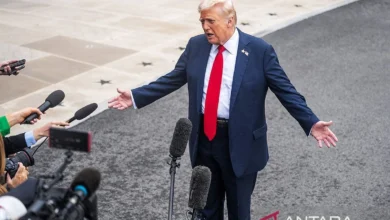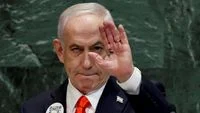
The publication of this list by the Tehran-affiliated media outlet Hamshahri marks a volatile escalation in the already strained geopolitical landscape of the Middle East. Following the death of Supreme Leader Ayatollah Ali Khamenei—an event that has sent shockwaves through global markets and diplomatic circles—the circulation of a "hit list" featuring high-ranking Western and Israeli officials has heightened fears of imminent retaliatory strikes. The infographic, which depicts figures such as U.S. President Donald Trump and Israeli Prime Minister Benjamin Netanyahu in orange prison jumpsuits with crosshairs superimposed on their heads, serves as a visceral illustration of the current hostility emanating from Tehran’s power circles.
The Context of Succession and Retaliation
The death of Ali Khamenei, who served as the Supreme Leader of Iran since 1989, represents a fundamental shift in the Islamic Republic’s power structure. His son, Ayatollah Mojtaba Khamenei, has swiftly assumed the mantle of leadership. In his inaugural address, the new Supreme Leader emphasized that the "blood of the martyr" would not go unavenged, framing the retribution as a national duty. This rhetoric has set the stage for what many regional analysts describe as a "new era of uncertainty" for Iran’s foreign policy.
The Hamshahri publication, while not an official state decree, reflects the prevailing sentiment among Iran’s hardline political factions. By naming leaders from the United States, Israel, France, the United Kingdom, Germany, and Italy, the outlet is effectively signaling that Iran views the current international order as a collective front responsible for the demise of its former leader.
The Targeted Officials: A Breakdown
The list of 13 individuals includes figures at the heart of Western security and foreign policy apparatuses:
- Donald Trump: Former and current U.S. President, long considered a primary antagonist by Tehran.
- Benjamin Netanyahu: Prime Minister of Israel, the central figure in Iran’s regional security concerns.
- Israel Katz: Israeli Minister of Defense.
- Pete Hegseth: U.S. Secretary of Defense.
- Marco Rubio: U.S. Secretary of State.
- Emmanuel Macron: President of France.
- Keir Starmer: Prime Minister of the United Kingdom.
- Friedrich Merz: Chancellor of Germany (notably listed twice in the original report).
- Giorgia Meloni: Prime Minister of Italy.
- Mike Huckabee: U.S. Ambassador to Israel.
- Brad Cooper: Commander of CENTCOM.
- Gideon Sa’ar: Israeli Minister of Foreign Affairs.
The inclusion of these specific names suggests a strategy aimed at intimidating key players in the Western-led security architecture. By targeting both political leaders and military strategists like CENTCOM’s Brad Cooper, the rhetoric moves beyond symbolic posturing toward a perceived tactical threat.
Chronology of Escalation
To understand the gravity of the current situation, one must examine the rapid series of events leading to this point:
- Pre-Crisis Period: Ongoing tensions in the Strait of Hormuz, where Iran has repeatedly threatened to disrupt global oil supplies, creating a fragile baseline for regional security.
- The Incident: The death of Ayatollah Ali Khamenei occurs during a joint intelligence and military operation, the details of which remain classified but have been attributed to a coalition involving U.S. and Israeli assets.
- The Succession: Ayatollah Mojtaba Khamenei is appointed as the new Supreme Leader, immediately pivoting the discourse toward "revolutionary justice."
- The Media Response: Hamshahri releases the infographic, causing immediate diplomatic alarm in the capitals of the nations mentioned.
- Current State: International intelligence agencies are reportedly heightening security protocols for the named individuals, while Tehran remains silent on whether this list represents an official government policy or localized propaganda.
Geopolitical Implications and Market Volatility
The implications of this list are profound. Global energy markets have already reacted to the instability in the region. With the Strait of Hormuz being a critical chokepoint for global oil transit, any Iranian retaliation could lead to a spike in crude prices. India, for instance, has already taken the precautionary measure of banning its citizens from working on ships passing through the strait, a clear indicator of how seriously individual nations are taking the risk of potential Iranian maritime retaliation.
Furthermore, the involvement of European leaders like Macron, Starmer, and Meloni suggests that Iran is expanding its definition of "enemies of the state" to include any nation that supports the U.S.-Israeli axis. This move complicates the already delicate diplomatic negotiations regarding Iran’s nuclear program and regional proxies, such as Hezbollah and the Houthis, who may now feel emboldened to act on behalf of the Iranian state.
Analysis of the Propaganda vs. Policy Debate
While Western intelligence officials are analyzing the threat level, many geopolitical analysts suggest that this list is a sophisticated form of "asymmetric warfare." By utilizing media outlets to circulate such imagery, the Iranian regime achieves several goals:
- Domestic Consolidation: It projects an image of strength and unwavering resolve to a domestic audience grappling with the transition of leadership.
- Psychological Operations: It forces the mentioned leaders to dedicate resources to increased security and forces their respective governments to issue public statements of condemnation, effectively placing Tehran at the center of the global news cycle.
- Plausible Deniability: Because the Iranian government has not officially ratified the list, they retain the ability to distance themselves from any "rogue" actors who might attempt to act on these threats, while still reaping the benefits of the fear generated by the publication.
Official Responses and International Security
As of the latest reports, there has been no official statement from the White House, Downing Street, or the Elysee Palace confirming specific changes to the security details of the listed individuals. However, security experts note that such lists are rarely ignored. In the past, similar threats against figures like Donald Trump have resulted in significant federal investigations and tightened security perimeters.
The silence from the Iranian Foreign Ministry is notable. It suggests a calculated decision to keep the international community guessing. By refusing to confirm or deny the list, Iran maintains a "gray zone" strategy, where the threat of action remains more potent than the action itself.
The Future of the Strait of Hormuz
Central to this entire conflict is the security of the Strait of Hormuz. Iran’s parliament has recently debated the "necessity of controlling" the strait, framing it as the ultimate leverage point against Western economic pressure. If Iran decides to weaponize its control over this maritime corridor, the impact on global inflation and supply chains would be catastrophic. The recent restrictions placed by the Indian government are likely only the beginning of a broader trend of shipping companies avoiding the region entirely, which would inevitably lead to increased insurance premiums and shipping costs worldwide.
Conclusion: A Precarious Standoff
The publication of the 13-name list by Hamshahri serves as a grim reminder of the volatility inherent in the Middle East. Whether this list is a genuine precursor to kinetic action or merely a high-stakes psychological maneuver, it has succeeded in escalating tensions to a level not seen in years. As the international community watches the transition of power in Tehran, the primary concern remains the prevention of a miscalculation that could draw major global powers into a direct, large-scale confrontation.
For now, the world remains in a state of heightened vigilance. The transition under Ayatollah Mojtaba Khamenei appears to be following a path of confrontation rather than reconciliation, and as long as the rhetoric of "revenge" continues to dominate the discourse, the risk of a misstep remains high. The nations involved must now balance the need for firm deterrence with the imperative of de-escalation, all while navigating a region where the margin for error has all but vanished.
As the situation develops, observers will be looking for signs of whether this list is a prelude to covert operations or simply a tool to galvanize the regime’s base. Regardless of the intent, the psychological and diplomatic damage is already done, leaving the international order in a state of suspended animation, waiting to see if Tehran’s next move will be a diplomatic pivot or a military strike.
Related posts: