Comprehensive Guide to Hamster Care: Essential Practices for Beginners to Ensure Health, Longevity, and Well-Being


The growing popularity of small mammals as household companions has positioned hamsters among the most sought-after pets for first-time animal owners and families alike. Renowned for their compact size, engaging behaviors, and relatively low maintenance compared to larger domestic animals, hamsters offer an accessible entry point into responsible pet ownership. However, despite their reputation as easy-to-manage creatures, these nocturnal rodents possess specific physiological and psychological needs that must be met to ensure a high quality of life. Proper husbandry encompasses a wide array of considerations, ranging from spatial accommodation and dietary requirements to environmental enrichment, hygiene management, and veterinary oversight. Understanding and implementing these foundational practices is critical for preventing common health issues, mitigating behavioral stress, and fostering a trusting bond between the animal and its human caregiver.
Main Facts and Environmental Preparation: Habitat Design and Spatial Requirements
The foundation of proper hamster husbandry begins with the selection and setup of an appropriate enclosure. In domestic settings, hamsters spend the overwhelming majority of their lives within the confines of their cage, making this environment the primary determinant of their physical and mental health. Historically, commercial pet trade practices frequently promoted small, multi-tiered plastic cages that modern veterinary science and small animal welfare organizations now recognize as inadequate.
According to guidelines synthesized from exotic animal veterinary practices and specialized welfare organizations such as Chewy, an enclosure must provide sufficient horizontal floor space rather than mere vertical height, as hamsters are terrestrial burrowers rather than adept climbers. The minimum recommended continuous floor space for a single hamster is approximately 24 by 12 inches (61 by 30 centimeters), though modern welfare standards increasingly advocate for enclosures measuring at least 40 by 20 inches to accommodate essential accessories without overcrowding.
The enclosure must feature secure, escape-proof latches, as hamsters are remarkably resourceful and possess strong incisors capable of exploiting weak points in wire mesh or plastic housing. Within this habitat, the choice of substrate—commonly referred to as bedding—plays a vital role in replicating the animal’s natural burrowing instincts. Substrates must be deep, clean, and safe for respiratory systems. Appropriate materials include unscented paper-based bedding or kiln-dried aspen shavings. Conversely, aromatic softwoods such as cedar and untreated pine contain volatile organic compounds, specifically phenolic oils, which are scientifically proven to cause severe respiratory distress, chronic pulmonary inflammation, and hepatic complications in small rodents. Shredded, unprinted white paper or laboratory-grade cellulose fibers also serve as viable, dust-free alternatives that support complex tunneling behaviors.
Chronology of Integration: Bringing a New Hamster Home and the Acclimation Process
The journey of pet ownership requires a carefully timed approach, particularly during the initial phase when the animal transitions from a commercial breeding facility or pet retailer to a domestic household. The first seventy-two hours following arrival represent a critical vulnerability window during which the hamster experiences acute environmental stress.
Chronologically, the integration process should follow a structured timeline:
Day 1 to 3: The Initial Decompression Phase. Upon introducing the hamster to its pre-prepared enclosure, the primary objective is to minimize stress. The animal should be provided with immediate access to fresh water, a pre-filled food bowl, and a secure hiding box, after which it should be left undisturbed for a minimum of 48 to 72 hours. During this period, direct handling must be strictly avoided to allow the animal to map its surroundings, establish scent marks, and adjust to ambient household noises and light cycles.
Day 4 to 7: Olfactory Familiarization. Once the initial adjustment period has lapsed, the caregiver can initiate passive interaction. This involves introducing human scent into the habitat without direct physical contact—such as placing a hand gently near the enclosure or introducing a tissue rubbed lightly between the palms. The hamster relies heavily on its olfactory senses to categorize environmental stimuli as safe or threatening.
Week 2 and Beyond: Progressive Tactile Interaction. Active handling should begin only when the hamster demonstrates curiosity rather than defensive postures, such as freezing, hissing, or attempting to bite. Initial interactions should take place in a secure, enclosed neutral space, such as a dry bathtub lined with a towel or a low-sided plastic bin. Caregivers are advised to wash their hands thoroughly before interaction to eliminate residual food scents that might trigger accidental biting. When lifting the animal, both hands should be cupped gently beneath the torso, avoiding the instinct to grasp from above, which mimics the predatory behavior of avian raptors in the wild.
Supporting Data: Nutritional Science and Dietary Balance
Dietary management is one of the most critical pillars of preventative veterinary care for captive hamsters. Omnivorous by nature, wild hamsters consume a diverse array of seeds, grains, grasses, and occasional insects. Replicating this nutritional profile in captivity requires a balanced commercial diet supplemented with fresh organic produce.
Nutritional science dictates that a primary diet should consist of high-quality laboratory blocks or uniform pellets combined with measured seed mixes. This prevents selective feeding, a common behavioral phenomenon where hamsters consume only their preferred high-fat seeds—such as sunflower seeds—while leaving nutrient-dense components behind, leading to nutritional deficiencies and obesity.
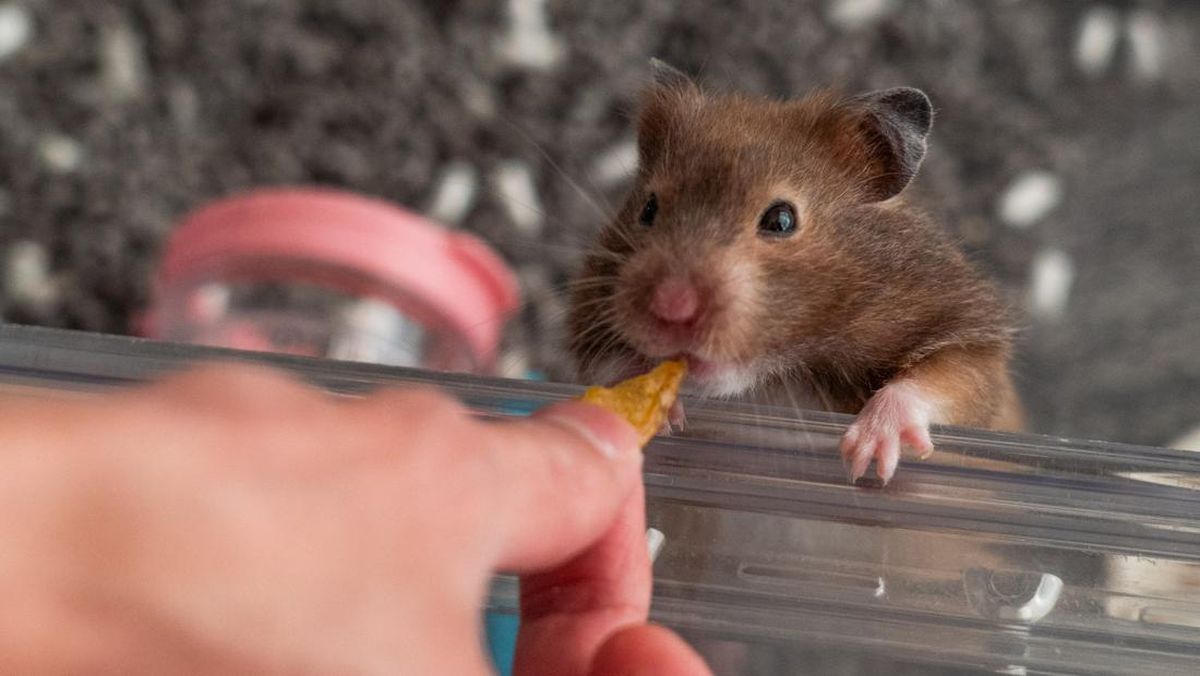
Commercial pellets should ideally contain a crude protein content of 16 to 20 percent, a fat content of 4 to 6 percent, and a high fiber percentage (around 8 to 10 percent) to support gastrointestinal motility. In addition to dry feed, small quantities of fresh vegetables and fruits can be introduced several times a week. Safe additions include broccoli florets, carrots, cucumbers, zucchini, and small cubes of apple.
However, strict dietary prohibitions must be observed. Toxic or hazardous foods that must be permanently excluded from a hamster’s diet include:
- Chocolate, caffeine, and products containing processed sugars or excessive sodium, which disrupt metabolic pathways.
- Avocado, due to the presence of persin, a fungicidal toxin lethal to many small animals.
- All members of the Allium family, including onions, garlic, and chives, which contain organosulfoxides capable of inducing Heinz body hemolytic anemia.
- Citrus fruits (oranges, lemons, grapefruits), whose high acidity can cause severe oral ulceration and gastrointestinal irritation.
- Raw potatoes and tomato greens, which contain toxic glycoalkaloids such as solanine.
Hydration is equally critical. Access to clean, potable water must be continuous. While traditional open ceramic bowls can be utilized, they present logistical challenges as hamsters frequently kick bedding into the water or tip the containers over. Consequently, inverted vacuum-sealed bottles equipped with stainless steel ball-bearing sipper tubes are the industry standard for maintaining pristine hydration sources.
Official Responses, Environmental Enrichment, and Behavioral Health
Preventing behavioral pathology in captive rodents requires proactive environmental enrichment. In the wild, hamsters cover vast distances nightly in search of food; in captivity, the spatial constraints of an enclosure can lead to severe stereotypic behaviors, such as bar-chewing, pacing, and excessive self-grooming driven by boredom.
Veterinary behavioral specialists emphasize the necessity of continuous physical and mental stimulation. An appropriately sized running wheel is non-negotiable. The wheel must possess a solid running surface rather than wire rungs, which can cause traumatic injuries such as bumblefoot or degloving of the tail and digits. Furthermore, the diameter of the wheel must be large enough to ensure the hamster’s spinal column remains flat while running; an arching spine resulting from an undersized wheel leads to permanent musculoskeletal damage. Syrian hamsters generally require a wheel diameter of at least 11 to 12 inches, while dwarf species require a minimum of 8 inches.
Dental health is another major consideration governed by anatomy. Hamster incisors grow continuously throughout the animal’s lifespan at a rate of approximately four to five inches per year. Without adequate materials to gnaw on, overgrowth occurs, preventing normal occlusion and leading to starvation or facial abscesses. Safe chewing outlets include untreated fruitwood blocks (such as apple or pear wood), compressed timothy hay cubes, and untreated cardboard tubes.
Hygiene and Maintenance Protocols
Maintaining a sanitary microclimate within the enclosure is essential for averting infectious diseases, particularly respiratory ailments caused by ammonia buildup from degraded urine. Urine accumulation in damp bedding releases high concentrations of ammonia gas, which irritates the delicate mucous membranes of the respiratory tract, predisposing the animal to pneumonia and chronic rhinitis.
Routine maintenance operates on a multi-tiered schedule:
- Daily Spot Cleaning: Caregivers must inspect the enclosure every 24 hours to remove wet patches of bedding, particularly in designated bathroom corners, and dispose of perishable fresh food items left uneaten to prevent mold growth and insect infestation.
- Weekly Deep Cleaning: Once a week, the entire enclosure should be emptied. Non-toxic, pet-safe disinfectants should be used to sanitize the habitat walls, base, and hard accessories. To minimize psychological stress, a small handful of clean, old bedding containing the hamster’s familiar scent should be mixed back into the fresh substrate upon reintroduction.
- Equipment Sanitation: Water bottles and food dishes require daily washing with hot, soapy water, followed by thorough rinsing to eliminate soap residue.
Broader Impact, Health Indicators, and Veterinary Implications
Recognizing deviations from baseline health is an essential skill for any hamster owner. Because hamsters are prey species, they instinctively mask signs of weakness, illness, or pain until a pathological condition is advanced. Consequently, acute deterioration can occur rapidly if subtle warning signs are overlooked.
Owners must monitor for specific clinical indicators of illness, which include:
- Dermatological signs: Alopecia (hair loss), excessive scratching, crusty skin lesions, or ectoparasites such as mites.
- Respiratory indicators: Ocular or nasal discharge, audible wheezing, rapid flank movement, and sneezing.
- Gastrointestinal abnormalities: Wet tail (proliferative ileitis), characterized by severe watery diarrhea, staining around the tail base, lethargy, and a hunched posture—a condition predominantly affecting young Syrian hamsters that carries a high mortality rate if untreated.
- Behavioral and systemic shifts: Sudden anorexia, weight loss, unkempt fur coats resulting from a cessation of grooming, and uncharacteristic aggression or lethargy.
When clinical abnormalities are identified, prompt intervention by a qualified exotic animal veterinarian is mandatory. General practitioners who primarily treat dogs and cats often lack the specialized pharmacological knowledge and surgical dexterity required for small rodent medicine. Routine wellness checks, fecal examinations for endoparasites, and proactive dental trims can significantly extend a hamster’s lifespan, which typically ranges from 1.5 to 3 years depending on the specific species (such as Syrian, Campbell’s dwarf, Winter White, or Roborovski).
Ultimately, the successful husbandry of hamsters transcends basic feeding and housing; it demands an active commitment to understanding the biological imperatives of a complex, sentient organism. By integrating evidence-based spatial design, precise nutritional formulations, rigorous sanitation protocols, and attentive behavioral observation, caregivers can ensure that these small mammals lead enriched, healthy, and comfortable lives in captivity.