Jakarta, Indonesia – A coalition of prominent Indonesian business associations, led by the Indonesian Employers’ Association (Apindo), has issued a forceful demand to the government for an immediate moratorium and comprehensive review of the derivative regulations stemming from Government Regulation (PP) Number 28 Year 2024 on Health. The associations, representing the nation’s vital Tobacco Products Industry (IHT), warn that specific provisions within the new regulation threaten to inflict severe economic damage, including fostering the proliferation of illegal cigarettes, triggering widespread layoffs, and significantly eroding state revenue. This urgent appeal highlights a growing chasm between public health objectives and the economic realities of a deeply entrenched industry, placing immense pressure on the current administration to navigate a complex policy landscape.
The core of the industry’s apprehension revolves around three critical points within PP 28/2024: the mandate for uniform packaging and plain-labeling of tobacco products, the imposition of stringent maximum limits for nicotine and tar content, and the outright prohibition of various tobacco product additives. Sutrisno Iwantono, Head of Public Policy at Apindo, articulated the dire potential consequences during a press conference held at Apindo’s headquarters in South Jakarta on Thursday, July 23. "Essentially, the uniformity of packaging, the limits on tar and nicotine, and the ban on additives will de facto shut down the legal industry," Iwantono asserted, emphasizing that the fallout would directly impact the workforce and paradoxically fuel the growth of an unregulated, illegal cigarette market, "without any proven health benefits."
Iwantono further elaborated on the projected financial repercussions for the state. He warned that a surge in illegal tobacco products, which evade taxation, would lead to a substantial decrease in excise tax revenue, a critical component of the national budget. "This regulation places an undue burden on the compliant legal industry without solving the problem, as the illegal industry will flourish. People will continue to smoke, but the government will suffer losses from reduced excise revenue," he explained. This sentiment underscores the industry’s argument that overly restrictive regulations, while ostensibly aimed at public health, could inadvertently create a black market that is even harder to control and offers no fiscal benefit to the nation.
Industry’s Stance: Economic Fallout and Illicit Trade Concerns
The Indonesian Tobacco Products Industry is a significant economic pillar, contributing substantially to the national GDP, employment figures, and state coffers through excise taxes. According to various industry estimates, the sector directly and indirectly employs millions of people, ranging from tobacco and clove farmers to factory workers, distributors, and retailers. Annual excise tax revenues from tobacco products consistently rank among the highest non-tax state revenues, often exceeding hundreds of trillions of rupiah. The industry’s concerns are therefore rooted in a deep understanding of its socio-economic footprint.
Iwantono revealed that Apindo and its allied associations have repeatedly voiced their apprehensions to government bodies, including the Ministry of Health, regarding the potentially devastating impact of these regulations. However, despite these sustained efforts, concrete solutions or clarifications have yet to emerge. Frustrated by the lack of progress in these discussions, Iwantono made a direct public appeal, stating, "We are tired of discussing this with the Ministry of Health. Therefore, this statement is addressed directly to President Prabowo Subianto." This direct address to the head of state signals the urgency and gravity with which the industry views the impending regulations, seeking intervention at the highest political level.
Deconstructing the Contentious Regulations
The three specific points within PP 28/2024 are viewed by the industry as fundamental threats to its operational viability and the distinct character of Indonesian tobacco products.
-
Uniform Packaging: Eroding Brand Identity and Market Distinction
The requirement for uniform packaging and plain labeling, often referred to as ‘plain packaging,’ is a measure adopted in several countries to reduce the attractiveness of tobacco products, particularly to younger consumers, and to diminish the impact of brand marketing. However, for the Indonesian IHT, this provision is seen as a severe blow to brand differentiation and consumer choice. Edy Sutopo, Chairman of the Indonesian Tobacco Community Alliance (AMTI), explained that such a move would make it exceedingly difficult for consumers to distinguish between legal, regulated products and illegal, often counterfeit, alternatives. Without distinct branding, consumers might inadvertently purchase illicit products, further exacerbating the problem of illegal trade and posing potential health risks due to unknown contents. Moreover, established brands, which have invested heavily in their identity and quality, would lose their competitive edge, hindering their ability to operate in a legal market. -
Nicotine and Tar Limits: A Threat to Local Agriculture
The proposed limits of 1 milligram of nicotine and 10 milligrams of tar per cigarette are particularly contentious. Sutopo highlighted that these stringent caps pose an existential threat to the national tobacco industry, which predominantly relies on local production. He explained that nearly all locally grown tobacco and cloves, which are integral to the unique Indonesian "kretek" (clove cigarette) industry, naturally possess tar and nicotine levels exceeding these proposed thresholds.
"If forced to comply with 1 milligram of nicotine and 10 milligrams of tar per stick, it is simply impossible to meet with local tobacco and local cloves," Sutopo asserted. The implication is profound: should these limits be enforced, the national IHT would be compelled to abandon local raw materials and instead rely heavily on imported tobacco to formulate products that meet the new specifications. This shift would deliver a crippling blow to the upstream industry, devastating tens of thousands of local tobacco and clove farmers who depend on the IHT for their livelihoods. The economic ripple effect would be immense, affecting rural economies across key agricultural regions. -
Additive Ban: Undermining Traditional Production
The prohibition of various additives is another critical point of contention, especially given the distinct nature of Indonesian tobacco products, particularly kretek. Many products, both traditional and modern, rely on specific additives for their characteristic flavor, aroma, and even physical properties. Sutopo provided several examples: "One of the prohibited items is flavorings, including cooling agents. All cigarettes, both kretek and white cigarettes, use cooling agents like menthol."
He further noted, "Also, sugar is not allowed. Local tobacco usually uses sugar, even in small amounts, to regulate its moisture content. Furthermore, extracts of vegetables and fruits are prohibited, which will also affect electronic cigarettes." These additives are not merely for flavor enhancement; in many cases, they are integral to the manufacturing process and the very identity of products like kretek, which traditionally incorporate cloves and other spices. The ban would effectively force a complete reformulation or discontinuation of many popular Indonesian tobacco products, erasing decades of product development and cultural heritage associated with kretek.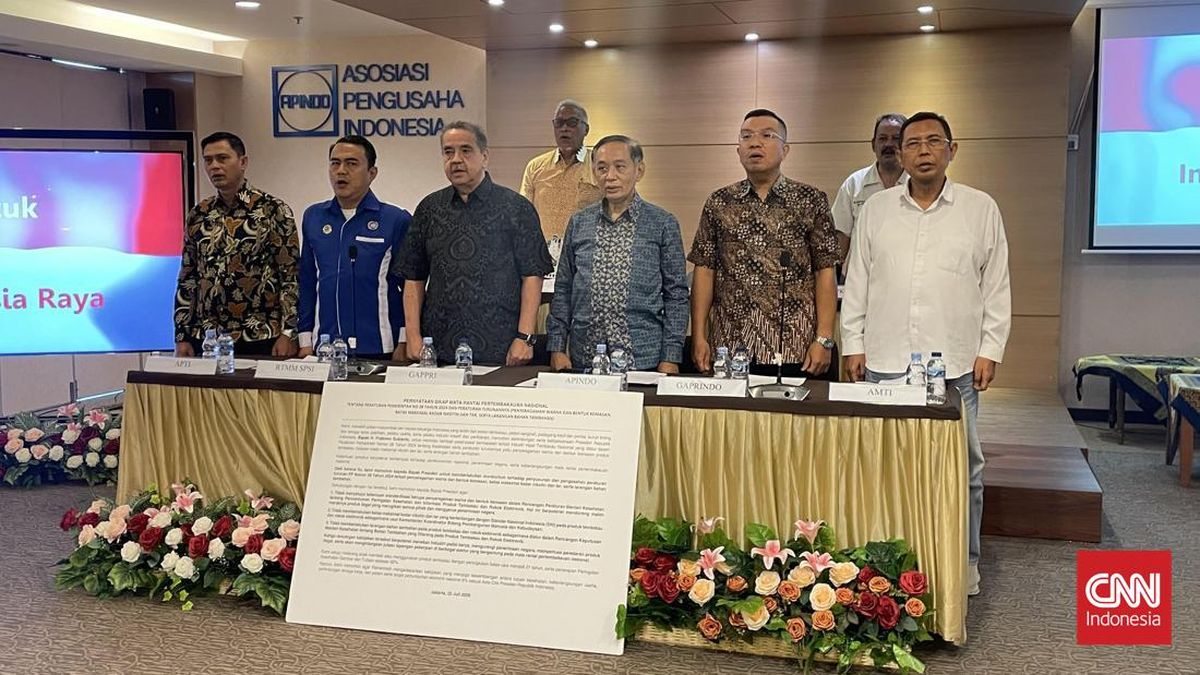
The Human Cost: Labor’s Dire Warning
The potential for mass layoffs is not a distant threat but a tangible fear among workers in the IHT. Didik Aswadi, Head of Research and Development for the Federation of Cigarette, Tobacco, Food, and Beverage Workers Union-All Indonesia Workers Union (FSP RTMM-SPSI), painted a stark picture of the workforce most vulnerable to these regulations. "Our workers are predominantly women, elderly, and have low levels of education," Aswadi stated. He emphasized that if the IHT is destabilized and widespread job losses occur, these workers, often with limited alternative skills or opportunities, would face immense difficulty in finding new employment.
Aswadi directly challenged the alignment of these regulations with the government’s broader economic agenda, particularly President Prabowo’s stated commitment to job creation. "If we are disrupted, this is not aligned with the President’s vision and mission of increasing employment; instead, it will increase unemployment," he warned. The FSP RTMM-SPSI’s strong opposition is rooted in the direct impact on their members’ livelihoods and welfare. Aswadi concluded with a firm warning, declaring, "We unequivocally reject the three points mentioned. We are serious. We warn that if this regulation is enacted, we will hold a mass demonstration in Jakarta and will surround the Ministry of Health on Sunday, July 26." This threat of direct action underscores the depth of desperation and determination among the labor force.
The Broader Landscape: Indonesia’s Tobacco Conundrum
Government Regulation No. 28 Year 2024 on Health is part of a broader national effort to improve public health, encompassing various aspects beyond tobacco. However, the derivative rules pertaining to IHT have ignited a fierce debate, highlighting the perennial tension between public health imperatives and economic realities in Indonesia.
-
Economic Backbone and Unique Cultural Identity
Indonesia stands as one of the world’s largest tobacco producers and consumers, and its IHT holds a unique position globally. Unlike many other nations, Indonesia is not a signatory to the World Health Organization’s Framework Convention on Tobacco Control (FCTC), although it has implemented various tobacco control measures independently. The IHT is not merely an economic sector; it is intertwined with the nation’s agricultural heritage, particularly through the cultivation of local tobacco and cloves, and the cultural significance of kretek cigarettes, which are distinctly Indonesian and have been consumed for over a century. Any policy shift that drastically alters the industry’s structure has profound implications for national identity and economic stability. -
The Regulatory Tug-of-War
The current controversy is not an isolated incident but rather the latest episode in a long-running policy tug-of-war. For years, public health advocates, supported by international organizations, have pushed for stricter tobacco control measures, citing the high prevalence of smoking and associated health burdens in Indonesia. Conversely, the industry, farmers, and labor unions have consistently argued for policies that balance public health goals with economic sustainability, emphasizing the sector’s contribution to livelihoods and state revenue. The government, caught between these powerful opposing forces, faces the complex task of crafting regulations that are both effective in promoting health and sensitive to socio-economic impacts. Previous regulations, such as those governing graphic health warnings or advertising restrictions, have also met with significant industry resistance, albeit usually leading to compromise or gradual implementation.
Stakes and Potential Repercussions
The implications of enforcing the contentious provisions of PP 28/2024 are multi-faceted and potentially far-reaching:
- Economic Downturn and Job Losses: The immediate and most direct impact would be on the IHT’s profitability, leading to factory closures, reduced production, and potentially millions of job losses across the entire supply chain, from farmers to factory workers and distributors. This could lead to a significant increase in poverty, particularly in rural areas heavily reliant on tobacco and clove cultivation.
- Decline in State Revenue: A shrinking legal market coupled with a surge in illicit trade would inevitably lead to a substantial drop in excise tax collection, forcing the government to find alternative revenue streams or cut public spending.
- Rise of Illicit Trade: As argued by the industry, overly restrictive regulations can create a fertile ground for illegal cigarette production and smuggling. These unregulated products often bypass quality controls, may contain harmful ingredients, and are typically sold at lower prices, making them accessible to vulnerable populations, including youth, and undermining public health efforts.
- Impact on Farmers: The specific limits on tar and nicotine, if enforced, would effectively render most local tobacco and clove varieties unsuitable for legal production, devastating the agricultural sector and forcing farmers to switch crops, often without adequate support or alternative markets.
- Social Unrest: The threat of mass demonstrations by labor unions highlights the potential for social unrest if the livelihoods of millions are jeopardized without viable alternatives.
- Political Challenge for the New Administration: President Prabowo Subianto’s incoming administration faces the immediate challenge of addressing this brewing crisis. Balancing the demands of a powerful economic sector and its workforce with the imperative of public health will be a defining test of his government’s policy-making and negotiation skills.
Calls for Presidential Intervention and Looming Protests
The collective voice of Apindo and allied IHT associations, amplified by the passionate appeal from labor unions, represents a significant challenge to the government’s regulatory framework. Their direct plea to President Prabowo Subianto underscores the perceived urgency and the lack of resolution through conventional channels. The planned demonstration at the Ministry of Health on Sunday, July 26, serves as a stark warning of the industry’s and workers’ resolve to fight for their survival.
As the deadline for implementation looms, the government faces a critical decision. It must carefully weigh the intended public health benefits of PP 28/2024 against the severe economic and social repercussions highlighted by the industry and labor unions. A swift and transparent review, potentially involving further dialogue with all stakeholders, may be necessary to find a balanced approach that genuinely safeguards public health while mitigating the potential for widespread economic disruption and the unintended consequence of fostering an even more dangerous illegal tobacco market. The coming weeks will be crucial in determining the fate of Indonesia’s iconic tobacco industry and the millions of lives connected to it.
Related posts: