Muhammadiyah Urges Thorough and Transparent Investigation into High-Level Wiretapping Scandal Targeting President Prabowo Subianto

The leadership of Muhammadiyah, one of Indonesia’s most influential Islamic organizations, has issued a strong call for law enforcement agencies to conduct a comprehensive, fair, and objective investigation into a massive illegal wiretapping scandal. The covert surveillance operation reportedly targeted the communications of President Prabowo Subianto, alongside a wide array of high-ranking state officials, political leaders, media executives, civil society activists, and prominent national business figures.
The scandal, which has sent shockwaves through the Indonesian political landscape, is currently under active investigation by the Criminal Investigation Agency of the Indonesian National Police (Bareskrim Polri). The illicit intelligence-gathering operation has raised profound concerns regarding national security, the integrity of state institutions, the rule of law, and the fundamental right to privacy for citizens and high-ranking public servants alike.
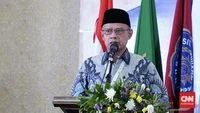
Speaking on the sidelines of an event at the University of Muhammadiyah Surabaya (Umsura), the General Chairperson of the Central Board of Muhammadiyah, Haedar Nashir, emphasized that any legal proceedings arising from this grave breach must be handled with utmost transparency. He underscored that as a constitutional democratic state, Indonesia’s response to such a systemic violation must strictly adhere to legal principles, devoid of political bias or institutional shielding.
"Every process related to the law and legal proceedings must be enforced fairly, objectively, and transparently. I am confident this is our foundational bedrock because we are a nation governed by law," Haedar stated. His remarks reflect growing anxiety among civil society organizations and religious bodies over the potential abuse of state power and intelligence apparatuses for clandestine political or personal objectives.
Chronology and Development of the Investigation
The unfolding wiretapping scandal has rapidly escalated from initial murmurs of security breaches into a full-blown institutional crisis. According to preliminary findings released by Bareskrim Polri, the unauthorized wiretapping operations took place over a sustained period, spanning from 2025 through 2026. During this timeframe, a sophisticated network allegedly intercepted sensitive communications channels used by key figures within the national leadership.
Investigators have uncovered evidence suggesting a systematic effort not only to eavesdrop on targeted individuals but also to systematically erase the digital footprints and data logs associated with the surveillance activities. As the net has widened, Bareskrim has taken unprecedented steps by implicating high-ranking members within the police force itself, signaling a deep-seated institutional compromise.
To date, Bareskrim Polri has formally named three police generals as suspects in the ongoing criminal investigation. Among the prominent figures implicated is former National Police Chief and current Head of the Presidential Staff Office (KSP), Listyo Sigit Prabowo (LSP). The inclusion of a sitting presidential chief of staff in a criminal wiretapping probe has unprecedented implications for the executive branch and the civil-military balance of power in Indonesia.
In addition to Listyo Sigit Prabowo, investigators have named two other high-ranking active police officers: the Head of the Legal Division (Kadivkum) of the National Police, Inspector General Ahrie Sonta Nasution (ASN), and Senior Police Lecturer Grade 1 at Sespim Lemdiklat Polri, Inspector General Eko Hadi Santoso (EH). The involvement of these senior legal and educational figures highlights the complex web of authority allegedly utilized to facilitate and legitimize the clandestine operations.
The investigation took another dramatic turn when authorities announced a fourth suspect, identified by the initials SU, who reportedly acted as a coordinator or mentor directing the actions of Inspector General Ahrie Sonta Nasution and Inspector General Eko Hadi Santoso. According to police investigators, SU played a central role in orchestrating the technical execution of the wiretapping and overseeing the subsequent deletion of the intercepted data to obstruct justice.
Broader Political Dynamics and Public Stability
As the investigation delves deeper into the upper echelons of power, political observers have noted a palpable tension within the nation’s capital and across broader administrative circles. The revelation that the head of state was targeted by rogue elements
within or connected to state security apparatuses underscores vulnerabilities in national cyber and communications security infrastructure.
Amidst this heightened political volatility, Haedar Nashir voiced the unwavering support of Muhammadiyah for President Prabowo Subianto’s administration. He stressed the importance of ensuring that the executive branch remains capable of executing its constitutional duties without destabilizing distractions, particularly given the pressing economic challenges facing the country.
"We also support the President’s steps to continue leading this nation and state based on the constitution, for the greatest possible benefit of the people’s lives, for unity, justice, and prosperity," Haedar asserted.
His statement serves as a stabilizing counterweight during a period when sensationalized reporting and political speculation threaten to polarize public opinion. Muhammadiyah, representing millions of members nationwide, has consistently positioned itself as a guardian of national stability, civic harmony, and democratic continuity during times of crisis.
Call for Public Calm and Prevention of Polarization
Addressing the broader public, Haedar issued a stern cautionary message against succumbing to inflammatory rhetoric or unverified information circulating across digital platforms and social media. He acknowledged that while political debate and differing perspectives are natural components of a healthy democracy, they must not cross the line into destructive confrontation or societal polarization at the grassroots level.
"Because this matter has been handled by the authorities and those with jurisdiction, the public is requested to remain calm and not become divided. You are free to discuss and engage in dynamics, but we must not allow ourselves to be divided into two camps that confront one another," Haedar cautioned.
The potential for the wiretapping scandal to fuel conspiracy theories or deepen institutional distrust between various state apparatuses—such as the National Police, the State Intelligence Agency (BIN), and the military—remains a significant risk. Analysts point out that maintaining public confidence in the judicial process will depend heavily on the ability of Bareskrim Polri to conduct a swift, thorough, and visibly independent prosecution of all individuals involved, regardless of their rank or past institutional affiliation.
Implications for Governance and Institutional Reform
The wiretapping scandal has exposed critical vulnerabilities regarding institutional oversight, executive-security relations, and the protection of civil liberties in Indonesia. For years, legal experts and human rights advocates have raised concerns over the adequacy of legislative frameworks governing intelligence gathering, electronic surveillance, and data privacy.
The misuse of state intelligence tools by individuals holding positions of immense authority demonstrates an urgent need for comprehensive legislative and structural reforms. Observers suggest that the scandal should serve as a catalyst for strengthening parliamentary oversight over intelligence and law enforcement agencies, ensuring that rigorous judicial warrants and multi-layered authorization protocols are strictly required before any interception of communications can take place.
Furthermore, the involvement of senior law enforcement officials in circumventing standard operating procedures highlights deep-seated cultural and structural challenges within Indonesia’s security sector. Restoring public trust will require not only criminal accountability through the courts but also proactive institutional self-cleaning and renewed adherence to democratic governance standards.
Guidance for the Muhammadiyah Community
In concluding his remarks, Haedar turned his focus inward, offering specific guidance to members and constituent bodies of Muhammadiyah. He urged the organization’s vast network of educational, social, and charitable institutions to remain steadfast in their mission to serve the public good, particularly during times of economic hardship.
"Make Muhammadiyah a home for everyone, and let Muhammadiyah continue to provide guidance and benefits for the lives of many people. Because many in our society are experiencing difficult lives, they must be served by all of us," Haedar concluded.
By pivoting the organizational focus toward community service and social welfare, Muhammadiyah leadership seeks to insulate its grassroots members from the distractions of elite political friction, reinforcing its historic role as a constructive pillar of Indonesian civil society. As the legal proceedings surrounding the wiretapping scandal continue to unfold in the coming weeks, the nation will look to its legal institutions to deliver justice transparently, setting a definitive precedent for the supremacy of the rule of law in contemporary Indonesia.