Pressure on BYD Subang Plant: Local Labor Demands and the Challenge of Foreign Investment in Indonesia

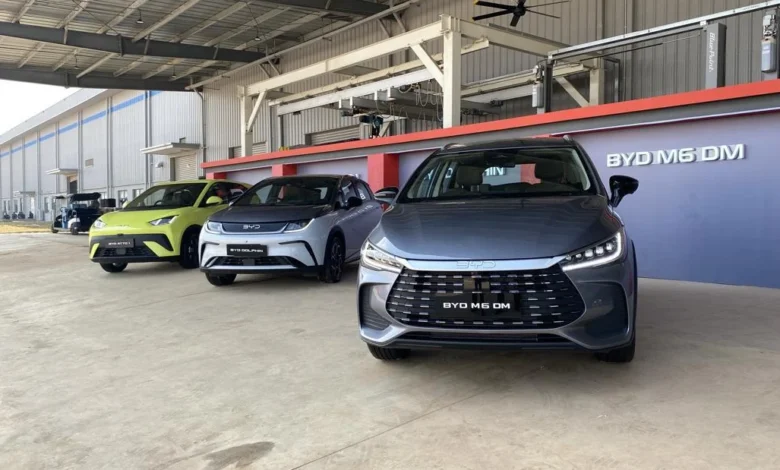
The sprawling BYD manufacturing facility located in the Subang Smartpolitan industrial zone has recently become the focal point of a labor-related controversy, as local organizations have staged protests demanding prioritized recruitment of the surrounding community. This incident marks the latest in a series of operational disruptions that have plagued the site since its development phase, raising critical questions regarding the intersection of foreign direct investment (FDI), community relations, and the regulatory environment for industrial projects in Indonesia. Despite these disruptions, official data from the company indicates that the plant has already integrated thousands of local workers into its operations, fueling a broader debate on the expectations versus the realities of large-scale multinational manufacturing.
Chronology of Disruptions: A Persistent Challenge
The presence of organized local groups, commonly referred to in Indonesia as "ormas," has been a recurring theme throughout the lifecycle of the BYD Subang facility. The recent demonstration, captured in videos circulating on social media, saw protesters not only calling for a larger share of local employment but also demanding a review of the company’s compliance regarding spatial planning and industrial waste management.
This incident is not an isolated event. Even before the facility reached its operational status in September 2026, the project faced significant hurdles. In 2025, reports emerged detailing instances of intimidation and interference by external groups during the construction phase. Eddy Soeparno, Vice Chairman of the People’s Consultative Assembly (MPR) of the Republic of Indonesia, brought these issues to the forefront during a diplomatic visit to Shenzhen, China. At that time, Soeparno emphasized that such acts of "premanisme" (thuggery or organized intimidation) pose a direct threat to investor confidence. His public statements urged the Indonesian government to adopt a zero-tolerance policy toward such interference, noting that the reputation of the nation as an investment-friendly destination relies on the ability to provide a secure environment for major industrial players like BYD.
Employment Metrics: The Reality of BYD’s Local Workforce
The demands raised by the protesting groups contrast sharply with the official employment figures released by BYD. According to Liu Xueliang, Vice President of BYD Co., Ltd., the facility—which represents a massive investment of IDR 11.7 trillion—has already successfully on-boarded 5,000 local Indonesian employees.
Liu has been vocal in his appreciation for the Indonesian workforce, specifically highlighting their diligence and adaptability. During the formal inauguration ceremony held in September 2026, he praised the staff for their rapid acquisition of complex manufacturing skills necessary for electric vehicle (EV) production. For many, the transition from traditional automotive roles to high-tech EV manufacturing represents a significant professional upgrade. BYD’s commitment to internal training programs is designed to bridge the skill gap, ensuring that the local workforce is not only employed but also upskilled to meet global manufacturing standards.
Long-term Economic Vision and Scalability
BYD’s strategic roadmap for the Subang plant is ambitious. The current workforce of 5,000 is intended to be a foundation for future expansion. As the plant approaches its maximum production capacity, the company projects that it will eventually employ up to 20,000 local workers. This scaling process is tied directly to the growth of the regional supply chain and the maturation of the Indonesian EV ecosystem.
The economic implications of this project extend beyond direct hiring. The plant is designed to function as a comprehensive manufacturing hub, which inherently creates a multiplier effect for local industries. By sourcing components domestically and engaging with local vendors for logistics, maintenance, and facility management, the plant serves as an anchor for a burgeoning industrial cluster in West Java. Analysts note that for this transition to be successful, the relationship between industrial tenants like BYD and the local community must evolve from one of friction to one of collaboration, where the benefits of industrialization are felt across the regional economy rather than just within the factory gates.
Analysis: Regulatory and Social Implications
The recurring nature of these protests highlights a broader challenge for Indonesia’s ambition to become a global EV battery and vehicle manufacturing powerhouse. While the government has implemented streamlined permitting processes to attract companies like BYD, LG Energy Solution, and Hyundai, the "last mile" of implementation—specifically local community acceptance—remains a sensitive issue.
Economic analysts suggest that the tension often stems from a mismatch in expectations. While the company operates on a strict timeline and requires specific technical competencies, local groups often view such large-scale investments as immediate sources of employment for all, regardless of the required technical qualifications. When these expectations are not met instantly, frustration can manifest as the type of public pressure observed in Subang.
Furthermore, the demand for reviews on spatial planning and waste management, while legitimate when conducted through official legal channels, can be used as a tool for leverage by non-governmental groups. This creates a complex landscape for legal teams and government liaisons. The Indonesian government, through the Ministry of Investment (BKPM) and local provincial authorities, faces the delicate task of protecting the rights of investors to operate without harassment while ensuring that the host community feels empowered and informed about the project’s environmental and economic impact.
Official Responses and the Path Forward
While the company has remained focused on its operational goals, the government’s stance remains pivotal. Sources within the local government suggest that mediation efforts are being prioritized to prevent further disruptions. The goal is to establish a formal communication channel where local community leaders can engage with BYD management regarding recruitment transparency and CSR (Corporate Social Responsibility) initiatives.
This structured engagement is expected to mitigate the influence of external actors who may be using the guise of community advocacy for personal or political gain. Experts suggest that the "Subang Model" of industrialization will be closely watched by other potential investors. If the state can provide adequate security and a stable regulatory environment, it will solidify Indonesia’s position in the global EV supply chain. Conversely, if operational interference becomes a common feature, it may deter future capital expenditure, as investors prioritize stability and predictability above all else.
The Broader Impact on the EV Sector
The BYD Subang plant is a cornerstone of Indonesia’s "downstreaming" (hilirisasi) strategy. By moving up the value chain from raw material extraction to finished vehicle manufacturing, Indonesia aims to capture a larger share of the EV market. The success of this strategy is intrinsically linked to the performance of facilities like the one in Subang.
The technology transfer taking place within the plant is a critical component of this strategy. As Indonesian engineers and technicians gain mastery over BYD’s proprietary EV platform, the country builds a domestic human capital base that is highly attractive to other global manufacturers. This long-term value proposition is what makes the current labor tensions so significant; they are not merely local employment disputes, but ripples in a much larger sea of industrial transformation.
Conclusion
As BYD continues to ramp up its production capacity in Subang, the focus will likely shift toward reconciling local community expectations with the operational realities of a global manufacturing firm. The company’s stated goal of reaching 20,000 employees is a testament to its long-term confidence in the Indonesian market. However, the path to achieving this target requires a stable social and regulatory environment.
For the Indonesian government, the task is twofold: to ensure that the economic benefits of the EV revolution are distributed equitably among the local population, and to demonstrate that the nation remains a safe, predictable, and welcoming hub for international investment. The resolution of the current tension at the BYD plant will likely serve as a blueprint for how industrial zones in West Java and beyond handle the complexities of large-scale, high-tech manufacturing in an era of rapid economic and social change. The future of Indonesia’s automotive sector depends not only on the capacity of its machines but also on the strength of its social compact with the communities that host them.
Related posts: