Understanding the Dynamics of Bilateral Cooperation and Its Significance for Indonesian Foreign Policy

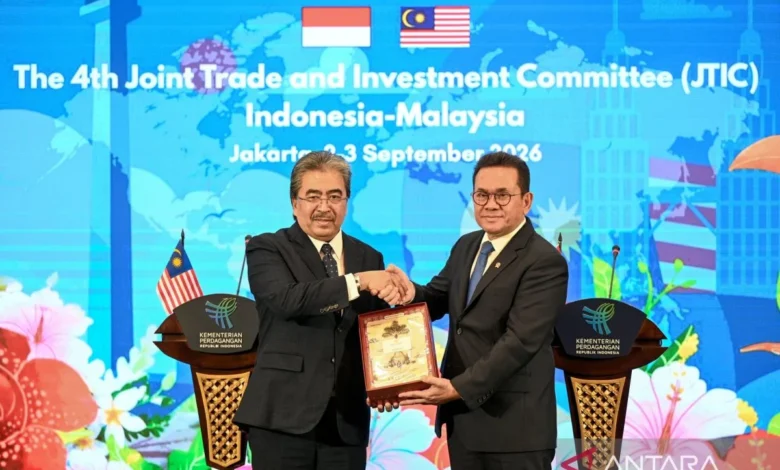
Bilateral cooperation serves as the fundamental bedrock of international relations, representing a direct, targeted partnership between two sovereign states designed to advance mutual interests. Unlike the broad, often cumbersome consensus-building required in multilateral forums, bilateral agreements provide a surgical approach to diplomacy. For a nation like Indonesia, which has historically championed a "free and active" foreign policy, bilateralism acts as a strategic instrument to foster economic growth, enhance national security, and solidify geopolitical standing on the global stage. As of August 2025, Indonesia maintains formal bilateral relations with 162 countries and one special territory, reflecting a sophisticated diplomatic network that spans every continent.
Defining the Bilateral Framework
At its core, a bilateral relationship is a formal interaction between two distinct entities. Within the scope of international law and diplomacy, this is articulated through various legal and administrative instruments, including binding treaties, memoranda of understanding (MoUs), strategic partnership agreements, and recurring intergovernmental dialogues. While multilateralism—such as engagement within the United Nations, ASEAN, or the G20—focuses on collective problem-solving among numerous states, bilateralism is characterized by its high level of customization. It allows Indonesia to tailor its interactions based on the specific needs of its partner, whether that entails agricultural cooperation with an African nation, technology transfers from a G7 country, or infrastructure investment from regional neighbors.
The significance of these relationships cannot be overstated. By maintaining a focused channel of communication, states can navigate complex geopolitical landscapes more effectively. When a crisis emerges, or a specific economic opportunity arises, the bilateral mechanism offers a direct line of sight that is often absent in larger, more bureaucratic multilateral organizations.
The Evolution of Indonesia’s Global Outreach
The history of Indonesia’s diplomatic expansion is intrinsically linked to its post-independence goal of becoming a respected global player. Throughout the late 20th century, the focus was largely on establishing basic diplomatic recognition. However, the 21st century has seen a shift toward "pragmatic diplomacy."
The current landscape is defined by the following strategic pillars:
- Economic Diplomacy: Prioritizing trade facilitation, investment climate improvements, and market access for Indonesian commodities.
- Human Capital Development: Emphasizing academic exchanges, vocational training, and the professionalization of the Indonesian workforce through global standard certifications.
- Technological Sovereignty: Partnering with technologically advanced nations to facilitate knowledge transfer in fields like renewable energy, digital infrastructure, and biotechnology.
- Maritime and Regional Security: Addressing transnational threats, including human trafficking, illegal, unreported, and unregulated (IUU) fishing, and maritime boundary management.
A notable example of the evolution of these ties is the relationship between Indonesia and Papua New Guinea. Since 2022, the implementation of the "Annual Leaders’ Dialogue" has transformed what was once a largely border-centric relationship into a comprehensive strategic partnership. This mechanism, supported by Joint Ministerial Commissions, allows for a granular review of progress across multiple sectors, ensuring that policy goals are not merely drafted but executed.
Strategic Objectives and Global Implications
The objectives of bilateral cooperation are multifaceted, touching upon both domestic welfare and international influence.
Strengthening Diplomatic Stability
Diplomatic relations are the prerequisite for all other forms of engagement. By establishing a robust framework for regular dialogue, countries create a "buffer" during periods of political friction. If two countries have a deep, institutionalized bilateral history, they are significantly more likely to resolve disputes through negotiation rather than escalation.
Economic and Industrial Catalysts
Bilateral agreements frequently serve as the gateway to Foreign Direct Investment (Frees). When Indonesia signs an Economic Partnership Agreement (EPA), it often includes provisions for tax harmonization, dispute resolution mechanisms, and regulatory transparency. These elements provide the predictability required for multinational corporations to commit capital to Indonesian projects.
Human Resource Empowerment
In the modern era, bilateralism has become a vehicle for soft power. Through state-sponsored scholarship programs and technical training, Indonesia builds lasting ties with the next generation of global leaders. For instance, cooperation with European nations often centers on education and sustainable development, while partnerships within the Asia-Pacific region focus more heavily on technical vocational training and industrial capacity building.
Technological Transfer and Innovation
Indonesia’s focus on the "Green Transition" has catalyzed a new wave of bilateral interest. By partnering with countries that lead in solar, wind, and geothermal technology, Indonesia is accelerating its domestic decarbonization efforts. These bilateral research partnerships ensure that technology is not just exported to Indonesia, but developed and adapted to the local context.
Comparative Analysis: Bilateral vs. Multilateral Frameworks
The distinction between bilateral and multilateral cooperation is often misunderstood. Multilateralism is vital for establishing global norms and standards—such as the Paris Agreement on climate change or the World Trade Organization’s (WTO) trade rules. However, these forums are often hindered by the "lowest common denominator" problem, where the need for consensus among dozens of nations limits the ambition of the final agreement.
Bilateralism, by contrast, operates on the principle of specificity. When Indonesia negotiates a bilateral trade deal, it can include bespoke clauses related to local content requirements or specific technology transfer timelines that would be impossible to negotiate in a forum with 150+ members. This is not to suggest that one is superior to the other; rather, they are complementary. A state that relies solely on bilateralism risks isolation from global norms, while a state that relies only on multilateralism lacks the flexibility to advance its specific national interests.
Recent Developments and Case Studies
The landscape of bilateral diplomacy is highly dynamic. Recent trends indicate a rise in long-term strategic partnerships that span decades. For example, the recent agreement between Canada and Ukraine, which establishes a 100-year partnership framework, signals a shift toward "evergreen" diplomacy—agreements that are designed to withstand domestic political cycles and ensure continuity of cooperation.
Similarly, Indonesia’s recent diplomatic discourse with Sudan regarding food security highlights the role of bilateralism in addressing immediate humanitarian and developmental challenges. By leveraging technical expertise in agriculture, Indonesia provides a tangible service to its partner while simultaneously opening new markets and strengthening its diplomatic footprint in the African continent.
Furthermore, the integration of regional blocks with external partners—such as ASEAN’s "plus" mechanisms with countries like Japan, China, and the United States—demonstrates that bilateral and multilateral frameworks are increasingly overlapping. This "minilateral" approach allows for more efficient coordination while keeping the broader regional stability in focus.
Analysis of Challenges and Future Outlook
Despite the benefits, bilateralism is not without challenges. The primary risk is the "asymmetry of power." When a small economy engages with a global superpower, the risk of unfavorable terms is high. Indonesia’s strategy has been to leverage its position as a member of the G20 and its leadership role in ASEAN to maintain a "balanced" approach, ensuring that bilateral partnerships do not lead to undue external influence over domestic policy.
Additionally, the administrative burden of maintaining over 160 bilateral relationships is immense. The Ministry of Foreign Affairs (Kemlu) must constantly monitor the implementation of these agreements to ensure they remain relevant. An agreement signed ten years ago may no longer serve the current national interest, requiring regular "diplomatic housekeeping" to revise or sunset outdated MoUs.
Looking ahead, the nature of bilateral cooperation is expected to evolve further toward digital diplomacy and climate-resilient development. As the global economy undergoes a digital transformation, the next generation of bilateral agreements will likely focus on data sovereignty, cybersecurity cooperation, and the ethical regulation of Artificial Intelligence.
Conclusion
Bilateral cooperation remains the most potent tool in Indonesia’s foreign policy toolkit. By maintaining a balance between deep, strategic partnerships and broad multilateral engagement, Indonesia secures its national interests while contributing to regional and global stability. The 162 bilateral relationships currently in place are not merely lines on a map; they are the arteries of the nation’s economic and political health. As the global environment becomes increasingly volatile, the ability to nurture direct, mutually beneficial partnerships will be the defining metric of successful diplomacy. For Indonesia, the path forward is clear: continue to strengthen these existing pillars while remaining agile enough to adapt to the shifting priorities of the 21st century.