Singapore Enforces Strict S$500 Fines for Bus Passengers Playing Loud Music and Putting Feet on Seats Starting 2026

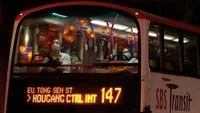
Singapore has long maintained a global reputation for its immaculate public infrastructure, strict adherence to civic regulations, and orderly urban environment. Building upon this foundational ethos, the government is set to significantly ramp up measures aimed at preserving public harmony within its extensive land transport network. Commuters utilizing public buses across the island state will soon face severe financial penalties for common acts of anti-social behavior that have long frustrated fellow travelers. Under a sweeping regulatory update announced by local transport authorities, actions as seemingly minor as playing audio devices at high volumes or resting one’s footwear on upholstered seats will be met with immediate administrative repercussions.
The initiative represents a concerted effort by the Lion City to extend the rigorous behavioral standards already enforced within its Rapid Mass Transit (MRT) rail system directly into the public bus network and its associated infrastructure. As population densities rise and daily transit volumes reach peak capacities, maintaining a mutually respectful shared space has become a paramount priority for urban planners and transportation policymakers alike. The upcoming regulatory shift is designed not merely as a punitive framework, but as a comprehensive cultural reset intended to foster mindfulness, consideration, and safety for every individual navigating the municipal transit ecosystem.
New Administrative Penalties and Categorized Offenses
Beginning September 23, 2026, the Land Transport Authority (LTA) of Singapore will formally implement the Bus Services Industry Regulations 2026. This legislative framework classifies a broad spectrum of disruptive behaviors within public buses, interchanges, and terminals as formal statutory offenses. The penalty structure is systematically divided based on the severity of the infraction, ensuring that minor annoyances and hazardous disruptions are addressed with proportionate legal force.
For general nuisances that disturb the peace and comfort of fellow passengers, individuals face maximum fines reaching up to S$500, approximately equivalent to Rp7 million. This specific tier of penalties targets actions that degrade the collective commuting experience. Among the explicit infractions listed under this category are playing music, videos, or audio content aloud without headphones; placing feet on bus seats; consuming food or beverages where prohibited; and littering within the vehicle or station premises.
Conversely, far more severe penalties are reserved for actions that actively compromise operational safety or cause substantial damage to public property. Passengers who engage in conduct that creates physical obstructions, generates hazardous conditions at bus stops or interchanges, or defaces and soils any part of the bus infrastructure will face drastically heightened consequences. For these grave offenses, the maximum fine escalates dramatically to S$5,000, aligning identically with the penalties long prescribed under the rapid transit system regulations. By harmonizing the punishment scales across both rail and bus networks, the LTA seeks to eliminate regulatory gray areas and establish a unified standard of commuter accountability across all modes of public transportation.
Chronology and Legislative Background
The journey toward these heightened enforcement measures began taking legislative shape long before the public announcement in September 2025. The statutory foundation for these regulations stems from the overarching Transport Sector Act, which was officially passed by Parliament in October 2025. This landmark legislation was engineered to grant regulatory bodies broader powers to combat anti-social, disruptive, and destructive behaviors across all facets of the nation’s public transport network, bridging historical gaps in how bus and rail offenses were handled legally.
Following the passage of the Transport Sector Act, transport authorities spent months drafting the precise operational mechanisms and enforcement guidelines that would comprise the Bus Services Industry Regulations 2026. On Monday, September 21, 2026, the LTA formally unveiled these impending rules to the public through an official media advisory. The announcement provided a clear runway for commuters, transport operators, and enforcement personnel to familiarize themselves with the new legal landscape ahead of the official enforcement date of September 23, 2026. This deliberate timeline underscores Singapore’s methodical approach to public policy implementation, allowing adequate dissemination of information to minimize friction and ensure widespread public awareness.
Enforcement Protocols and the Role of Transport Personnel
A critical operational challenge in managing passenger behavior on mobile transit fleets is balancing enforcement efficacy with the primary duties of transport operators. To ensure that bus captains remain entirely focused on navigating traffic safely, the LTA has structured the enforcement protocol to keep drivers out of administrative disputes. Under the new regulations, bus drivers are not authorized to issue administrative penalties or fine notices, thereby insulating them from potential confrontations that could distract them from their critical safety responsibilities.
Instead, the operational framework empowers designated public bus operator staff—such as trained ticket inspectors and terminal personnel—to issue Administrative Notices of Offence (NOO) to individuals suspected of violating the regulations. Following the issuance of an NOO, the LTA assumes responsibility for conducting subsequent investigations and officially processing the penalties.
While bus captains retain no enforcement or ticketing duties, they are equipped with standardized protocols for managing disorderly situations. Drivers are authorized to verbally advise passengers to immediately cease disruptive behaviors. If a passenger refuses to comply with these directives, the bus captain holds the authority to request that the individual disembark from the vehicle. In scenarios that escalate into severe threats, hostility, or safety risks, drivers are instructed to immediately contact the Bus Operations Control Centre or summon assistance from the Singapore Police Force. This multi-layered approach ensures that discipline is maintained efficiently without compromising the immediate safety of the transit service.
Broader Societal Implications and Public Response
The introduction of these stringent rules reflects a broader socio-cultural evolution in how modern metropolitan areas manage shared public goods. Public transportation systems function as the literal and figurative circulatory systems of major cities, bringing together diverse segments of the population within enclosed environments for prolonged periods. In such high-density settings, individual habits that might seem negligible in private spaces—such as listening to media through phone speakers or occupying multiple seats with luggage and footwear—accumulate to create a stressful and friction-laden environment for the collective public.
Urban sociologists and public policy analysts note that regulatory interventions of this nature serve an important signaling function. By codifying basic etiquette into law, the state establishes a clear baseline of social contract expectations. This discourages the gradual degradation of civic norms that often accompanies rapid urbanization and technological saturation, where personal devices frequently blur the boundaries between private audio consumption and public space.
Furthermore, the economic implications of the S$500 to S$5,000 fine structure act as a powerful deterrent. While a S$500 penalty may represent a manageable financial impact for some, the psychological and administrative burden of receiving an official notice of offense is often sufficient to alter public habits permanently. The strict enforcement framework underscores the government’s zero-tolerance stance toward behaviors that diminish the quality of life for the majority of commuters who rely on public transit for their daily mobility.
Balancing Strictness with Institutional Discretion
Despite the rigid nature of the new legal penalties, the LTA has emphasized that the application of the regulations will be tempered with institutional wisdom and fairness. Transport authorities and public bus operators have been instructed to exercise careful discretion when addressing infractions, particularly in sensitive scenarios involving vulnerable populations. Special considerations are explicitly outlined for cases involving passengers with specific physical, developmental, or mental health conditions, ensuring that enforcement mechanisms do not inadvertently penalize individuals whose behaviors stem from medical or cognitive challenges rather than willful disregard for social order.
This nuanced approach highlights the sophisticated nature of Singapore’s urban management strategies, which continually seek to balance absolute public order with humanitarian sensitivities. The primary objective, as reiterated by transport officials, remains anchored in minimizing inconvenience to the broader commuting public while preserving the uninterrupted, safe flow of essential public transport services.
Conclusion and Future Outlook
As the implementation date of September 23, 2026, approaches, commuters across Singapore are actively adjusting their expectations regarding public etiquette. The comprehensive update to the Bus Services Industry Regulations marks a definitive milestone in the ongoing evolution of the nation’s public transport governance. By legally anchoring baseline standards of courtesy—banning loud audio playback, unruly seating postures, and environmental degradation—Singapore continues to pioneer regulatory frameworks designed to protect the integrity of shared urban spaces. The success of this policy will likely serve as a benchmark for other global metropolitan areas grappling with similar challenges in passenger conduct and public transit management in the digital age.
Related posts: