How to Accurately Identify the Gender of Your Betta Fish Through Physical and Behavioral Analysis

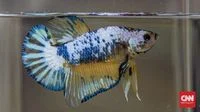
The identification of gender in Betta splendens, commonly known as the Siamese fighting fish, remains one of the most frequent challenges for both novice hobbyists and professional breeders. While the species exhibits distinct sexual dimorphism, the increasing prevalence of diverse fin types and specialized breeding lines—such as the Plakat variety—has blurred the visual lines that historically distinguished males from females. Distinguishing between a female Betta and a short-finned male is not merely a matter of aesthetic observation; it is a critical requirement for responsible husbandry, as inappropriate housing pairings can lead to fatal territorial disputes.
The Evolution of Betta Breeding and Sexual Dimorphism
Historically, the Betta fish was identified by a clear dichotomy: males possessed long, flowing fins and vibrant, saturated colors, while females were characterized by shorter fins and more muted, earth-toned palettes. However, selective breeding programs over the past several decades have fundamentally altered these physical markers. Breeders have successfully developed female lines that rival the color intensity of males, as well as short-finned male varieties, such as the Plakat, which possess a robust, compact body structure that mimics the traditional female silhouette.
Because color and fin length are no longer reliable, singular indicators, the aquatic scientific community recommends a multi-factor diagnostic approach. By analyzing anatomical markers—specifically the presence of the ovipositor, the size of the branchiostegal membrane, and specific behavioral displays—keepers can achieve a significantly higher accuracy rate in sexing their specimens.
Anatomical Markers: The Primary Diagnostic Indicators
The most reliable anatomical feature for identifying a female Betta is the presence of an "egg spot," scientifically referred to as the ovipositor. This is a small, whitish or cream-colored protrusion located on the ventral surface of the fish, situated precisely between the pelvic fins and the anal fin. In mature females, this organ is responsible for the release of eggs during the spawning process. While it serves as a strong indicator, it is not infallible. Juvenile females may not yet show a fully developed egg spot, and in some rare instances, male specimens may possess a small, vestigial spot that can lead to misidentification.
Furthermore, the body shape of the female differs significantly from that of the male, particularly in the abdominal region. Females typically exhibit a more rounded, broader midsection. This is largely due to the development of ovaries. When a female is in prime health and ready for reproduction, this abdominal fullness becomes even more pronounced. In contrast, the male Betta is generally slender, aerodynamic, and displays a more streamlined profile designed for agility during territorial displays.
The branchiostegal membrane, commonly referred to as the "beard," is another critical area for examination. This membrane sits beneath the gill covers and is displayed when a fish flares its gills to intimidate a rival. In males, the beard is notably larger and extends beyond the gill plate, creating a dramatic visual silhouette. While females also possess a beard, it is markedly smaller and often remains hidden beneath the gill cover, even when the fish is mildly agitated.
Behavioral Indicators and Stress Response
Behavioral analysis provides a secondary layer of verification. One of the most telling signs of a female’s physiological state is the emergence of "breeding bars." These are vertical, light-colored stripes that appear along the flanks of the body. These bars serve as a signal to potential mates that the female is receptive to spawning. It is imperative that keepers do not confuse these with "stress stripes," which are horizontal, darker bands that manifest when a fish is subjected to poor water quality, temperature fluctuations, or inadequate environmental enrichment. Stress stripes can appear on both males and females, serving as a universal marker of physiological distress.
Contrary to popular belief, aggression is not a gender-specific trait in Betta fish. Both sexes are inherently territorial. Female Bettas, when kept in an improperly sized tank or one lacking sufficient visual barriers, can exhibit high levels of aggression toward both conspecifics and other species. The notion that females are "docile" is a misconception that often leads to improper stocking decisions in community aquariums.
Chronological Development and Maturation
The difficulty in sexing Bettas often stems from the age of the specimen. At the fry stage, distinguishing between male and female is almost impossible without specialized laboratory equipment. Typically, sexual characteristics become observable between three to five months of age.
- 0–8 Weeks: Fry are virtually indistinguishable. Both sexes display similar growth rates and fin development.
- 8–12 Weeks: The initial divergence occurs. Males may begin to show slightly longer anal fins, and the body shape of the female may begin to thicken.
- 3–5 Months: Secondary sexual characteristics—such as the egg spot, beard growth, and the development of mature color patterns—become prominent. This is the optimal window for accurate identification.
Implications for Aquaculture and Hobbyist Welfare
The necessity for accurate gender identification has significant implications for animal welfare. Misidentifying a male as a female and introducing it into a "sorority" tank—a group of multiple female Bettas—is a frequent cause of aquarium mortality. Because males are highly territorial, the introduction of a male into a female-only environment will invariably result in severe, often lethal, combat.
Professional aquarists emphasize that there is no single "magic bullet" for identification. Instead, the "Rule of Two" is generally applied: a specimen should only be confirmed as a specific gender if it exhibits at least two of the primary markers—such as a combination of an egg spot and a smaller beard, or a rounded abdominal profile coupled with shorter, more compact fins.
Expert Perspectives on Selective Breeding
According to industry reports from leading aquarium science journals, the shift in Betta breeding has forced the hobbyist market to become more sophisticated. "The reliance on color and tail shape is an antiquated method of identification," says Dr. Aris Thorne, a researcher specializing in labyrinth fish. "We are seeing a high degree of phenotypic plasticity in modern Betta lines. When breeders select for specific tail types—like the Halfmoon or the Crowntail—they are inadvertently altering the traditional physical indicators. The onus is on the owner to look at the skeletal structure and the reproductive anatomy rather than the superficial appearance."
Conclusion and Best Practices for Owners
For those currently attempting to identify the gender of their Betta, the process should be conducted in a stress-free environment. Using a high-lumen LED light to observe the fish from the side or underneath (if the tank allows) can help clarify the presence of an egg spot. If the fish is exhibiting signs of stress, such as horizontal stripes or lethargy, it is advisable to wait until the fish is acclimated to its environment before attempting to finalize the identification.
Ultimately, the identification of a Betta’s gender is an essential skill that requires patience and a holistic understanding of the species’ biology. By moving beyond color and fin length, and focusing on anatomical markers like the ovipositor, beard size, and body shape, hobbyists can ensure they are providing the correct environment for their fish, thereby promoting a longer, healthier life for these complex and fascinating creatures. Whether for the purpose of breeding or simply ensuring the long-term health of an individual pet, a diligent and scientific approach to sexing your Betta is the hallmark of a responsible aquatic keeper.