Bahlil Lahadalia Says Energy Ministry Bears Blame for Blackouts Despite PLN Role as Operator


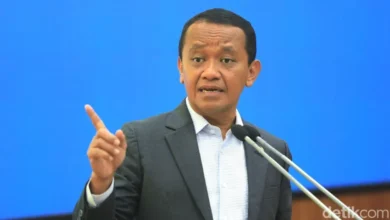
Minister of Energy and Mineral Resources Bahlil Lahadalia has addressed recurring public criticism regarding electrical blackouts across multiple regions in Indonesia, highlighting a frequent misconception regarding the division of responsibilities within the country’s energy sector. Speaking during a working session with Commission XII of the House of Representatives (DPR RI) at the parliamentary complex in Senayan, Jakarta, Bahlil explained that while his ministry functions strictly as a policy regulator, the operational implementation of electricity generation, transmission, and distribution lies entirely with state-owned electricity monopoly PT PLN (Persero).
Despite this clear structural demarcation, Bahlil acknowledged that the Ministry of Energy and Mineral Resources (ESDM) remains the primary target for public ire whenever localized power outages occur. Rather than deflecting blame or sidestepping institutional accountability, the minister emphasized that accepting such pressure is an inherent duty of leadership. He affirmed that the ministry would not evade its responsibilities and pledged to coordinate closely with PLN management to swiftly resolve the technical and environmental issues triggering power interruptions in affected territories.
Structural Realities and Institutional Accountability
The exchange during the parliamentary hearing brought to light the ongoing challenges of managing Indonesia’s vast and geographically complex power grid. Bahlil noted that when electricity supply falters, consumers and lawmakers naturally look toward the regulatory apex—the Ministry of ESDM—for answers and solutions.
"ESDM is the regulator, while implementation is handled by PLN. But as soon as the lights go out, ESDM is the one blamed, that is roughly how it goes," Bahlil stated during the hearing on Wednesday, September 16.
Nevertheless, the minister maintained a pragmatic stance on executive responsibility. He asserted that true leadership requires stepping up during crises, regardless of whether the operational failure originated within the ministry’s direct purview. By committing to proactive intervention, Bahlil signaled a hands-on approach to resolving grid instability, stressing that the government’s ultimate obligation is to ensure reliable energy access for citizens across the archipelago.
Regional Blackouts: Climate Impacts in South Sulawesi
During the parliamentary session, Bahlil detailed the specific causes behind recent power outages in two heavily impacted regions: Central Kalimantan and South Sulawesi. Each region, he explained, faced distinct structural and environmental hurdles that disrupted normal energy generation.
In South Sulawesi, the primary catalyst for instability was a severe drop in production from Hydroelectric Power Plants (PLTA). The region’s electrical grid relies heavily on hydroelectric generation, which has been severely compromised by prolonged dry weather conditions linked to the El Niño climatic phenomenon.
According to data presented during the discussions, the output capacity of hydroelectric facilities in South Sulawesi plummeted dramatically from a normal operational level of approximately 400 megawatts (MW) down to a constrained range of 200 to 250 MW. This sudden deficit created a significant generation shortfall, forcing regional grid operators to implement rolling blackouts to prevent total system collapse.
"The report I received is that in South Sulawesi, several generation units are indeed hydroelectric. Due to this El Niño phenomenon, the water pressure and volume have decreased," Bahlil explained, illustrating how global climate patterns directly impact domestic energy security.
Maintenance and Grid Stability in Central Kalimantan
While South Sulawesi grappled with water scarcity, the situation in Central Kalimantan stemmed from infrastructure maintenance and equipment upgrades. Bahlil clarified that blackouts in this province occurred because PLN had taken specific generation units offline for essential scheduled maintenance and technical repairs.
While temporary power disruptions are an unavoidable part of routine grid maintenance, the clustering of outages raised concerns among lawmakers, prompting the parliamentary inquiry. The Ministry of ESDM assured the legislative committee that these maintenance activities are critical for long-term grid reliability, designed to prevent catastrophic equipment failures during peak demand periods.
Debunking Coal Supply Misconceptions and RKAB Adjustments
A major focus of the parliamentary hearing was whether recent adjustments to mineral and coal mining quotas—formally known as the Mining Business Work Plan and Budget (RKAB)—contributed to the fuel shortages at power plants. Lawmakers questioned if strict production caps had inadvertently starved PLN’s coal-fired power plants (PLTU) of necessary fuel supplies.
Bahlil firmly rejected these hypotheses, maintaining that the regional blackouts had no connection to government-mandated mining quotas. He emphasized the need for transparency and fairness when evaluating the root causes of the energy disruptions.
"Let’s be fair about this. There is no connection between the lights going out in Kalimantan and Sulawesi with the RKAB," Bahlil stated.
To eliminate any ambiguity or potential fuel bottlenecks, the minister highlighted aggressive administrative measures taken within his ministry. He noted that Tri Winarno, the Director-General of Mineral and Coal at the Ministry of ESDM, has been assigned an expanded, hands-on portfolio to oversee fuel logistics directly. In addition to his regulatory duties, the Director-General has effectively assumed the role of Vice President of Coal Procurement for PLN, monitoring supply chains on a daily basis.
"If we talk about coal RKAB, there are no more issues concerning PLN. Now the Director-General of Mineral and Coal also serves as the VP of Coal Procurement because coal procurement for PLN is now handled directly by the Director-General, almost every day, so that there are no more blackouts caused by RKAB excuses," Bahlil asserted.
Broader Implications for Indonesia’s Energy Transition and Grid Resilience
The recent parliamentary discussions underscore the complex interplay between climate change, state-owned enterprise execution, and government oversight in Indonesia’s energy sector. As the nation navigates the dual pressures of maintaining grid reliability and transitioning toward sustainable energy sources, structural vulnerabilities continue to test the resilience of regional power networks.
The heavy reliance on hydroelectric power in regions like South Sulawesi exposes the Indonesian electrical grid to the increasing volatility of extreme weather events driven by climate change. As global temperatures rise and weather patterns become more erratic, prolonged droughts associated with phenomena like El Niño pose a persistent threat to renewable generation capacity that depends on hydrological stability. This vulnerability highlights the urgent need for grid diversification, energy storage investments, and robust backup generation systems to buffer against environmental shocks.
At the same time, the administrative measures implemented by the Ministry of ESDM—such as direct ministerial oversight of coal supply chains—reflect an effort to streamline bureaucratic hurdles and ensure uninterrupted fuel delivery to thermal power plants. By tightening coordination between regulatory bodies and operational executors like PLN, the government aims to minimize avoidable fuel-related disruptions.
Ultimately, the parliamentary session served as a reminder of the high stakes involved in national energy management. With public expectations centered on reliable, affordable electricity for industrial and household consumption, both the Ministry of ESDM and PLN face mounting pressure to modernize infrastructure, enhance climate adaptation strategies, and improve communication when regional crises occur. As Bahlil indicated, leadership in the energy sector demands absolute accountability, setting a precedent for proactive problem-solving as Indonesia continues to develop its power infrastructure to meet future economic and environmental demands.