President Donald Trump Announces Sharp Tariff Increase on South Korean Imports Amid Legislative Standoff

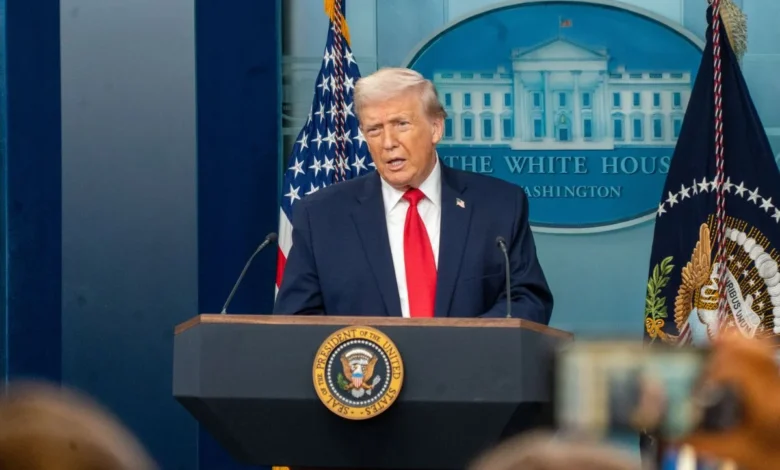
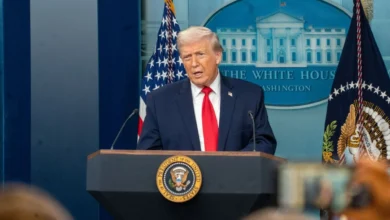
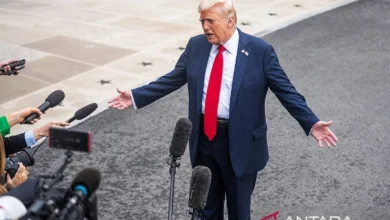
The diplomatic and economic partnership between the United States and South Korea faced a significant rupture on Monday, January 26, 2026, as President Donald Trump announced a unilateral decision to escalate tariffs on a broad spectrum of South Korean goods. Citing a failure by the South Korean National Assembly to ratify a pivotal bilateral trade agreement, President Trump declared that tariffs on automotive, timber, and pharmaceutical products, alongside other reciprocal levies, would be increased from 15 percent to 25 percent effective immediately. This development marks a volatile shift in trans-Pacific trade relations, threatening to disrupt supply chains that have been meticulously calibrated over decades of cooperation.
The announcement, delivered via social media, directly targeted the legislative process in Seoul. President Trump expressed frustration that the National Assembly had not yet codified the trade pact finalized in late 2025. "Given that the South Korean legislature has not ratified our Historic Trade Agreement, which is their prerogative, I am hereby increasing the TARIFFS on Automotive, Timber, and Pharmaceutical products from South Korea, as well as all other Reciprocal TARIFFS, from 15 percent to 25 percent," the President stated. He emphasized that the current legislative delay represented a breach of trust, specifically pointing to personal commitments made during high-level summits with South Korean President Lee Jae-myung.
A Chronology of Escalation: From July 2025 to January 2026
To understand the current impasse, one must look at the rapid progression of negotiations that occurred throughout 2025. The foundation for the current conflict was laid on July 30, 2025, when President Trump and President Lee Jae-myung announced a "Grand Deal" aimed at balancing trade flows and fostering deeper industrial integration. At that time, the atmosphere was one of mutual optimism, with both leaders promising a new era of economic cooperation.
The negotiations reached a critical juncture on October 29, 2025, when President Trump visited Seoul to reaffirm the terms of the agreement. The core of the October deal involved a significant quid pro quo: the United States agreed to set a comprehensive tariff floor of 15 percent on South Korean imports—a rate lower than the punitive 25 percent levels Trump had previously threatened—in exchange for a massive capital injection from South Korean firms. South Korea committed to investing $350 billion into the U.S. economy, a move designed to stimulate domestic manufacturing and job growth in the United States.
However, the transition from presidential handshake to legislative enactment has proven treacherous. While the executive branches in both Washington and Seoul expressed alignment, the South Korean National Assembly encountered internal political friction. Opposition parties and industry lobby groups expressed concern over the long-term impact of the $350 billion investment pledge, arguing that such a massive outflow of capital could weaken the domestic South Korean economy and lead to industrial hollowing.
Economic Stakes and Trade Volatility
South Korea remains one of the most critical economic partners of the United States. In recent years, the trade volume between the two nations has exceeded $100 billion annually, with South Korean companies playing an outsized role in the American consumer market, particularly in the automotive and semiconductor sectors. The sudden 10-percentage-point increase in tariffs is expected to have immediate, tangible consequences for U.S. consumers and South Korean exporters alike.
The automotive sector is perhaps the most vulnerable. Major South Korean manufacturers have built extensive supply chains that rely on the seamless movement of parts and finished vehicles across the Pacific. A 25 percent tariff will likely force these companies to either absorb the costs, which would significantly erode profit margins, or pass the price increases to the American consumer. Economists warn that such a move could exacerbate inflationary pressures on durable goods, particularly as the automotive industry is already grappling with the high costs of transitioning to electric vehicle (EV) production.
Furthermore, the pharmaceutical sector, which has become an increasingly important component of the U.S.-South Korean trade profile since the COVID-19 pandemic, faces similar uncertainty. Increased costs for imported raw materials and finished drugs could affect pricing in the U.S. healthcare market, where affordability is a recurring point of public concern.
Official Responses and Diplomatic Maneuvering
The reaction from Seoul was one of surprise and immediate crisis management. Shortly after the announcement, officials from the South Korean presidential office indicated that they had received no prior notification of the tariff hike from the White House. This lack of diplomatic signaling has caused further anxiety in the South Korean capital, where officials are now scrambling to interpret whether this move is a definitive policy shift or a tactical maneuver intended to force a legislative vote in the National Assembly.
The South Korean Ministry of Trade, Industry, and Energy announced that it would dispatch a high-level delegation to Washington in the coming days. The primary goal of this mission is to clarify the scope of the new tariffs and to negotiate a potential stay or exemption, provided that the South Korean government can offer a credible timeline for the ratification of the trade agreement.
Analysts suggest that the South Korean government is in a precarious position. If the administration of President Lee Jae-myung moves to force the bill through the National Assembly, it risks significant domestic backlash from a legislature wary of presidential overreach. Conversely, if the government fails to satisfy the White House’s demands, the trade war could deepen, potentially leading to retaliatory measures that would further isolate South Korean businesses from the U.S. market.
Broader Implications for Global Trade
The Trump administration’s move is consistent with its broader "Reciprocal Trade" doctrine, which prioritizes bilateral parity over multilateral frameworks. By linking trade agreements to specific investment commitments and domestic legislative timelines, the U.S. is signaling a departure from the more traditional, long-term diplomatic stability that characterized U.S.-Asia relations for decades.
For global markets, this move introduces a new layer of risk. Other trading partners are likely watching the U.S.-South Korea dispute with concern, as it sets a precedent for how the U.S. intends to handle trade agreements that are not fully codified by domestic legislatures. If other nations perceive that the U.S. is willing to impose sudden, high-impact tariffs as a tool of legislative pressure, it could lead to a global scramble to renegotiate existing treaties or, conversely, a move toward regional protectionism.
From an analytical perspective, the efficacy of this strategy remains to be seen. While tariffs have historically been used as leverage to gain concessions, their success depends on the willingness of the other party to comply without causing irreparable damage to the bilateral relationship. In the case of South Korea, the United States is dealing with a country that is not only a major exporter but also a critical security ally in the Indo-Pacific region. The potential for economic friction to bleed into the security domain—where the two nations coordinate closely on regional defense—is a concern for geopolitical strategists.
Conclusion: A Testing Ground for Bilateral Diplomacy
As the situation unfolds, the coming weeks will be a crucial testing ground for the diplomatic machinery of both Washington and Seoul. The focus will now shift to the upcoming talks in Washington, where the South Korean trade delegation will attempt to bridge the gap between President Trump’s demands and the political reality of the South Korean National Assembly.
Whether the tariff hike is a permanent fixture of the new trade landscape or a short-term pressure tactic, the incident underscores the fragility of international trade agreements in an era of nationalist economic policy. For American industries, the cost of goods is set to rise, while for South Korean manufacturers, the challenge of maintaining their market share in the United States has become significantly more complex. The resolution of this dispute will likely dictate the tone of U.S.-South Korean relations for the remainder of 2026 and serve as a bellwether for the future of U.S. trade policy on the global stage.
Related posts: