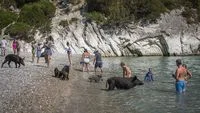
The remote and previously uninhabited Greek island of Atokos, nestled within the picturesque Echinades archipelago in the Ionian Sea, has experienced an unprecedented surge in international tourism over recent weeks. This sudden influx of global travelers was triggered by viral social media footage documenting a rare and unexpected wildlife phenomenon: a sounder of wild black pigs regularly swimming in the crystalline azure waters of the Mediterranean. What was once a secluded sanctuary known exclusively to passing sailors, luxury yacht charters, and local fishermen has now transformed into a bustling bucket-list destination, drawing thousands of visitors from across Europe, North America, and Asia.
Main Facts of the Phenomenon
Atokos, a privately owned island primarily utilized for seasonal livestock grazing, has suddenly captured the global imagination. The core attraction centers around a population of wild and feral black pigs that inhabit the rugged terrain of the island. Unlike typical swine, these animals have developed a distinct behavioral adaptation: regularly venturing from the shoreline into the sea to cool off during high temperatures, forage near shallow reefs, and interact curiously with approaching watercraft.
Digital media platforms, most notably TikTok, Instagram, and YouTube, served as the primary catalyst for the phenomenon. Short-form videos capturing tourists swimming alongside the dark-furred mammals in translucent turquoise bays accumulated tens of millions of views within a fortnight. Consequently, local tour operators based in neighboring islands such as Lefkada, Ithaca, and Cephalonia have reported a staggering 300 percent increase in day-trip bookings specifically routed toward Atokos. Ferries, high-speed RIBs, and chartered catamarans are now arriving daily, discharging hundreds of sightseers onto beaches that historically saw fewer than a dozen visitors per week.
Chronology of the Viral Surge
The transformation of Atokos from an anonymous islet to a mainstream tourist hotspot can be traced through a distinct timeline over the past several months.
In early spring, a small group of international sailing tourists anchored in one of Atokos’s secluded bays—traditionally known as One House Bay, named after the sole residential structure on the island. While preparing lunch on deck, the travelers recorded a video of several black pigs plunging off a pebble beach and paddling through the sea. The footage was uploaded to social media with minimal fanfare.
By late spring, the algorithm of several major platforms propelled the content outward. One specific TikTok video uploaded by a European travel influencer surpassed five million views in less than seventy-two hours, accompanied by viral audio tracks and widespread media sharing.
As summer commenced, the digital momentum translated into physical foot traffic. By June, local maritime agencies in Lefkada noted a dramatic shift in itinerary requests, with tourists explicitly demanding detours to the "swimming pig island of Greece." By mid-summer, the once-tranquil anchorage was frequently congested with dozens of commercial and private vessels, leading to unprecedented logistical challenges for local authorities and the island’s stewards.
Supporting Data and Regional Tourism Metrics
The sudden popularity of Atokos highlights broader shifts in post-pandemic travel behavior, where experiential, nature-based, and highly visual tourism dominates consumer preferences. According to regional tourism boards in the Ionian Islands periphery, overall foreign arrivals to the western coast of Greece have risen by approximately 14 percent compared to the previous year, with minor islets experiencing disproportionately higher spikes due to social media exposure.
Data compiled from regional harbor masters indicate that maritime traffic around the Echinades group has doubled. On peak weekends, upwards of fifty vessels—ranging from multi-million-dollar superyachts to budget excursion boats—anchor off the coast of Atokos simultaneously. The economic spillover has directly benefited port towns like Nydri in Lefkada and Frikes in Ithaca, where tavernas, fuel suppliers, and equipment rental agencies report record seasonal revenues.
However, quantitative data also reveal mounting pressure on local infrastructure. Environmental monitors note that waste management facilities in nearby transit hubs are struggling with the sudden surge in day-trippers. Furthermore, marine traffic density in the narrow straits surrounding Atokos has increased safety risks for traditional navigation and local fishing fleets.
Official Responses and Ecological Concerns
The rapid transition of Atokos from an undisturbed ecological haven to a mass-tourism attraction has prompted urgent discussions among local government officials, environmental protection agencies, and the private owners of the island.
Representatives from the Municipality of Ithaca, which holds administrative jurisdiction over the broader Echinades cluster, issued a joint statement alongside regional environmental bodies expressing cautious concern. While acknowledging the undeniable economic boost to the local hospitality sector, officials emphasized the critical need for regulated management to prevent ecological degradation.
"The phenomenon observed at Atokos is a testament to the captivating allure of nature, but it carries profound responsibilities," noted a regional tourism development spokesperson speaking on condition of anonymity pending formal policy announcements. "An uninhabited island lacks the waste disposal systems, freshwater supplies, and permanent administrative presence required to sustain thousands of unvetted visitors daily."
Wildlife conservationists have also raised alarms regarding the welfare of the pigs themselves. Historically sustained by natural foraging and minimal human intervention, the animals are increasingly being fed inappropriate foodstuffs—including processed snacks, bread, and sugary items—by well-meaning but ill-informed tourists. Veterinarians warn that unnatural diets can severely compromise the health of the swine population. Additionally, behavioral experts caution that continuous close-range interactions with large numbers of humans may induce chronic stress, alter natural foraging habits, and eventually lead to aggressive encounters.
In response to these emerging challenges, local authorities are currently drafting emergency regulatory frameworks. Proposed measures include establishing a designated maritime buffer zone around the island’s primary beaches, setting daily caps on commercial tour boat landings, and deploying educational wardens to monitor tourist behavior and enforce anti-littering and anti-feeding ordinances.
Broader Impact and Socio-Economic Implications
The Atokos phenomenon serves as a micro-case study for the broader vulnerabilities and opportunities inherent in modern digital-era tourism. Overtourism driven by social media algorithms—often referred to in industry parlance as the "Instagram effect"—has previously impacted fragile ecosystems worldwide, from pristine beaches in Southeast Asia to remote mountain trails in South America. The sudden focus on Atokos demonstrates that even privately held, uninhabited European territories are no longer immune to the hyper-accelerated reach of global digital platforms.
From an economic perspective, the surge provides a vital financial lifeline for small-scale maritime businesses recovering from years of macroeconomic volatility. Local skippers, guesthouse owners, and artisanal producers have found a lucrative new market among travelers seeking novelty experiences beyond traditional mainland monuments and crowded urban centers.
Conversely, the ecological implications demand a reevaluation of how regional governments manage unmonitored natural assets. Environmental analysts argue that proactive infrastructure investment and digital geo-fencing strategies must be implemented before viral attention causes irreversible harm to delicate coastal habitats and indigenous fauna.
As the summer season progresses, the future of Atokos hangs in a delicate balance. Whether the island can successfully transition from an unregulated viral hotspot to a sustainably managed eco-destination will depend largely on the collaborative enforcement capabilities of Greek municipal authorities, maritime regulators, and the conscious cooperation of the global traveling public.
Related posts: