Indonesia’s Green Energy Transition Gains Momentum as Ministry Greenlights Mount Ungaran Geothermal Project

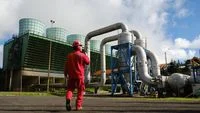
The development of the Mount Ungaran Geothermal Power Plant (PLTP Gunung Ungaran) in Central Java is projected to yield substantial dual benefits, driving environmental preservation while simultaneously generating localized economic prosperity for surrounding communities. According to academic and geological engineering experts, scaling up geothermal energy infrastructure represents a pivotal step in fulfilling Indonesia’s carbon reduction commitments while optimizing the nation’s vast renewable energy reserves.
The initiative has received definitive regulatory backing from the central government. Ministry of Energy and Mineral Resources (MEMR) officially granted approval to state electricity monopoly PT PLN (Persero) to develop the Mount Ungaran Geothermal Working Area (Wilayah Kerja Panas Bumi or WKP). This regulatory milestone underscores Jakarta’s renewed commitment to accelerating the commercialization of clean baseload power, moving away from heavily polluting fossil fuels toward indigenous, sustainable alternatives.
Environmental Advantages and Low-Emission Metrics
Geological engineering academics from Diponegoro University (UNDIP), Yoga Aribowo, emphasized that integrating a higher proportion of geothermal energy into the national energy mix creates profoundly positive ramifications for ecosystem preservation. As a source of clean energy, geothermal systems are inherently reliable and decoupled from the weather volatility that frequently plagues solar and wind power generation.
"As the proportion of geothermal power plants increases, it will certainly contribute positively to overall environmental quality, spanning air, marine, and water ecosystems," Yoga noted during a recent briefing.
From a technical standpoint, geothermal power generation exhibits remarkably low greenhouse gas emissions relative to conventional coal-fired or gas-turbine power plants. Carbon dioxide emissions originating from modern geothermal plants typically hover around 100 grams per kilowatt-hour (kWh), while hydrogen sulfide emissions are kept below 1 gram per kWh. These metrics highlight the technology’s relative ecological compatibility.
The mechanics of geothermal energy extraction are frequently misunderstood by the general public. The process harnesses high-temperature steam and hot water stored deep within subterranean geological reservoirs, situated thousands of meters beneath the earth’s surface. Crucially, the water utilized in these operations is entirely distinct from the shallow groundwater aquifers accessed via residential wells.
Furthermore, geothermal operations function on a closed-loop or reinjected hydrological cycle. Once the thermal energy has been extracted from the subterranean fluids to drive steam turbines, the condensed water is safely returned to the original reservoir via deep reinjection wells. This meticulous process ensures long-term resource sustainability, preventing subterranean pressure depletion and maintaining the integrity of the underground hydro-geological structure.
Catalyzing Local Economic Development and Community Empowerment
Beyond ecological remediation and climate mitigation, large-scale energy infrastructure projects serve as potent catalysts for regional economic development. The establishment of the Mount Ungaran geothermal facility is anticipated to trigger a multiplier effect, spawning both direct and indirect employment opportunities while stimulating commercial activity in adjacent sub-districts.
During the construction and operational phases, the influx of specialized engineers, technical operators, and supporting workforce personnel naturally generates demand for local services. Small and medium-sized enterprises—including neighborhood food stalls (warungs), retail grocery shops, transportation service providers, and residential boarding houses (kos)—stand to benefit directly from increased localized purchasing power.
Moreover, project developers are mandated to channel resources back into the host communities. These initiatives typically manifest as corporate social responsibility (CSR) programs designed to upgrade local infrastructure, enhance educational facilities, and improve healthcare access, ensuring that the socio-economic benefits are equitably distributed among regional stakeholders.
Regulatory Chronology and the Path to Approval
The formal greenlighting of the Mount Ungaran project represents the culmination of extensive regulatory deliberation and strategic policy alignment. The progression toward development crystallized during the prestigious Indonesia International Geothermal Convention & Exhibition held in Jakarta.
During the high-profile industry gathering, Director General of New, Renewable Energy and Conservation of Energy (EBTKE) Eniya Listiani Dewi formally announced the issuance of critical ministerial decrees. The breakthrough was achieved under the leadership of Minister of Energy and Mineral Resources Bahlil Lahadalia, who authorized the formal licensing framework.
"We extend our profound gratitude to the Minister for issuing the decrees regarding the Geothermal Operating Licenses. These will be formally designated to PT PLN (Persero) for the Mount Ungaran geothermal working area, alongside the allocation of the Telaga Ranu geothermal working area to PT Telaga Ranu Geothermal," Eniya stated during the proceedings.
This ministerial decree effectively removes administrative bottlenecks, granting state-backed developers the legal clarity required to commence exploratory drilling, environmental impact assessments (AMDAL), and subsequent infrastructure deployment.
National Context: Untapped Geothermal Potential
The Mount Ungaran initiative assumes heightened significance when viewed through the prism of Indonesia’s broader macroeconomic and energy landscape. Indonesia sits atop the Pacific Ring of Fire, endowing the archipelago with some of the most prolific geothermal reserves on Earth.
According to comprehensive statistical data compiled by the Ministry of Energy and Mineral Resources, Indonesia’s total cumulative geothermal potential stands at an impressive 23,202.77 megawatts (MW). Despite this staggering natural endowment, the nation’s cumulative installed geothermal capacity currently rests at just 2,776.39 MW.
These figures reveal a stark operational reality: approximately 88.4 percent of Indonesia’s total geothermal energy potential remains entirely untapped. This vast latent capacity underscores both the magnitude of the missed economic opportunity and the enormous headroom available for future renewable energy expansion.
Strategic Implications for Indonesia’s Energy Transition
The slow pace of geothermal commercialization historically stems from high upfront capital expenditures, complex subterranean exploratory risks, and protracted tariff negotiations with state off-takers. However, shifting geopolitical imperatives, international climate financing commitments, and rigorous domestic carbon emission targets have compelled policymakers to recalibrate the national energy strategy.
By entrusting the Mount Ungaran project to state-owned enterprise PLN, the government aims to leverage institutional balance sheets and sovereign backing to absorb early-stage exploration risks—a strategy designed to accelerate project delivery timelines. Successful execution at Mount Ungaran could serve as a replicable blueprint for unlocking dormant geothermal assets across Java, Sumatra, Sulawesi, and Eastern Indonesia.
As global capital increasingly prioritizes environmental, social, and governance (ESG) compliance, harnessing clean baseload power like geothermal energy is no longer merely an environmental aspiration for Indonesia; it is an economic necessity. Projects like the Mount Ungaran PLTP demonstrate that ecological stewardship and regional economic revitalization can proceed in tandem, paving a resilient path toward national energy independence and deep decarbonization.