Agensi Rumah Tangga brings the realities of modern employment and domestic dynamics to the big screen on September 10 2026

The landscape of Indonesian cinema is set to shift on September 10, 2026, with the nationwide release of Agensi Rumah Tangga, a compelling dramedy directed by Naya Anindita. Adapted from the best-selling novel by Almira Bastari, the film serves as a poignant mirror to the contemporary Indonesian workforce, navigating the delicate intersections of economic survival, social status, and the evolving nature of domestic employment. With a screenplay penned by the renowned duo of Upi and Ayu Anggraini Putri, the film promises to be more than just a source of humor; it is a narrative exploration of the resilience of women in a changing economy.
A Narrative Rooted in Contemporary Hardship
At the heart of the story is Katia, portrayed by Enzy Storia. The film begins with a relatable catalyst: the sudden and jarring experience of job termination. As Katia faces the looming threat of defaulting on her mortgage—a reality shared by millions of urban professionals—the narrative shifts from corporate aspiration to the gritty, often overlooked world of domestic staffing.
Katia’s transition from a professional office setting to the management of a domestic worker agency serves as the primary engine of the plot. This pivot allows the audience to witness the disparate lives of various domestic workers (ART), each carrying their own burden of personal conflict, financial strain, and social expectation. What begins as a professional arrangement for Katia gradually evolves into a familial bond, forcing the protagonist to choose between the path of least resistance—reclaiming a traditional career to satisfy societal and parental pressures—or embracing the unconventional community she has built.
The Production and Creative Vision
The creative team behind Agensi Rumah Tangga has emphasized that the film’s strength lies in its balance of levity and gravitas. Producer Chand Parwez, a veteran of the Indonesian film industry, has highlighted that while the film utilizes the comedic talents of several prominent stand-up comedians and actors, the humor is never at the expense of the characters’ dignity.
"We are aiming for a story that resonates on a human level," Parwez noted during early production discussions. "The humor serves to bridge the gap between different social classes, but the core of the film is about how individuals—specifically women—navigate the struggle for economic independence."
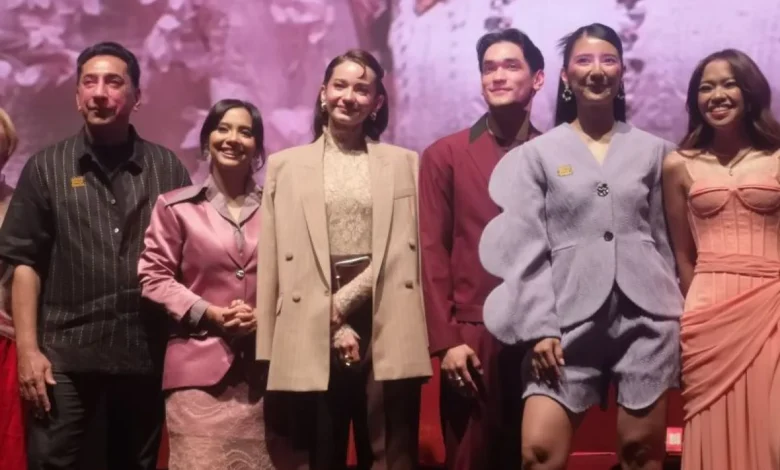
Director Naya Anindita, known for her keen eye on social narratives, has been meticulous in her casting process. By assembling a diverse ensemble cast—including Afgansyah Reza, Fita Anggriani, Ardit Erwandha, and Yunita Siregar—Anindita sought to create a set environment defined by mutual respect. She has stated that the positive energy generated during production was a deliberate effort to ensure that the onscreen relationships felt organic and genuine, rather than staged.
Contextualizing the Domestic Worker Economy
To understand the cultural weight of Agensi Rumah Tangga, one must consider the socio-economic framework of Indonesia. Domestic workers remain a vital, yet often under-regulated, component of the nation’s economy. Data from various labor organizations suggest that millions of Indonesians rely on domestic help to balance the demands of dual-income households. However, the legal protections and social recognition for these workers have historically lagged behind other sectors.
By centering a film around an "agency" that connects these workers with employers, the story touches upon the professionalization of domestic labor. It challenges the traditional view of the "maid" as a subordinate, instead presenting these women as agents of their own survival, possessing complex lives, professional ambitions, and familial duties that mirror those of the people they work for.
Chronology of the Film’s Development
The journey of Agensi Rumah Tangga from a literary property to a major cinematic production reflects the growing demand for local, character-driven narratives in Indonesia:
- Pre-Production (2024): The adaptation rights for Almira Bastari’s novel were secured. The production team focused on balancing the lighthearted tone of the book with the necessary dramatic weight required for a feature film.
- Script Development (Early 2025): Upi and Ayu Anggraini Putri finalized the script, focusing on the character arc of Katia and ensuring that the ensemble cast had sufficient room to develop their respective backstories.
- Principal Photography (Late 2025): Shooting took place across Jakarta, utilizing urban settings to emphasize the pressure of city life. The production prioritized an authentic depiction of the modern Indonesian home.
- Post-Production (Early 2026): Final edits were made to balance the comedic timing with the film’s emotional crescendos.
- Release Date (September 10, 2026): The official theatrical debut marks the culmination of two years of development, positioning the film as a late-year tentpole for local cinema.
A Multidimensional Cast
The film features an expansive list of talent, intentionally designed to reflect a cross-section of Indonesian society. Beyond the lead, Enzy Storia, the inclusion of actors like Unique Priscilla and Tike Priatnakusumah brings a layer of gravitas to the older generation of characters, while the inclusion of stand-up comedians like Neneng Wulandari, Boah Sartika, and Musdalifah Basri ensures that the film maintains a brisk, entertaining pace.
The character diversity is significant. The film depicts women in various roles: from government employees (PNS) balancing the demands of motherhood to women entering sectors historically dominated by men. This intersectionality is central to the film’s message: that the struggle for economic survival is universal, even if the paths taken to achieve it vary wildly.
Analytical Perspective: Why This Film Matters
From an analytical standpoint, Agensi Rumah Tangga is poised to be a significant cultural touchstone. In the post-pandemic era, the Indonesian middle class has become increasingly aware of the precarity of the job market. The "Katia" archetype—the educated, urban worker who finds herself suddenly unemployed—is a demographic that has grown in recent years. By focusing on this character, the film taps into a collective anxiety regarding economic stability.
Furthermore, the film’s success in weaving together comedy and drama suggests a maturing market. Indonesian audiences have shown an increasing preference for films that offer "edutainment"—content that is highly watchable but also prompts a dialogue about social structures. The film’s focus on the employer-employee relationship serves as a microcosm for broader societal issues, such as income inequality and the inherent power dynamics in domestic settings.
Broader Implications for the Industry
The release of Agensi Rumah Tangga also speaks to the current trend of adapting successful literary works. As streaming platforms and cinema chains compete for viewers, established IPs (Intellectual Properties) with pre-existing fanbases, such as those written by Almira Bastari, are becoming high-value assets for producers.
The film’s success will likely influence future greenlighting decisions in the Indonesian industry. If Agensi Rumah Tangga achieves the anticipated box office success, it could pave the way for more films that prioritize female-led narratives and stories that tackle the intersection of class and labor in a contemporary urban context.
Final Reflections
As the premiere date of September 10, 2026, approaches, anticipation continues to build. The combination of a strong literary foundation, a seasoned production team, and a cast that spans the spectrum of Indonesian talent suggests that Agensi Rumah Tangga is more than a standard commercial offering. It is a calculated effort to blend the joy of comedy with the sincerity of human struggle.
For the audience, the film serves as an invitation to look at the people behind the domestic services we often take for granted. By humanizing the characters through the lens of a comedy-drama, Naya Anindita and her team have crafted a story that is not only intended for entertainment but for reflection. Whether Katia chooses her new "family" or the path of corporate stability, the journey she takes is one that many in the modern workforce will find both familiar and deeply moving. As the industry looks toward the future, films of this caliber confirm that the heart of Indonesian cinema remains firmly grounded in the stories of the everyday person.