BYD Launches Massive Recruitment Drive for Over 9,000 Positions Amidst Soaring Global Demand

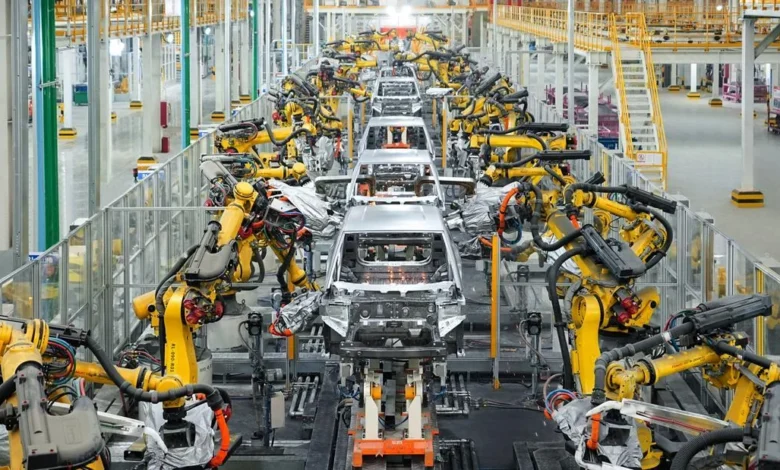
Shenzhen, China – Chinese automotive giant BYD is undertaking a significant recruitment surge, opening more than 9,000 job vacancies within its Special Cooperation Zone in Shenshan, Shenzhen. This extensive hiring initiative is directly linked to the company’s unprecedented growth in international markets, particularly its passenger car and pickup truck segments, which have experienced explosive sales figures. The company is seeking to fill roles across its key manufacturing facilities, including the Ebu component plant and the Xiaomo vehicle assembly plant, to meet escalating production demands.
This large-scale hiring effort underscores BYD’s strategic positioning as a global leader in new energy vehicles (NEVs) and its aggressive expansion strategy. The sheer volume of openings signals a robust confidence in sustained market demand and a commitment to scaling up production capacity to maintain its competitive edge. The focus on both component manufacturing and final assembly highlights BYD’s integrated approach to its supply chain and production processes.
Surging Export Sales Fueling Expansion
The impetus behind this massive recruitment drive is the remarkable surge in BYD’s international sales performance. In 2025, the company achieved a monumental milestone, exporting 1.05 million passenger cars and pickup trucks, representing a staggering 145% increase compared to the previous year. This exponential growth trajectory has continued into the first half of 2026, with export sales reaching approximately 789,400 units, a substantial 70% year-on-year rise. BYD has set an ambitious target of 1.5 million export units for the entirety of 2026, a figure that necessitates a significant expansion of its workforce and production capabilities.
This sustained demand reflects a global shift towards electrification and BYD’s successful penetration of key international markets. The company’s diverse product portfolio, encompassing a range of affordable and technologically advanced NEVs, has resonated with consumers worldwide. Factors such as competitive pricing, innovative battery technology, and expanding charging infrastructure have all contributed to BYD’s growing market share.
Key Recruitment Areas and Compensation Structure
The recruitment effort is distributed across BYD’s facilities in the Shenshan Special Cooperation Zone. The Xiaomo vehicle assembly plant is set to hire 4,800 new employees. These roles will span a variety of crucial production lines, including sheet metal workers, upholstery technicians, and warehouse staff. These positions are critical for the final assembly of vehicles, ensuring that production lines can operate at maximum efficiency to meet delivery targets.
Furthermore, Division 15 operating within the Xiaomo facility requires an additional 1,200 workers. These roles will focus on assembly line operators, welding technicians, and foam technicians, all vital for the intricate manufacturing processes involved in modern vehicle production. The Ebu component plant, also under Division 15, will absorb another 2,000 new employees. The focus here will be on operators, machine setters, and welders, reinforcing the company’s commitment to in-house component manufacturing to control quality and supply chain reliability.
BYD has implemented a tiered compensation system designed to attract and retain skilled labor. Entry-level general operators can expect a starting salary of approximately 5,000 yuan (around $690 USD) per month. This figure is competitive within the Chinese manufacturing sector and reflects the company’s investment in its workforce. For more experienced and specialized roles, such as senior technicians, monthly earnings can range significantly higher, between 15,000 and 20,000 yuan (approximately $2,070 to $2,760 USD). This tiered structure incentivizes skill development and career progression within the company, aiming to build a highly competent and motivated workforce.
Global Localization Strategy in Full Swing
This substantial hiring spree in China is not an isolated event but rather a component of BYD’s broader, aggressive global localization strategy. The company is actively establishing and expanding production facilities worldwide to be closer to its key markets, reduce logistical costs, and comply with local content requirements.
Brazil: BYD’s manufacturing facility in Brazil recently celebrated a significant milestone, producing its 100,000th new energy vehicle. This plant has become a crucial hub for BYD in South America, employing over 5,500 individuals. The success in Brazil demonstrates BYD’s ability to adapt its production and business models to diverse international landscapes and consumer preferences.
Hungary: In Europe, BYD is constructing its first passenger car manufacturing plant in the region, located in the city of Szeged. This strategic investment signals BYD’s commitment to the European market and its ambition to become a major player in the continent’s rapidly electrifying automotive sector. The Hungarian plant is expected to create a substantial number of local jobs and contribute to the region’s economic development.
Thailand: BYD’s plant in Rayong, Thailand, serves as its first passenger vehicle production base outside of China. This facility is already manufacturing a diverse range of five models: the BYD Dolphin, Atto 3, Seal 5 DM-i, Sealion 5 DM-i, and Sealion 6 DM-i. The presence in Thailand positions BYD strongly within the Southeast Asian market, a region with growing demand for electric vehicles.
Indonesian Operations: Local Production Underway
The expansion of BYD’s manufacturing footprint extends to Indonesia, with its plant located in Subang, West Java. Head of PR & Government Relations at PT BYD Motor Indonesia, Luther Panjaitan, confirmed in June that the Subang facility is already producing several car units. He indicated that some vehicles used for test drives were manufactured at this local plant.
When questioned about the production of the newer BYD M6 DM (Dual Mode) model, which is rumored to be assembled locally, Panjaitan provided a strong indication of its localized production status. While careful not to make an official pronouncement, he stated, "I shouldn’t be speaking officially right now. It should be yes (already locally produced). Of course, the M6 DM is specifically prepared for Indonesia, prepared and equipped with components produced in Indonesia." This suggests that BYD is not only assembling vehicles in Indonesia but also integrating locally sourced components, further solidifying its commitment to the Indonesian market and its contribution to the local economy.
Broader Implications and Future Outlook
BYD’s aggressive recruitment and expansion strategies have significant implications for the global automotive industry. The company’s rapid growth challenges established automakers and signals a new era of competition driven by Chinese manufacturers. The sheer scale of BYD’s operations, from component manufacturing to global assembly, demonstrates a highly integrated and efficient business model.
The massive hiring spree in China, coupled with its international expansion, indicates a proactive approach to securing its supply chain and production capacity. This ensures that BYD can continue to meet demand, control costs, and maintain its competitive pricing strategy. The focus on NEVs also aligns with global efforts to reduce carbon emissions and transition to sustainable transportation.
For the automotive workforce, BYD’s expansion presents both opportunities and challenges. The creation of thousands of jobs, both in China and abroad, offers significant employment prospects. However, it also highlights the evolving nature of automotive manufacturing, with an increasing demand for skilled workers in areas such as battery technology, software development, and advanced manufacturing processes.
As BYD continues its upward trajectory, its strategic investments in production capacity and its commitment to localization will be key determinants of its long-term success. The company’s ability to navigate diverse regulatory environments, adapt to local market demands, and maintain its innovative edge will shape its position as a dominant force in the global electric vehicle revolution. The current recruitment drive is a clear testament to BYD’s confidence in its future and its unwavering commitment to meeting the burgeoning global demand for sustainable mobility solutions.